


Too Good to Be True: How to Avoid Scams Targeting Writers
A poet who nearly fell for an e-mail scam warns writers about what to look out for, including offers that arrive out of the blue and sound too good to be true.
Tags:
Jump to navigation Skip to content
Articles from Poet & Writers Magazine include material from the print edition plus exclusive online-only material.
A poet who nearly fell for an e-mail scam warns writers about what to look out for, including offers that arrive out of the blue and sound too good to be true.
“Being gentle may not make it better, but it rarely makes it worse.” —Siew Hii, author of Entered Some Aliens

The author of Pulse (Omnidawn, 2026) considers how metaphor can help metabolize anger.

“Don’t rush the writing, and enjoy it for itself.” —Tara Menon, author of Under Water

The author of Pulse (Omnidawn, 2026) considers how one can morally bend the truth in poetry.
“When I work in coffee shops, people actually remark on the chaos of my desktop, wondering how I can get any work done.” —Tom Junod, author of In the Days of My Youth I Was Told What It Means to Be a Man
“I am often wildly optimistic about my productivity in the mornings. This feeling lasts no later than noon.” —Jordy Rosenberg, author of Night Night Fawn

The author of Clutch (Tin House, February 2026) describes the rigorous line work that went into finishing her manuscript.

“I think that losing the joy of process causes writer’s block.” —Tayari Jones, author of Kin

The author of Clutch (Tin House, February 2026) reflects on adjusting rising and falling action across time in fiction.
The new executive director of the American Literary Translators Association (ALTA) discusses the role of translation in the literary landscape and exciting upcoming initiatives at ALTA.

T Kira Māhealani Madden’s new novel, Whidbey, asks challenging questions about how we as a society treat and talk about both the survivors and perpetrators of sexual abuse.
Write a series of formal poems to reflect on a complicated aspect of your life, a story in which you pose as the recipient of letters from a nonhuman character, or a hybrid essay that incorporates elements of memoir and criticism.
A novelist explores the decision to name real places in fiction, the way maps circumscribe those places, how locales heavily defined by tourism are susceptible to those projections, and what it means to push against those expectations.
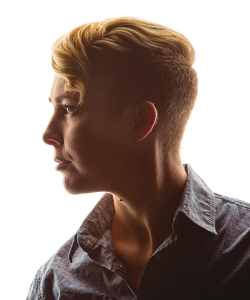
The author of Last Psalm at Sea Level considers the different shapes of language through a reflection on curating Deaf art and signed literature for programming at the Guggenheim Museum.
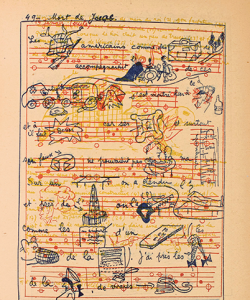
A new exhibition at the Center for Book Arts in New York City focuses on Isidore Isou and the postwar, avant-garde artistic movement he spearheaded in France.
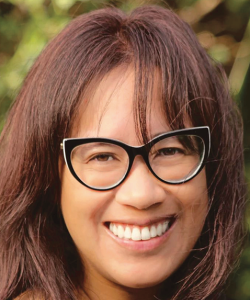
The prose writer Mandy-Suzanne Wong highlights journals that have published some of her surprising, emotive essays on mollusks including Digging Press Journal and Black Warrior Review.
Founded in 2012 and now based in Minneapolis, Trio House Press publishes twelve books of poetry and nonfiction annually and aims for its titles to build empathy and understanding.

Boa Editions celebrates a half century of independent publishing and releases a previously unpublished collection of Lucille Clifton’s poetry.
Seven private foundations have forged a new partnership to support literary arts organizations amidst an increasingly precarious funding landscape.

Ahead of this year’s Independent Bookstore Day, a look back at last year’s controversy when Amazon surprised indie stores with a sale of its own.
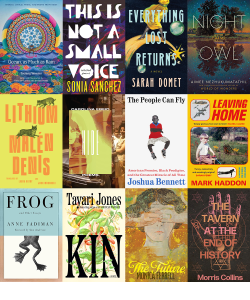
The first lines of a dozen noteworthy books, including Night Owl by Aimee Nezhukumatathil and Frog: And Other Essays by Anne Fadiman.
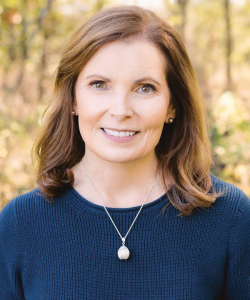
While promoting her book, an author collects personal stories of shelter and storm, curating an accidental anthology that demonstrates how sharing stories fosters community during a time of climate upheaval.

With his second collection, Horses, award-winning poet Jake Skeets shows us how to contemplate the profundity of our interconnected world, holding space for both grief and beauty, the Anthropocene and queer eros.
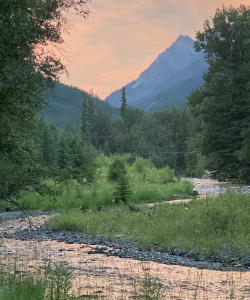
In a season of disappointment while trying to conceive, the author of How to Commit a Postcolonial Murder reconnects with creativity at the Summer Fishtrap Gathering of Writers.