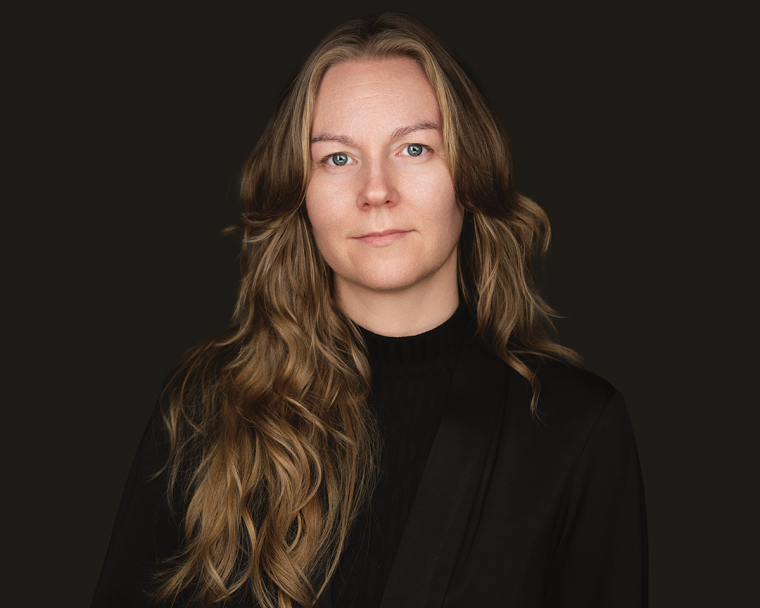
Last April, Katrine Øgaard Jensen was appointed executive director of the American Literary Translators Association (ALTA), an organization serving and connecting literary translators, educators, and readers and championing the art of literary translation. Jensen, who succeeded Elisabeth Jaquette at ALTA, is a poet and translator of Danish literature and the recipient of several fellowships and awards, including the National Translation Award in Poetry for her translation of Ursula Andkjær Olsen’s Third-Millennium Heart (Broken Dimanche Press/Action Books, 2017). Jensen’s book-length translations from the Danish also include Olsen’s My Jewel Box (Action Books, 2022) and Outgoing Vessel (Action Books, 2021), as well as To the Most Beautiful (co•im•press, 2024) by Mette Moestrup. Jensen recently spoke about ALTA’s mission and latest projects, in addition to her own work and the future of literary translation. The following is an expanded version of the interview that appears in the print edition of the March/April 2026 issue of Poets & Writers Magazine.
How did you come to translation?
I fell in love with literary translation as the world’s greatest writing exercise: a cover song performed on the page. After finishing my undergraduate degree in Denmark, where I grew up, I applied to MFA writing programs in New York City and ended up choosing a program that offered a scholarship and a joint course of study in writing and literary translation—a program created out of the belief that an encounter with literary translation is beneficial to a writer’s development and imagination. During the second year of graduate school, I attended my first of many ALTA conferences with a friend—and the rest, as we nerds like to say, is ALTA history.
In your translator’s note for Outgoing Vessel (Action Books, 2021), you describe how Ursula Andkjær Olsen used Google Translate to translate her own poems into different languages and then back into Danish. There are so many online and digital tools at our disposal nowadays. What resources and tools do you utilize in your own translation process?
Let me start by saying that I’ve always been quite curious about technology. My recent book of collaborative poems, Ancient Algorithms, explores the medium of translation via various technologies through an often nostalgic lens, from the 1990s computer game Myst to lo-fi online Spider Solitaire to the early days of Google Translate, when it infamously produced very silly out-of-context mistranslations.
That being said, when it comes to actual literary translation, I’ve found that there are no better resources than human resources. I think I can say that without sounding like a dinosaur, since I have experimented with a variety of tools over the past decade and spoken often about my interest in technology. But in order to write exciting and memorable lines, I pull works that have been written and translated by humans off my bookshelf and find my inspiration there, just like any writer does. I pay attention to voice, rhythm, and imagery in translation, and from that process I’m filled with input on how to approach re-creating a work in a new language. It is a process in which there’s no one-to-one input and output; more often than not, a colleague’s literary work will take my mind somewhere completely new, and the output I gain from reading it is unexpected and might be fully unrelated to the text I just read. Similarly, editing or workshopping a difficult text with other writers and translators always brings about surprising solutions that infuse dull lines with life and language. Community is an enormous part of my writing life and the best resource for improving and sustaining my work.
You recently published Ancient Algorithms (Sarabande Books, 2025), a book of “mistranslations,” with Ursula Andkjær Olsen, Sawako Nakayasu, Aditi Machado, Paul Cunningham, Baba Badji, and CAConrad. Did the process of writing that book change the way you think about translation? And, if so, how?
I don’t know if it changed the way I think about translation, but it made me realize something about my interest in collaborative work. The book opens with an introduction as well as an “egoism-exorcism” that invites the reader to consider the connections between writing, translation, and collaboration before moving into the poems. In my introduction I write that each poem is, to borrow an expression from Alejandra Pizarnik in Cole Heinowitz’s translation [A Tradition of Rupture (Ugly Duckling Presse, 2019)], not necessarily an expression of being but rather a memorial for a moment of fusion. I discovered it’s that moment of fusion that interests me most as a writer and translator—who we might become when we open ourselves up to a foreign influence.
What role do you think literary translation plays in the current landscape?
International literature provides us with a crucial human perspective on the histories, politics, and cultures of other nations. The National Endowment for the Arts [NEA], when luminaries like literature director Amy Stolls were still there, published a collection of essays celebrating literary translation titled The Art of Empathy: Celebrating Literature in Translation. The collection came out the [same] year we lost Gabriel García Márquez [2014]. In her introduction, Stolls describes how, following García Márquez’s death, thousands of writers around the world who read his work in their own languages—thanks to literary translators—spoke about his influence on their own writing and thinking. She notes that García Márquez himself had been influenced by authors who were made accessible to him in Spanish translation, including Franz Kafka and Sophocles. Think of how many of your favorite poets, authors, dramatists, and screenwriters have been influenced by works in translation, and how many…have shaped your own writing and worldview. Now imagine a literary canon stripped of these diverse voices and experiences. Consider how narrow storytelling and thinking would become.
What kind of work has ALTA been doing in the past year in its mission to “advance the art of literary translation”?
For the first time in many years, we put on our annual conference and mentorship program without any financial support from the NEA, as our programming “no longer effectuate[d] agency priorities,” according to the grant termination letter we received last May. Despite this significant hole in our annual budget, thanks to the support of our members and partners, we were proud to produce our forty-eighth ALTA conference for over four hundred attendees in Tucson this past November. At least sixty-three languages were represented among the conference’s attendees, with sixty-six panels, workshops, and bilingual readings, as well as a bookfair, several receptions, and coffee breaks connecting literary translators, publishers, educators, students, and readers of literature in translation. We also held our annual awards ceremony, where we celebrate excellence in our field by giving out six awards for translated literature.
These awards are one way that ALTA brings prestige and visibility to the art of literary translation. The National Translation Awards in Poetry and Prose, for example, are given out for exceptional books of translated literature published within the previous year, which ALTA has proudly administered since 1998. We are also pleased to have teamed up with partners to offer our other awards: the Lucien Stryk Asian Translation Prize, the Italian Prose in Translation Award, and the Spain-USA Foundation Translation Award. Since 2024 we also offer the ALTA First Translation Prize—an initiative begun by a group of generous ALTA members—which awards a debut literary translation each year.
Our Emerging Translator Mentorship Program reached its tenth anniversary this year. The program pairs an emerging translator with an established translator mentor to guide them as they translate a book over the course of a year. We also put on a cycle of virtual programming each year, including our ever-popular pitch sessions with translation publishers. These sessions help literary translators gain direct access to publishers of literary translations, allowing them to briefly pitch a project via Zoom for possible publication. Making that connection is one of the ways we can best serve our members.
Which upcoming ALTA initiatives or programs are you most excited about?
I am really looking forward to meeting our next cohort of mentees. Our mentorship program is open to thirteen mentees in 2026, including the third iteration of our partnership with the SALT [South Asian Literature in Translation] Project at the University of Chicago. This collaboration is designed to address the fact that very few translations from South Asian languages are published in English. With SALT, we have now offered mentorships in fourteen South Asian languages, including Bangla, Braj Bhasha, Gujarati, Hindi, Kannada, Kashmiri, Malayalam, Marathi, Nepali, Punjabi, Sinhala, Tamil, Telugu, and Urdu—along with a mentorship for children’s literature; one for poetry; and one for premodern, classical, or early modern literature from a South Asian language.
In addition, our 2026 conference will be held in Portland, Oregon, from October 21 to October 24. Finally, ALTA’s fiftieth conference anniversary is coming up in 2027, and we are already making big plans for our programming that we look forward to unveiling soon.
In November, ALTA held its forty-eighth conference with the theme “Visions and Versions.” How do you envision the future of literary translation in the face of AI and machine-generated translations?
I envision a future where literary translators lean into the quality, artistry, and specialized nature of their work. I think there will continue to be publishers and authors committed to hiring human translators for high-quality work and those who will be fine with publishing completely AI- or machine-produced translations by hiring translators to “clean up” or “post-edit” these texts at much lower rates. … That’s what we’ve been seeing lately.
In what feels like another life, I [thought] that we’d eventually have to accept this kind of heavy use of translation technology as the new normal in our field, that we’d have to evolve or die. From the bottom of my heart, I no longer believe that to be true. Imagine if, for instance, Anne Carson had been hired to “clean up” an AI-produced translation of Sappho’s poetry instead of creating her unique vision for If Not, Winter [Vintage Books, 2002].
In literary translation as well as in creative writing and other artistic disciplines, there’s AI-generated art and then there’s human art. There’s fast food and there’s slow food. Gabriel García Márquez waited three years for literary translator Gregory Rabassa’s schedule to clear so he could translate One Hundred Years of Solitude into English. In an interview with the Paris Review, where García Márquez spoke mostly in Spanish and his two sons shared the translating, he said: “A good translation is always a re-creation in another language. That’s why I have such great admiration for Gregory Rabassa.”
In my own experience, achieving a pitch-perfect pun in translation, a unique tone and style, or an image that haunts its reader is a writing process that requires an approach quite opposite to what something like predictive or machine-generated text can offer.
I hope and believe we will reach a saturation point in the AI bubble where there will be a renewed appreciation for human-made quality art and entertainment and for unpredictable, non-formulaic stories and language. At the ALTA conference, as well as in our online workshops, we provide a community where human literary translators can be inspired, supported, and celebrated. Literary innovation depends on it, just like it depends on human writers.
What advice would you give to emerging translators or those interested in becoming a translator?
First of all: Go ahead and start translating. I recommend starting with short pieces of no more than one or two pages that you can easily finish and polish to the best of your ability. Then visit literarytranslators.org, and keep an eye on our calendar for important dates and information about ALTA’s upcoming programming and opportunities. If you can, I highly recommend attending our annual conference, which features several sessions and events of special interest to ALTA newcomers and emerging translators. Each year we offer a dozen or more Emerging Translator Mentorships, as well as a smaller number of early-career Travel Fellowships, all of which include financial assistance to support attendance at our conference. As an aside, I’m always more than a little starstruck when I revisit the ALTA archives—these early-career Travel Fellowships, for instance, have supported several now-prominent writers and translators, including Don Mee Choi, Aaron Coleman, Philip Metres, Robin Myers, Aaron Robertson, and Damion Searls. Anyone seeking these opportunities would, historically speaking, be in terrific company.
Rachel Britton is a writer and translator from New York, based in Iceland. She has received support from the Fulbright Commission, the American-Scandinavian Foundation, and the Icelandic Literature Center. Her translation of Brynja Hjálmsdóttir’s A Woman Looks Over Her Shoulder was published by Circumference Books in 2024.
Photo credit: Mike Fallon