




Ten Questions for T. Geronimo Johnson

“I sing into your ear sweet whispers you mistake for your own thoughts.” —T. Geronimo Johnson, author of The Occidental Book of the Dead
Tags:
Jump to navigation Skip to content
Read weekly interviews with authors to learn the inside stories of how their books were written, edited, and published; insights into the creative process; the best writing advice they’ve ever heard; and more.
“I sing into your ear sweet whispers you mistake for your own thoughts.” —T. Geronimo Johnson, author of The Occidental Book of the Dead

“Sometimes I know I need to just observe and live life and let the writing come later.” —Tomas Moniz, author of The King of Aloe Vera

“Can a poem, in reaching for something beyond the moment of composition, pick up some vibration from the future?” —Kiki Petrosino, author of Perfect Italian

“Writing nonfiction can feel like a kind of freedom because it gives you power, which you didn’t have when you first lived through your experiences.” —Brittany Perham, author of Executrix

“Write all the truth of your life that you can.” —Paisley Rekdal, author of Heritance

“As soon as I stopped worrying about what others would think and wrote how I wanted, it seemed to come a little easier.” —Amanda Peters, author of The Birthing Tree

“Just be consistent and show up every day, and it’ll get done eventually.” —Drew Buxton, author of Daytona Teddy Riggs

“I love and need to move just as much as I need to sit and think and write.” —Catherine Jagoe, author of Unbelonging: A Life in Search of Home

“I was surprised at how much mental pep talk goes into writing a novel.” —Téa Mutonji, author of My Person

“I’ve been writing a lot in my head before I actually sit down to write.” —Paul Yoon, author of Etna

“Just like there is a right time for readers to read a book, the right time came for me to write this one.” —Marta Pérez-Carbonell, author of I Made You Up Inside My Head

“I try to remember that all the other stuff in life—my family, my job—isn’t in competition with my writing life.” —Andrea Uptmor, author of The New People

“Ordering a manuscript is part intuition, part acumen.” —Maya C. Popa, author of If You Love That Lady

“As an artist, it’s easy to compare yourself to your younger self, instead of giving yourself the freedom to be who you are now.” —Fatimah Asghar, author of Daughter of the Mountains

“If I spend too long thinking about or planning a book, then I never start writing.” —Prudence Bussey-Chamberlain, author of Bone Horn

“I believe that a wise man told us all to fail better.” —Monica Datta, author of Nebraska

“Writing is like any other bodily function for me—necessary, rhythmic, and almost involuntary.” —Kate Christensen, author of Good Company

“There was a time when I would have called my nonwriting life an impediment, but these days I see it more like I need to be a whole person.” —Deb Olin Unferth, author of Earth 7

“Work continuously and discipline yourself for this art that you love.” —Gregory Orr, author of We Interrupt This Broadcast
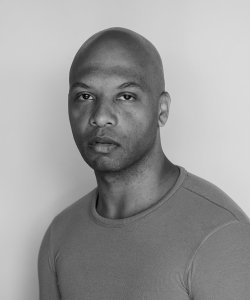
“It’s good to have a group of friends who make you feel like you can do anything.” —Nicholas Goodly, author of Star Power

“I collect fragments of language as they occur to me.” —Tom Lin, author of Babylon, South Dakota
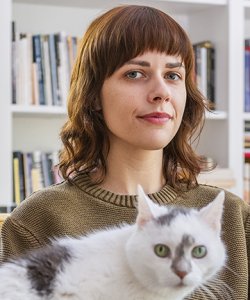
“You can surely be a writer who doesn’t read. But you won’t be a very good writer.” —Paige Lewis, author of Canon

“Every poem has work to do in the world, and recognition is the moment that the soul meets the poem it needs at that time.” —Beth Piatote, author of distant water

“I think every mistake or every moment of doubt is just part of the process.” —Douglas Stuart, author of John of John

“I had to become a different person in order to write the version of this book that readers will hold in their hands, and for a long time I wasn’t that person yet.” —Emma Copley Eisenberg, author of Fat Swim