


Small Press Points: Green Linden Press

Based in Grinnell, Iowa, and motivated by a mission to support reforestation, Green Linden Press publishes around six titles per year and donates a portion of its proceeds to environmental efforts.
Tags:
Jump to navigation Skip to content
Articles from Poet & Writers Magazine include material from the print edition plus exclusive online-only material.
Based in Grinnell, Iowa, and motivated by a mission to support reforestation, Green Linden Press publishes around six titles per year and donates a portion of its proceeds to environmental efforts.

The translator of Ye Hui’s The Ruins highlights journals that embraced his translations, including Asymptote and Copihue Poetry.

Housed in the trunk of a 1984 Mercedes-Benz 380SL, AUTO Books travels throughout Los Angeles, bringing art, photography, and poetry titles, along with other rare and experimental literature, to neighborhoods across the city.

The new executive director of AWP discusses her path from publishing to arts administration and shares what gives her hope for the literary arts.

“Becoming a mother, and feeling the ferocity of love that parents hold for their children, and doing the daily work of parenting, helped me find the emotional core of the book.” —Megha Majumdar, author of A Guardian and a Thief

“It should be possible to both write good and live good. Go see your friends. Be with your family. Taste something new. Fall in love with the world again and again while you still can.” —Joshua Wheeler, author of The High Heaven
The author of no swaddle (University of Iowa Press, 2025) reflects on approaching uncertainty on the page.

“I think I’m a natural maximalist, and I still enjoy orchestrating a complex, layered scene or sentence, but I often found myself paring down versus building up.” —Jade Chang, author of What a Time to Be Alive
The author of no swaddle (University of Iowa Press, 2025) considers the legacies and influences of authors engaged in similar forms and topics.

“I try to write every day, whether that’s generating new words or taking a walk to think about a revision problem.” —E. Y. Zhao, author of Underspin
The author of no swaddle (University of Iowa Press, 2025) considers the value of both engaging with and refuting a traditional form.

“I wish all writers the audiences they desire and the acclaim they deserve.” —Ashley M. Jones, author of Lullaby for the Grieving
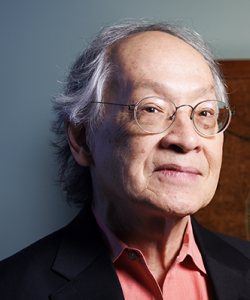
During his term as poet laureate, Sze plans to have a special focus on poetry in translation.

“When an impediment arrives, I try writing about it. This helps me remain patient.” —Jeannie Vanasco, author of A Silent Treatment

The author of Indigo (Copper Canyon Press, 2020) reflects on the lessons Robert Frost offers us when writing about loss.

“Stop telling yourself you can’t do this.” —Patrick Ryan, author of Buckeye

“[Y]ou can’t edit something into being good before getting it down.” —Austyn Wohlers, author of Hothouse Bloom

The author of Indigo (Copper Canyon Press, 2020) recommends writers use coding when trying to describe loss.

Literary and arts organizations are left reeling after budget cuts at the NEA, NEH, and IMLS.

An executive editor at Scribner, previously a senior editor at Grove Atlantic, Katie Raissian talks about learning to be fearless, what grabs her in a query, and the art of publishing books.

A writing degree’s worth lies in early readers met, sacred hours at the desk, life-changing books, and deep community.

Faculty, program type, format, and size are just a few of factors to consider when finding a school that suits who you are as a writer.

Use your essay to answer the question: Devoting two years to writing can be a dream come true, but why is it your dream?

Time well-spent in grad school means “learning to labor in language in such a way that you’ve made yourself worthy of the next labor.”