



Ten Questions for Anne Waldman

“I like the idea of action writing, putting text on the floor and playing with arrangement like abstract expressionist painting.” —Anne Waldman, author of Mesopotopia
Tags:
Jump to navigation Skip to content
Articles from Poet & Writers Magazine include material from the print edition plus exclusive online-only material.
“I like the idea of action writing, putting text on the floor and playing with arrangement like abstract expressionist painting.” —Anne Waldman, author of Mesopotopia

“But fear can be galvanizing; perhaps the novel would not have been written without it.” —Xenobe Purvis, author of The Hounding

The author of Restitution (Regal House Publishing, September 2025) recommends writers refine their research and examine which details actually serve their characters and plots.

“I just remember the miraculous appearance of story seeds, bursts of inspiration, and cloudless composition.” —Ed Park, author of An Oral History of Atlantis

The author of Restitution (Regal House Publishing, September 2025) recommends writers use their own memories as a testing ground for their characters.

“I think every writer carries with them someone they wish they could’ve told all their stories to.” —Katie Yee, author of Maggie; Or, A Man and a Woman Walk Into a Bar

The author of Restitution (Regal House Publishing, September 2025) recommends writers use time as a tool to shape the emotional stakes of novels.

“I tend to work across these different forms, on different projects at the same time.” —Issa Quincy, author of Absence

“Writing lends itself to filmmaking in terms of structuring a story, but I think filmmaking lends itself to more visually stimulating writing.” —Lawrence Burney, author of No Sense in Wishing

“Notes/fragments help me relive moments that carry seeds, sparks, moments of import, humor, and beauty.” —Rhoni Blankenhorn, author of Rooms for the Dead and the Not Yet

The author of Scream / Queen (Acre Books, 2025) recommends poets expand their research beyond their typical interests.
“The research I did for this novel was so intriguing, looking at the psychology and science of siblinghood, memory, identity.” —Fran Littlewood, author of The Accidental Favorite
The author of Scream / Queen (Acre Books, 2025) encourages poets to consider world-building in their collections like compiling a concept album.
The range of potential agents can feel overwhelming to someone just starting out; a senior agent at the Transatlantic Agency shares her tips for connecting with someone who will stand by your work with commitment and thoughtfulness.

It’s a stranger time than ever to exist online. An experienced agent at Frances Goldin advises anxious writers to focus on craft and not let cultivating an online following get in the way of writing the strongest manuscript possible.

Drawing on recommendations from industry veterans, one of our senior editors interviews six agents who reflect the best of a new cohort of talent, each with a vision for evolving the industry and a profound investment in their writers.
A former magazine editor shares how his experience satisfying and subverting audience assumptions during his tenure at GQ helped him better consider reader expectations throughout the novel-writing process.
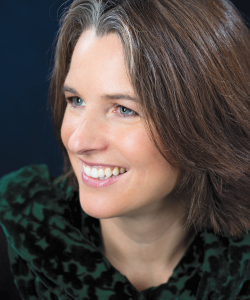
A writer discusses the impact of perceived literary success on her marriage to another writer, drawing attention to the domestic and quotidian labor behind the privilege of being able to pursue one’s creative dreams.
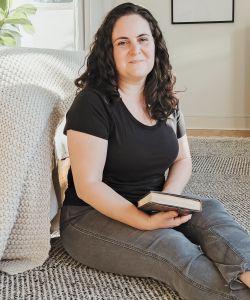
Writing a book is a daunting challenge—but the texts we know and love can help. A nonfiction writer describes how a methodically organized spreadsheet of favorite quotes aided her journey from proposal to finished memoir.
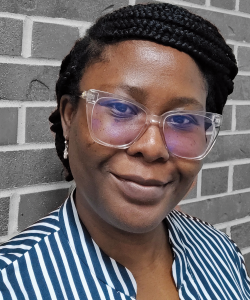
A Nigerian professor and fiction writer describes how a new place like Starkville, Mississippi, becomes a home and how the color, texture, and form of her surroundings make their way into her storytelling.

Write a poem that creates unexpected connections, a story from the point of view of someone older than you, or a pair of lyrical essays that explore your personal responses to losses and gains.

Artificial intelligence has irrevocably changed the paradigm of publishing. A journalist and editor speaks to agents about their thoughts on AI in a professional context, raising questions about contracts, rights, and the nature of art.
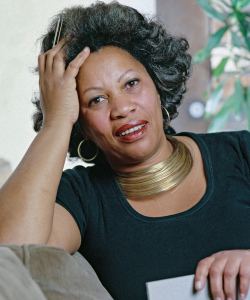
A new book examines Toni Morrison’s years as an editor at Random House and the complicated art of publishing books of poetry by Barbara Chase-Riboud, Lucille Clifton, and June Jordan.

Lauren Grodstein, David Heska Wanbli Weiden, Megan Kamalei Kakimoto, Honorée Fanonne Jeffers, and Jonathan Escoffery introduce five debut fiction authors: Sarah Yahm, Jon Hickey, Carrie R. Moore, Aaron John Curtis, and Jemimah Wei.

For decades, the International Writing Program in Iowa City facilitated transformative connections for its resident writers—but the loss of funding worth nearly a million dollars challenges staff and students to find ways to keep going.