



The Anthologist: A Compendium of Uncommon Collections

A roundup of new anthologies, including American Journal: Fifty Poems for Our Time, edited by Tracy K. Smith.
Tags:
Jump to navigation Skip to content
Articles from Poet & Writers Magazine include material from the print edition plus exclusive online-only material.
A roundup of new anthologies, including American Journal: Fifty Poems for Our Time, edited by Tracy K. Smith.

In her fifth collection, The Carrying, Ada Limón digs deep down to the roots of what she sees happening in the world today—and she is deeply troubled by what she finds.

A small press run by high school students in Pennsylvania publishes handmade books of poetry and prose.

The first lines of a dozen noteworthy books, including Lake Success by Gary Shteyngart and Perennial by Kelly Forsythe.

Sue Landers takes over as executive director of the nonprofit dedicated to LGBTQ writers.

With recent grant funding of $1.4 million, the National Book Foundation aims to reach more readers.

An agent answers questions on referrals, pitching a self-published book, and what to do if you’re dropped by an agency.

For an editor like Caroline Bleeke of Flatiron Books, there is a lot more to the job than simply reading and editing manuscripts.
A fiction writer breaks up with her novel and learns that sometimes it’s more important to follow your intuition than take advice.

Colorful illustrations accompany notes, quotes, and literary trivia about books to read and bookstores to visit.

A fiction writer discusses five journals that published stories from his debut collection, Friday Black.
“In a system that doesn’t value writing, but only the marketing possibility of the writer and the written object, to write is the ‘success’ itself.” —Jos Charles, author of feeld
“I don’t think beyond the book I’m writing, and I’m always writing one.” —Catherine Lacey, author of Certain American States

“I write every day and walk every day.” —Amitava Kumar, author of the novel Immigrant, Montana
The author of If You Leave Me focuses not on a character’s likability but rather on making that character feel true.

“I’ve gotten messages from people who tell me that they were waiting on a book like mine.” —Alexia Arthurs, author of the story collection How to Love a Jamaican

The pleasures and pitfalls of writing a novel with multiple perspectives.

“I’m coming to believe more and more that the whole body should be engaged in the writing process.”—Amy Bonnaffons, author of the debut story collection The Wrong Heaven

Brian Turner is best known for his award-winning poetry collections and memoir about the Iraq War, but with his new project he has pushed into an entirely new dimension of creative expression.
How does a writer tell a story set in another country during a time before she was even born? Research, research, research.

“You can almost always make something better by making it shorter.” —Keith Gessen, author of the novel A Terrible Country

The desire to tell stories is one thing; finding the stories you want to tell is something else entirely.
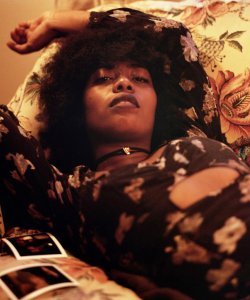
“Get in where you fit in, and where you don’t, break it.” —Jasmine Gibson, author of Don’t Let Them See Me Like This

A simple exercise to help lead you closer to the fiery core of your own, utterly unique, narrative style.

“Avoid the word ‘it’ whenever possible. Which is to say, specificity whenever possible.” —Lillian Li, author of the debut novel Number One Chinese Restaurant