Write! Look! Listen! is the creative writing reading series of the Merritt Writing Program (MWP) at the University of California in Merced. Since 2006, Write! Look! Listen! has featured readings and guest workshops with locally and nationally recognized poets, fiction writers, journalists, and nonfiction writers. The series features ethnically and aesthetically diverse readers in order to give students a sense of the full range and vibrancy of contemporary American writing. MWP faculty members organize, publicize, and host readings and workshops that are free and open to students, faculty, staff, and the public. Current principal organizers include: Andrea Mele, Susan Varnot, Dawn Trook, and Callie Kitchen. Contributors to this blog post include: Andrea Mele, Dawn Trook, and Paul Gibbons.
What makes your organization and its program unique?
Andrea Mele: The Merritt Writing Program at UC Merced includes composition courses, Writing in the Disciplines courses, and Writing Minor courses in Professional and Creative Writing. MWP faculty created the Write! Look! Listen! Series, as well as our undergraduate Creative Writing Conference and Collaboratorium, both of which are supported by the Writing Program, UC Merced’s Center for Humanities, and Poets & Writers’ grants.
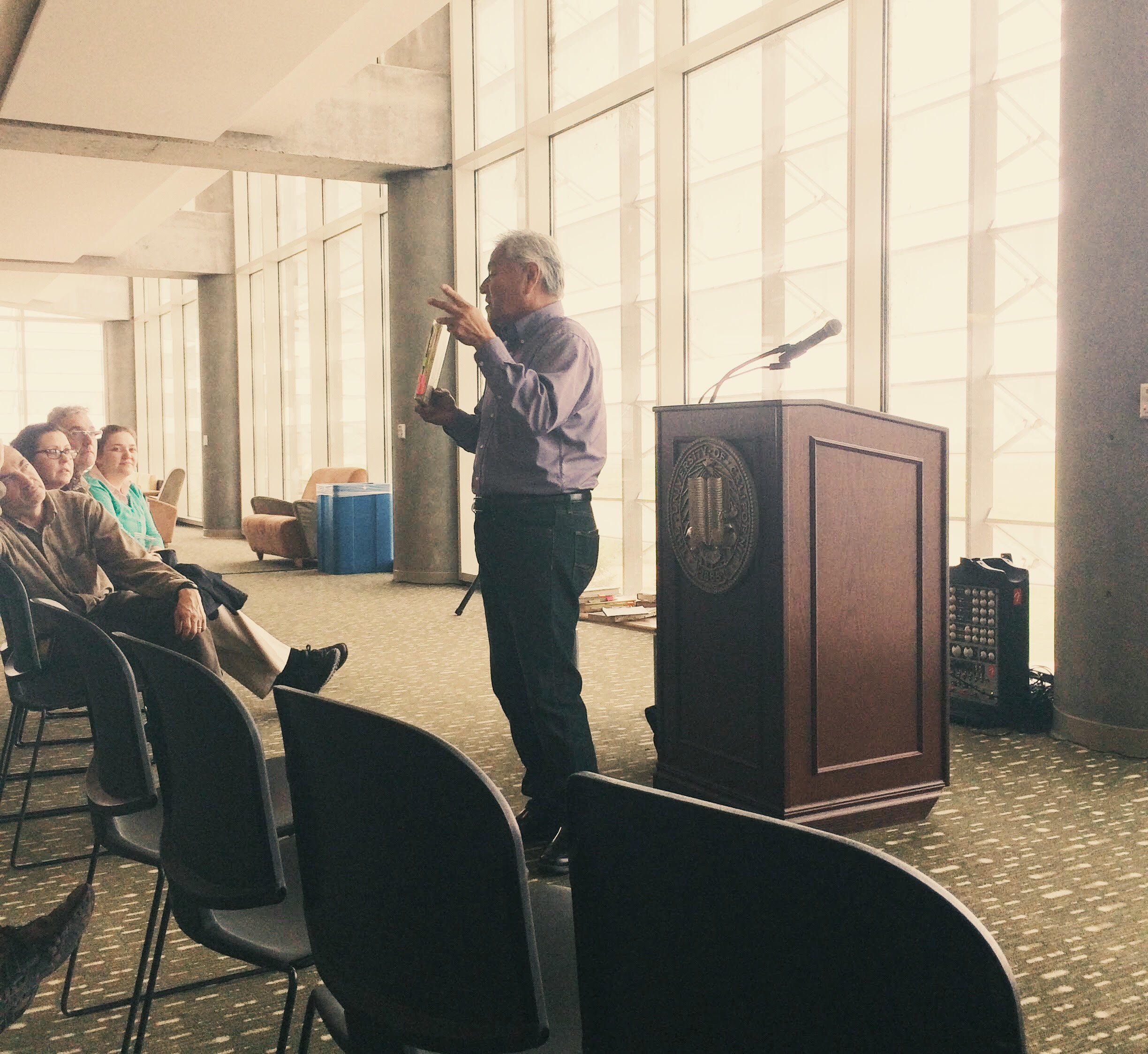 Write! Look! Listen! invites regionally-based writers of national acclaim to campus for readings and workshops. These readings and workshops are free and open to the public, and are well attended by students, faculty, and staff. WLL strives to bring writers of diverse genres and backgrounds who reflect the diversity of our own campus, and who will connect with students on both subject and craft levels. Attendees and participants often comment on the ways in which they can relate to the authors’ experiences, and how this motivates their own writing, confidence, and commitment to their craft. Recent guests include David Mas Masumoto, Steven Church, David Campos, Paula Treick DeBoard, Lawson Inada, and the Hmong American Writers Circle.
UC Merced’s Creative Writing Conference and Collaboratorium is a day-long event, which includes morning workshops, and afternoon participant and keynote readings. Students and faculty from UC Merced and nearby Merced and Modesto colleges come together for a day of collaboration—in teaching creative writing, composing it, revising, and sharing. The event generates excitement and inspiration pedagogically and creatively, and additionally reflects the Merritt Writing Program’s commitment to community engagement and diversity of educational and artistic experience. Keynote readers highlight the region’s diversity of authors and genres. Past readers include Lee Herrick (Fresno’s Poet Laureate), Soul Vang, Rachel Starnes, and Carole Firstman.
What recent project and/or program have you been especially proud of and why?
Dawn Trook: Whenever we bring the Hmong American Writers Circle to UC Merced, I feel very moved. These readings always bring out a diverse and large crowd, and it's exciting to celebrate a community whose native language didn't have a written form, so they are claiming their voices in new (and beautiful) ways.
What’s the craziest (or funniest or most moving or most memorable) thing that’s happened at an event you’ve hosted?
Trook: When Peter Orner connected to our students in his Q&A as if he was talking to a group of writers, talking to them like equals. It really empowered them and made them feel like they were a part of a writing community.
How do you cultivate an audience?
Trook: Facebook and word of mouth seem to be the best ways. Writing program faculty promote events in their classes, and publicize events on news and social media platforms.
 How has literary presenting informed your own writing and/or life?
Paul Gibbons: Coteaching for the Collaboratorium has taught me all over again how to take advantage of teachable moments and how to include students. Because you’re not teaching alone, the sessions can resemble the best panel discussions—where people are all trying to understand and engage in a dialectic that benefits everyone in the room. And then the panel dissolves to one focused discussion among us, writer to writer instead of teacher to students. We use that energy to write and revise and share. At the end of the day, these sessions make me want to write more and teach better—that’s the lift from the teaching in the Collaboratorium, the momentum you get for both writing and teaching.
Trook: In a town isolated from big cities, it's kept me connected to the larger writing community. It's always great to be able to support a writer's work by bringing them to speak and read.
What do you consider to be the value of literary programs for your community?
Trook: Opening students to a variety of styles, experiences, and cultural perspectives beyond the scope of our creative writing faculty is invaluable.
Mele: The Creative Writing Conference and Collaboratorium brings together students from Central Valley colleges and universities. We value our institutional relationships, and work to create a larger sense of community by hosting students and faculty from around the valley. We hope to invite more universities to participate in future conferences.
Photo (top): David "Mas" Masumoto. Photo credit: Andrea Mele.
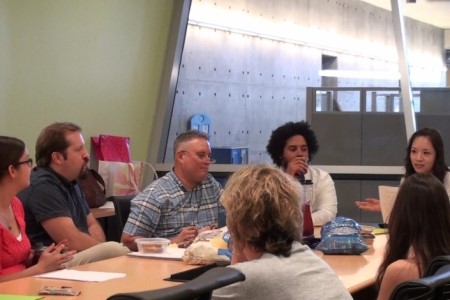
Photo (bottom): Fall Faculty Reading (left to right) Andrea Mele, Erik Habecker, Tom Hothem, Orisa Santiago Morrice, Yu-Han Chao, unknown, and Brigitte Bowers. Photo credit: Paul Gibbon.
Major support for Readings & Workshops in California is provided by the James Irvine Foundation and the Hearst Foundations. Additional support comes from the Friends of Poets & Writers.





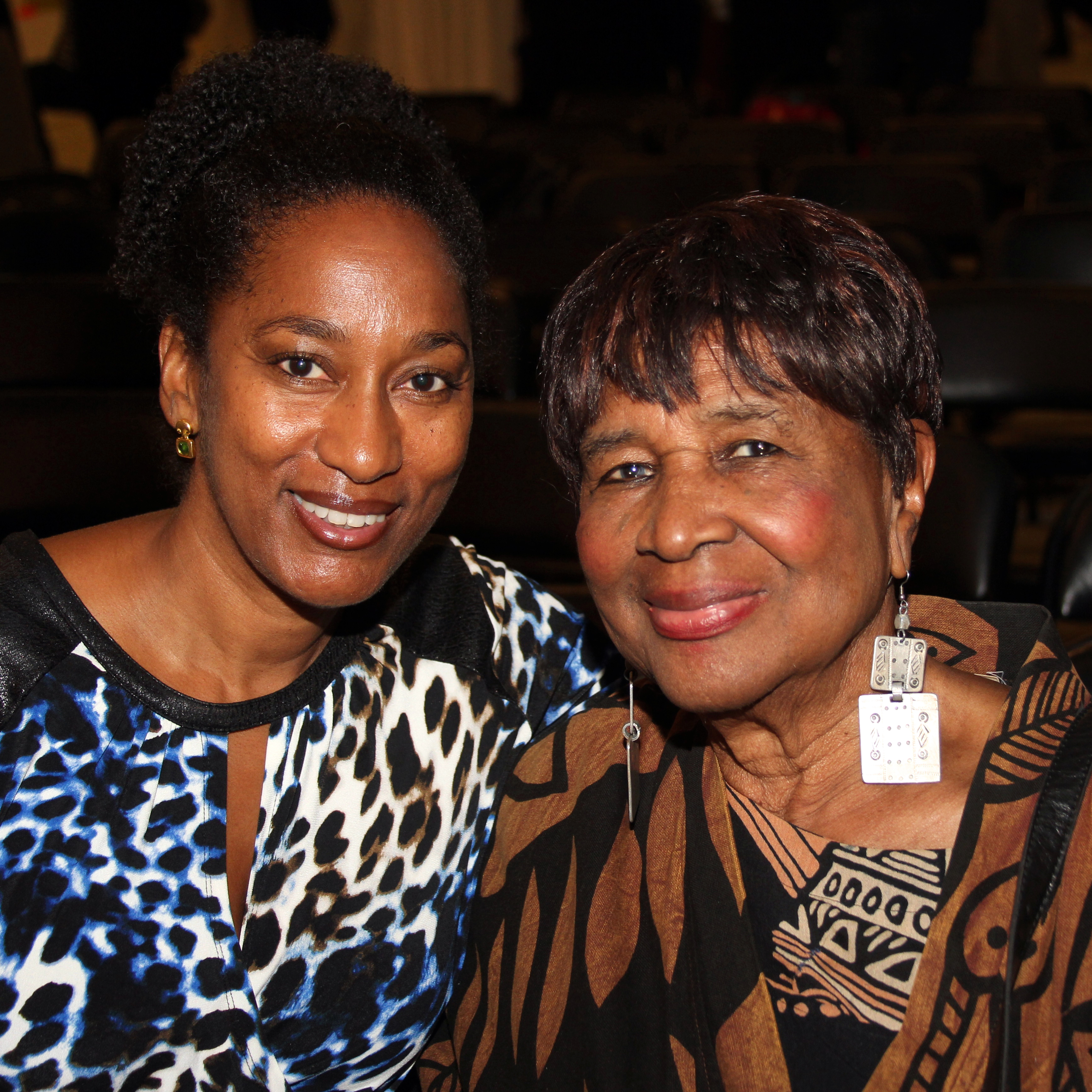 The new prize was founded in honor of novelist, essayist, journalist, and activist Louise Meriwether, age 93, who published her first novel, Daddy Was a Number Runner, in 1970. The book, about the life of a poor black family in the post–Harlem Renaissance era, was one of the first contemporary American novels to feature a young African American girl as the protagonist, and went on to inspire the careers of authors such Jacqueline Woodson and Bridgett M. Davis.