




Q&A: Philip Levine’s American Lyric

The late poet laureate Philip Levine spoke in early 2012 about his plans for the position and the range of influences on his work through the years.
Tags:
Jump to navigation Skip to content
Articles from Poet & Writers Magazine include material from the print edition plus exclusive online-only material.
The late poet laureate Philip Levine spoke in early 2012 about his plans for the position and the range of influences on his work through the years.
Administrators offer insight into the mystifying process of applying to a writing retreat by answering some common questions: How do residency juries weigh a work plan? Would your boss make a better reference than a former writing teacher? Is published or unpublished work more desirable in a writing sample?
Literary MagNet chronicles the start-ups and closures, successes and failures, anniversaries and accolades, changes of editorship and special issues—in short, the news and trends—of literary magazines. This issue’s MagNet features Digital Americana, Lumberyard, Sawmill, draft: a journal of process, and Poetry.
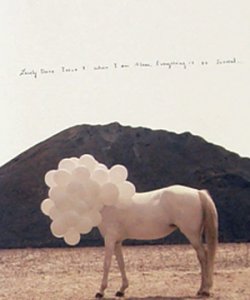
In this issue we offer a look at the first four issues of the limited-edition magazine Lovely Daze on display February 20 through March 14 in Millennium Magazine, an exhibition of artist-magazines at the Museum of Modern Art in New York City.
With so many good books being published every month, some literary titles worth exploring can get lost in the stacks. Page One offers the first lines of a dozen recently released books, including Esi Edugyan’s Half-Blood Blues and Adam Levin’s Hot Pink, as the starting point for a closer look at these new and noteworthy titles.
In the midst of the political protests that were escalating in Wisconsin last winter, three library science majors at the University of Wisconsin devised the Library as Incubator Project, a website for writers, artists, and librarians to share their creations and ideas in one collaborative space.
Small Press Points highlights the innovative and can-do spirit of independent presses. This issue features the new Sacramento-based Nouvella, publisher of “collectible, one-of-a-kind mementos that will become dearer and dearer as the authors career progresses.”
Thanks to the accessibility of new digital tools offered by booksellers such as Amazon and Barnes & Noble, self-publishing is loosing its stigma and holds new promise for writers venturing out on their own.
Immerse yourself in the music, films, art, and other points of inspiration that set off the spark for our twelve debut poets of 2011.

What creativity needs most of all is time for the mind to percolate, to mix old ideas together in new ways, and to find connections no one else has found. For this the mind must be left to itself.
After making a name for itself in independent-press circles with its stylish, smart books of fiction, children’s literature, and food writing, the fourteen-year-old San Francisco–based outfit McSweeney’s is starting its first poetry imprint.
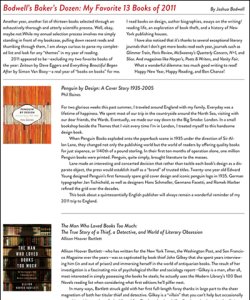
In the spirit of year-end best-of reading lists, we offer Joshua Bodwell’s Baker’s Dozen 2011 as a companion to his article “You Are What You Read: The Art of Inspired Reading Lists,” which appears in the January/February 2012 issue's special section on inspiration.

Geoffrey Bartholomew, poet and head bartender at McSorley’s Old Ale House, New York City’s famous saloon, reveals how he sold five thousand copies of his self-published poetry collection while pushing pints from behind the bar.
The Grub Street literary center has created a long-form fiction class that might offer a cure for the novel-writing anxiety that the traditionally story-centric MFA workshop isn’t equipped to resolve.
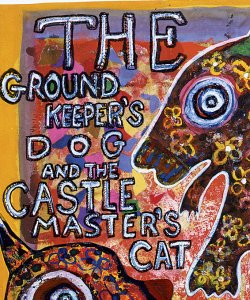
In this issue we offer a look at one of Kenneth Patchen’s “picture-poems,” currently on display in An Astonished Eye: The Art of Kenneth Patchen, the largest-ever exhibition of the genre-defying writer’s visual work, at the University of Rochester in New York.
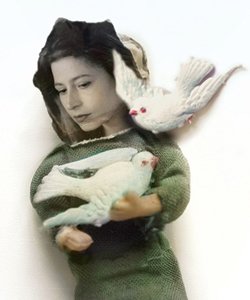
Polly Becker, a Boston-based artist who in her formative years was influenced stylistically by artists such as Edward Gorey, Alphonse Mucha, and Aubrey Beardsley, speaks about the assemblages she created for the cover and our special section on inspiration.

For nearly a century, the ampersand has been a key feature of certain strands of American poetry. To understand its history in the genre—and the role it plays for contemporary poets—one must return to the character’s origins.
With so many good books being published every month, some literary titles worth exploring can get lost in the stacks. Page One offers the first lines of a dozen recently released books, including Ben Marcus’s The Flame Alphabet and Amy Newman’s Dear Editor, as the starting point for a closer look at these new and noteworthy titles.
In this regular feature, we offer a few suggestions for podcasts, apps, web tools, newsletters, museum shows, and gallery openings: a medley of literary curiosities for readers and writers on a budget.
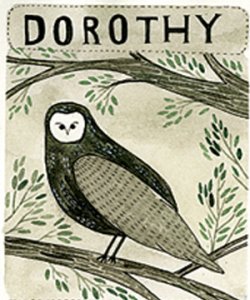
Small Press Points highlights the innovative and can-do spirit of independent presses. This issue features Dorothy, a publishing project, which aims to publish books “of slightly different aesthetic sensibilities but equal wonderfulness” written by women.
Literary MagNet chronicles the start-ups and closures, successes and failures, anniversaries and accolades, changes of editorship and special issues—in short, the news and trends—of literary magazines. This issue’s MagNet features New World Writing, Transition, Asymptote, the White Review, Granta, the Dark Horse, and Versal.
The newly launched Findings, an online community that lets users compile and contribute excerpts from books and websites, joins a growing number of digital endeavors that place a new emphasis on sharing while reading.

Having chronicled her husband’s sudden death in The Year of Magical Thinking, Joan Didion returns to the subject of loss in a new memoir, Blue Nights, about the subsequent passing of her daughter.
While other social networking sites are useful for playful community-building, LinkedIn provides a place for professional writers to focus on sincerity when creating connections.
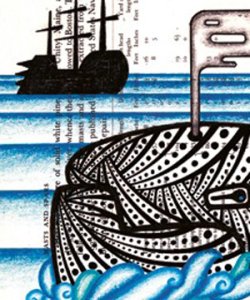
In this issue we offer a look at one of the 552 illustrations by Tim Kish, who created a picture a day for each page of Melville’s tome, featured in Moby-Dick in Pictures, published in October by Tin House Books.