




The Poetry Pilgrim Presses On
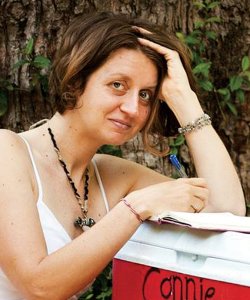
Poet Crystal Hoffman sets out on a pilgrimage across the country to write a collection of poetry and essays based on the narratives of people she meets along the way. And she’s doing it all on foot.
Tags:
Jump to navigation Skip to content
Articles from Poet & Writers Magazine include material from the print edition plus exclusive online-only material.
Poet Crystal Hoffman sets out on a pilgrimage across the country to write a collection of poetry and essays based on the narratives of people she meets along the way. And she’s doing it all on foot.

Pamela Paul, the new editor of the New York Times Book Review, discusses her job and the current climate of literary criticism.
Small Press Points highlights the innovation and can-do spirit of independent presses. This issue features Off the Grid Press, which publishes books exclusively by poets over the age of sixty.

The Newtowner, an arts and literary quarterly based in Newtown, Connecticut, published a tribute issue in an effort to help its hometown heal after the shooting at Sand Hook Elementary School.
With so many good books being published every month, some literary titles worth exploring can get lost in the stacks. Page One offers the first lines of a dozen recently released books, including David Gilbert's & Sons and Lindsay Hunter's Don't Kiss Me, as the starting point for a closer look at these new and noteworthy titles.
Read exclusive excerpts from the novels and story collections of debut fiction writers NoViolet Bulawayo, Bushra Rehman, Bill Cheng, Anton DiSclafani, and Chinelo Okparanta.
New online platforms like Hostr are bridging the gap between virtual and in-real-life communities.
Literary MagNet chronicles the start-ups and closures, successes and failures, anniversaries and accolades, changes of editorship and special issues—in short, the news and trends—of literary magazines in America. This issue's MagNet features MAKE: A Chicago Literary Magazine, Tin House, Bellevue Literary Review, and Harvard Review.
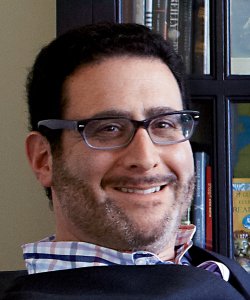
A heavy-hitting agent who for twenty-two years has represented some of the biggest literary writers in the country, Eric Simonoff discusses recent changes in the publishing industry, the pitfalls of self-publishing, and what he's learned about staying creative.
Authors who know how to give an inspired reading, on stage or at the front of the room, in front of an audience, can make connections that are just as moving, inspiring, and unforgettable as those established on the page.

One of the world's most beloved storytellers, Neil Gaiman talks about his novel The Ocean at the End of the Lane, young adult literature, writing comics, and how writers should (and should not) use Twitter.
New York City-based independent publisher New Directions recently relaunched its Poetry Pamphlets, a series originally published by founder James Laughlin in the 1940s.
With so many good books being published every month, some literary titles worth exploring can get lost in the stacks. Page One offers the first lines of a dozen recently released books, including Sophie Cabot Black's The Exchange and Brian Kimberling's Snapper, as the starting point for a closer look at these new and noteworthy titles.

Frank Bidart says a poet must use language that embodies the immediacy and intensity the poet feels, which may explain why his ninth collection, Metaphysical Dog, is his most intimate book yet.
The biennial Gift of Freedom Award, sponsored by the Placitas, New Mexico-based A Room of Her Own Foundation, transcends competition by acting as an agent for change in the lives of women writers.
Character calls forth writer. Writer calls forth reader. It seems straightforward—but is it? Novelist, filmmaker, and Zen Buddhist priest Ruth Ozeki explores the relationships embedded in every novel and work of fiction.
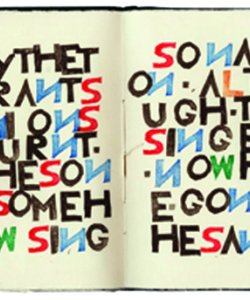
San Francisco poet Beau Beausoleil starts a book art project in honor of Baghdad's literary community affected by a 2007 car bombing.
As online book reviews and user-sourced suggestion models have become increasingly important to the bookselling industry, publishers are developing new digital platforms for reviews and recommendations.
Portland, Oregon-based Octopus Books and Tin House Books join forces to collaborate on a new poetry series that carves out a space for a new audience and invigorates the city's poetry community.
Literary MagNet chronicles the start-ups and closures, successes and failures, anniversaries and accolades, changes of editorship and special issues—in short, the news and trends—of literary magazines in America. This issue's MagNet features Mississippi Review, New Orleans Review, Booth, West Branch, and Pleiades.
Small Press Points highlights the innovation and can-do spirit of independent presses. This issue features Gazing Grain Press, an inclusive feminist press based in Fairfax, Virginia, that publishes one title each year as part of its annual poetry and hybrid-prose chapbook contest.
Reagan Arthur, the new publisher of Little, Brown, discusses her new role and the health of the company she now leads through these uncertain times in publishing.
With a total of more than $9 million, Poets & Writers Grants & Awards section saw an increase of more than $3 million from tens years earlier.

Literary agent Matt McGowan, who represents Eula Biss, John D’Agata, Brian Evenson, and many others, answers writers’ most commonly asked questions.

Fiction writer Aaron Hamburger got more than he bargained for when he signed up for a class in food writing. Instead of simply learning about a new genre, he also learned some valuable lessons about the one he'd been practicing for years.