



On Trauma and Knowing When You’re Ready to Write

Jehanne Dubrow offers advice to writers wondering whether they are ready to process traumatic experience on the page.
Tags:
Jump to navigation Skip to content
Articles from Poet & Writers Magazine include material from the print edition plus exclusive online-only material.
Jehanne Dubrow offers advice to writers wondering whether they are ready to process traumatic experience on the page.
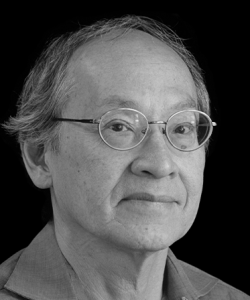
“Write one poem at a time and resist knowing where you are going.” —Arthur Sze, author of Into the Hush

Wherever you are on your personal journey as a writer, a stop at the home of a literary hero can be a revelation, inspiring and invigorating your writing in ways you might not expect.

The author of Spring, Summer, Asteroid, Bird (Norton, 2025) encourages writers to consider a deeper definition of diversity and embrace alternative storytelling styles and structures.

“I was playing, trying to make something I liked, something no one else had already made for me.” —Rachel Trousdale, author of Five-Paragraph Essay on the Body-Mind Problem

“Editing down is something I dread in the abstract because I know I can lose motivation easily. But this book has ingrained the lesson in me fully.” —Dennis E. Staples, author of Passing Through a Prairie Country

The author of Spring, Summer, Asteroid, Bird (Norton, 2025) recommends writers embrace circuitous storytelling structures, typical of nonwestern literature.

“The magic happens in the writing, on the page. That’s the high.” —Mariam Rahmani, author of Liquid: A Love Story

The author of Spring, Summer, Asteroid, Bird (Norton, 2025) encourages writers to introduce a surprising element more than halfway into their storytelling structure.
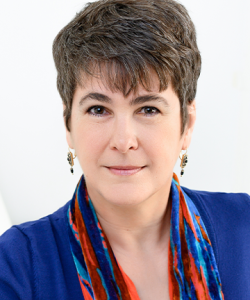
“This isn’t writer-stuff, it’s life-stuff that bears on the poems.” —Lesley Wheeler, author of Mycocosmic

“I had many beginnings and several endings, and I tried to arrange the poems in a way that might ask why that was.” —Austin Araujo, author of At the Park on the Edge of the Country

The transcription of Voca, an audiovisual archive of more than twelve thousand poetry recordings, makes literary history accessible to poets, critics, scholars, and the general public.

Originally an umbrella site for literary journals, this book publisher looks to the wider writing community for inspiration, camaraderie, and collaborators in the art that it makes and promotes.

The author of Joyriders highlights journals and platforms that have offered his short stories a home, including Alaska Quarterly Review and American Short Fiction.

In response to publishers turning to artificial intelligence as a tool to expedite or replace the work of human translators, publishers and translators question whether machine-led translation can truly supersede a human touch.

The first lines of a dozen noteworthy books, including The Figure Going Imaginary by Marianne Boruch and Marginlands: A Journey Into India’s Vanishing Landscapes by Arati Kumar-Rao.

In the aftermath of the September 2024 hurricane, the literary community has banded together to support North Carolina residents trying to rebuild their lives and has provided hope in the long recovery process.
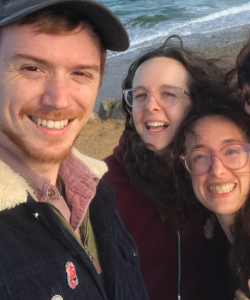
Tired of waiting for an acceptance? The ingredients for a magical retreat are readily available to all of us outside the strictures of a space someone else is hosting—and at the place, time, and budget of our choosing.
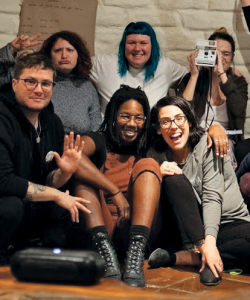
Gatherings like the Heart of It are part of a boom in writer-run retreats and workshops that serve as homegrown alternatives to established retreats, addressing a need for kinship, in-person community, and mentorship.

Residency programs at the homes of famous writers offer both the luxury of space and time to write and deep immersion into a literary hero’s everyday world, often providing newfound clarity and insight into ongoing work.
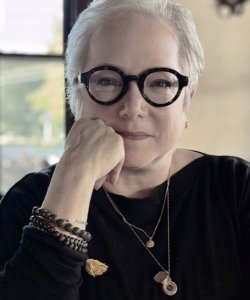
An excerpt from Permission: The New Memoirist and the Courage to Create by Elissa Altman, a compassionate, inspiring literary guide to transcend the fear and shame that can too often keep important stories from being written.

Karen Russell’s second novel, The Antidote, published by Knopf in March, examines a dark chapter of America’s past, but not without hope for the future.

Drawing strength from traditions of moving across the land, a poet describes the joy and presence of mind that driving brings. Without the constant pull of screens, the road opens up an ideal space for creation.
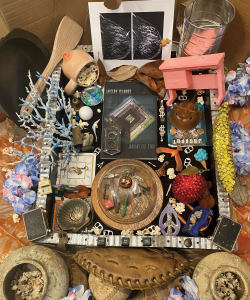
Flower Conroy’s elaborate three-dimensional installations, fashioned from found and crafted objects, masterfully evoke the spirit of each book the artist chooses and carefully communicate her reverence for literature.

Rosie Stewart, the new senior manager of public policy at Penguin Random House’s Intellectual Freedom Taskforce, shares some context for her new role, advice for those who want to get involved, and her hope for the future.