


3 for Free
In this regular feature, we offer a few suggestions for podcasts, apps, web tools, newsletters, museum shows, and gallery openings: a medley of literary curiosities for readers and writers on a budget.
Tags:
Jump to navigation Skip to content
Articles from Poet & Writers Magazine include material from the print edition plus exclusive online-only material.
In this regular feature, we offer a few suggestions for podcasts, apps, web tools, newsletters, museum shows, and gallery openings: a medley of literary curiosities for readers and writers on a budget.
The newly launched Findings, an online community that lets users compile and contribute excerpts from books and websites, joins a growing number of digital endeavors that place a new emphasis on sharing while reading.
Literary MagNet chronicles the start-ups and closures, successes and failures, anniversaries and accolades, changes of editorship and special issues—in short, the news and trends—of literary magazines. This issue’s MagNet features New World Writing, Transition, Asymptote, the White Review, Granta, the Dark Horse, and Versal.

Polly Becker, a Boston-based artist who in her formative years was influenced stylistically by artists such as Edward Gorey, Alphonse Mucha, and Aubrey Beardsley, speaks about the assemblages she created for the cover and our special section on inspiration.
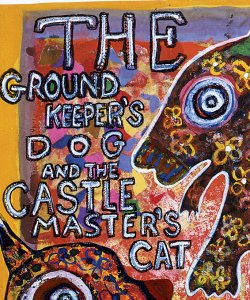
In this issue we offer a look at one of Kenneth Patchen’s “picture-poems,” currently on display in An Astonished Eye: The Art of Kenneth Patchen, the largest-ever exhibition of the genre-defying writer’s visual work, at the University of Rochester in New York.
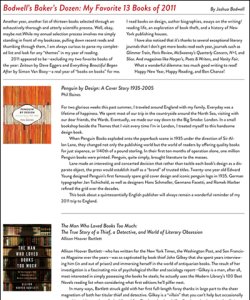
In the spirit of year-end best-of reading lists, we offer Joshua Bodwell’s Baker’s Dozen 2011 as a companion to his article “You Are What You Read: The Art of Inspired Reading Lists,” which appears in the January/February 2012 issue's special section on inspiration.
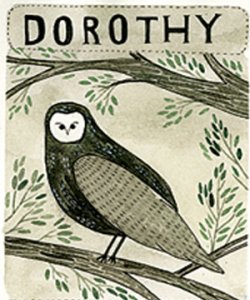
Small Press Points highlights the innovative and can-do spirit of independent presses. This issue features Dorothy, a publishing project, which aims to publish books “of slightly different aesthetic sensibilities but equal wonderfulness” written by women.
The Grub Street literary center has created a long-form fiction class that might offer a cure for the novel-writing anxiety that the traditionally story-centric MFA workshop isn’t equipped to resolve.

What creativity needs most of all is time for the mind to percolate, to mix old ideas together in new ways, and to find connections no one else has found. For this the mind must be left to itself.

Having chronicled her husband’s sudden death in The Year of Magical Thinking, Joan Didion returns to the subject of loss in a new memoir, Blue Nights, about the subsequent passing of her daughter.
Small Press Points highlights the happenings of the small press players. This issue features Exterminating Angel Press, the six-year-old independent book publisher with a big mission: to challenge the received cultural narrative.
With so many good books being published every month, some literary titles worth exploring can get lost in the stacks. Page One offers the first lines of a dozen recently released books, including Aracelis Girmay’s Kingdom Animalia, and Tomaž Šalamun’s The Blue Tower, as the starting point for a closer look at these new and noteworthy titles.
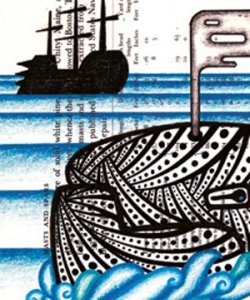
In this issue we offer a look at one of the 552 illustrations by Tim Kish, who created a picture a day for each page of Melville’s tome, featured in Moby-Dick in Pictures, published in October by Tin House Books.
Despite the average wired American’s tendency to downsize their character counts, the page counts of newly published books of translated fiction show that the rest of the global literary community may be beefing up.
CantoMundo, a burgeoning Latino poets workshop in its second year, has become the third organization to make up an unofficial triad aimed at nurturing the work of American poets of color.

Artist Colin McMullan, founder of the Kindness and Imagination Development Society, has found one way to take the act of sharing that’s become so popular with social media outside the electronic box and into the physical world with his Corner Library project.
Literary MagNet chronicles the start-ups and closures, successes and failures, anniversaries and accolades, changes of editorship and special issues—in short, the news and trends—of literary magazines in America. This issue’s MagNet features Memoir (and), Harvard Review, Huizache, the Coffin Factory, Monday Night, and Ploughshares.

While working on his fourth issue as editor of Poetry Northwest, Kevin Craft, who succeeded David Biespiel in January 2010, discussed the importance of community, as well as a measured approach to editing, to the magazine’s success.
While U.S. publishers continue their cautious march into the digitization of American titles, the rest of the world is looking to take advantage of other burgeoning markets in Europe, Japan, and beyond.
While other social networking sites are useful for playful community-building, LinkedIn provides a place for professional writers to focus on sincerity when creating connections.

Sam Savage wrote for decades and eventually gave up completely before his debut novel was published when he was sixty-five. Now he’s an international best-selling author with a third novel, Glass, published by Coffee House Press, and one simple message for all of us: Art can save you.

Newly settled into her position as editor of the Mary Burritt Christiansen Poetry Series at the University of New Mexico Press, Hilda Raz spoke about her hopes for the series.
We’ve compiled this annual guide to graduate creative writing programs—which includes our rankings of the top full- and low-residency MFA programs (with honorable mentions) and, new to this year, doctoral programs—to provide a spark for the deep thinking and serious consideration that the process of choosing a program requires.
Attorney, poet, editor, and freelance journalist Seth Abramson explains the methodology used to compile the Poets & Writers Magazine 2012 rankings of postgraduate creative writing programs.
Despite the recent collapse of book review sections in newspapers and magazines, the form is still thriving across a variety of venues, from web-savvy publications to local papers.