Telling the Truth Slant: Assuming Different Characters

The author of Mock Heart: New & Selected Poems (Knopf, 2026) encourages poets to embrace fictional speakers in their work.
Tags:
Jump to navigation Skip to content
The author of Mock Heart: New & Selected Poems (Knopf, 2026) encourages poets to embrace fictional speakers in their work.
In this virtual reading and conversation, Poets & Writers Magazine senior editor India Lena González introduces the five debut authors featured in “The New Nonfiction 2026” in the September/October 2026 issue: Nita Noveno, Phill Branch, Megan O’Grady, Joseph Trinidad, and Elena Dudum.
In a 1988 issue of the Yale Review, an essay titled “Making Contact: Encounters With Readers” by Annie Dillard, who passed away earlier this month, consists of a series of short segments recalling the letters, notes, and items she had received from readers who felt compelled to write to her. Dillard recounts readers who sent her missives about their lives, short stories they had written, existential questions, religious objects, medical journal articles, a marriage proposal, pamphlets about God, dead insects, and numerous bits of ephemera. Taking inspiration from this form, think about memorable things that you have received in the mail or in person over the years. Compose a chronicle of people who have given you these letters or objects, and write short reflections that explore both the content and the context of these interactions. How might the collection reveal something about the role you play in others’ existences?
Watch the trailer for the new film adaptation of Jane Austen’s Sense and Sensibility, directed by Georgia Oakley and starring Daisy Edgar-Jones, Esmé Creed-Miles, Caitríona Balfe, George MacKay, and Fiona Shaw.
As part of the marketing campaign for the recent sci-fi thriller film The Last House, in which a family must figure out how to survive after being sealed inside their home due to a mysterious menace taking over the outside world, Netflix constructed a tiny living space inside an advertising billboard thirty feet above Sunset Boulevard in Los Angeles where an actor was “trapped” inside for several days. The stunt attracted passersby who interacted with the actor and visited him daily. Write a short story that revolves around the deployment of a publicity stunt connected to a storyline for a new film, book, or amusement park ride. You might decide to take the point of view of a confused onlooker or the performer within the stunt. Allow yourself to play around with layers of artifice and performance, and mix the real with the surreal.

“The swallows screech at dawn / Birds which day from night divide // We are quick shuttles / Weaving the blurred thread of mystery // Dusk is our element / Brushing the edge of a moment,” writes Blaže Koneski in his poem “Swallows,” translated from the Macedonian by Kristian Josifoski and published in the May 2026 issue of Poetry magazine. Swallows have long been known for their close relationship to humans—the way they build their nests on the sides of buildings and bridges, their anticipated annual migrations as harbingers of spring and autumn, and as a symbol of resilience for sailors through long journeys and homecomings. Write a poem that draws upon the physical traits and behavior of swallows, or another common bird, weaving in symbolism and connections to your own relationship to the natural progression and patterns of passing time.
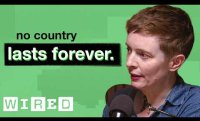
In this WIRED interview with Katie Drummond, Emily St. John Mandel discusses how the current political climate in America informed the speculative catastrophe in her latest novel, Exit Party (Knopf, 2026), and shares how she connects her novels in what the New Yorker calls the “Mandel Cinematic Universe.”
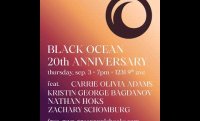
In this Green Apple Books event, Black Ocean, a nonprofit independent publisher based in Boston and Chicago, celebrates its twentieth anniversary with readings from authors Carrie Olivia Adams, Kristin George Bagdanov, Nathan Hoks, and Zachary Schomburg.
What books do you turn to when you need a bit of consolation? Comfort reads are books that readers return to again and again; knowledge of the trajectory of the story providing a bit of a warm and fuzzy feeling and relief from stress or melancholy. Whether you’re feeling downtrodden because of a dreary time of year, a recent crisis, an illness, or general distress, a comfort read—even if just reading a few pages or excerpts—is liable to restore cheer from its well-worn familiarity. Write a personal essay about some of your favorite comfort reads, whether novels, poetry collections, memoirs, graphic novels, or even children’s picture books. Recount your earliest reading of the book and other times when you have turned to it again. Even if you have found different things to value in subsequent readings, what are the reliable elements that continue to provide an uplifting feeling?

![SENSE AND SENSIBILITY - Official Trailer [HD] - Only In Theaters October 16](https://www.pw.org/files/styles/video_thumb_medium/public/media-oembed/i.ytimg.com/vi/mcrwcvad84U/hqdefault.jpg?itok=HZagmVOc)