chaun webster

“go outside. if it is warm enough, take the okra seeds from the water—their husks just softened—and put them in the soil.
Jump to navigation Skip to content
“Summer grass aches and whispers. // It wants something; it calls and sings; it pours / out wishes to the overhead stars.” In Carl Sandburg’s three-stanza poem “Summer Grass,” originally published in his 1928 collection Good Morning, America, the poet explores sentiments of longing and transition, capturing the spiky heat and dryness of summer through a personification of grass straining for cool, nourishing hydration, and then the deliverance of rain. As summer slowly transitions into autumn, compose a series of short poems that manifest both the physical sensations and the emotional elements you might associate with two consecutive seasons, moving from one to the other. How can you play with rhythm and line breaks, sound and space, to express movement and energy?

“As soon as I stopped worrying about what others would think and wrote how I wanted, it seemed to come a little easier.” —Amanda Peters, author of The Birthing Tree
In this episode of the Reclaiming With Monica Lewinsky podcast, Chang-rae Lee talks about his latest novel, A Tender Age (Riverhead Books, 2026), his choice to leave a career in finance in order to become a writer, and his experience writing the screenplay for the film adaptation of C Pam Zhang’s novel How Much of These Hills Is Gold, directed by Ang Lee.
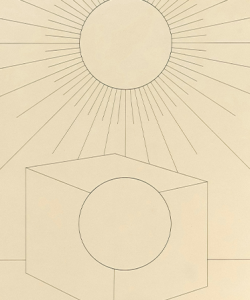
The author of The Man in 119 (Copper Canyon Press, 2026) reflects on erasure and encouragers writers to experiment with the form.
In this video, Joe Wilkins presents “Language, Memory, and Story” for the 2022 Wallace Stegner Lecture hosted by the Lewis-Clark State College in Lewiston, Idaho. Wilkins, author of Every Sky at Home: Essays on Landscape and Family (Bison Books, 2026), is featured in “Literary MagNet” in the September/October 2026 issue of Poets & Writers Magazine.
In Amy Gallo’s essay, “Forever Faithful to a Single Story: An Ode to Monogamous Writing,” published on Literary Hub, the author writes about her decades-long commitment to a single manuscript and how she adamantly avoided juggling multiple writing projects in the process of publishing her first book. “I couldn’t move on because I was still spoken for, I suppose, my consciousness occupied by the single story closest to my heart,” writes Gallo. Write a personal essay reflecting on your commitment to an essay or manuscript you’ve been working on. Do you tend to focus on one project at a time or do you enjoy taking breaks with something new?
In “What Scientists Learned By Eavesdropping on Thousands of People,” an essay recently published in the New Yorker, Shayla Love reports that people are speaking fewer and fewer words, citing a study published earlier this year that found, on average, people speak about three hundred fewer words a day than in years past. Write a short story set in the near future in which people rarely speak aloud to one another. Consider which thoughts or emotions become difficult or impossible to express when spoken language becomes a rarity. How do those lost conversations affect your characters and reshape societal values? Has verbal communication been supplanted by another kind of discourse?
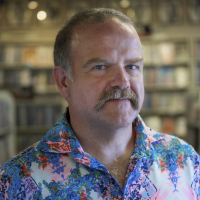
In this PBS NewsHour interview, Fred de Sam Lazaro speaks with Daniel Umemezie, who has been named the tenth National Youth Poet Laureate, about how he aims to use his work to inspire social change. Umemezie is featured in a Q&A by Rigoberto González in the September/October 2026 issue of Poets & Writers Magazine.