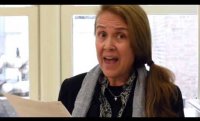
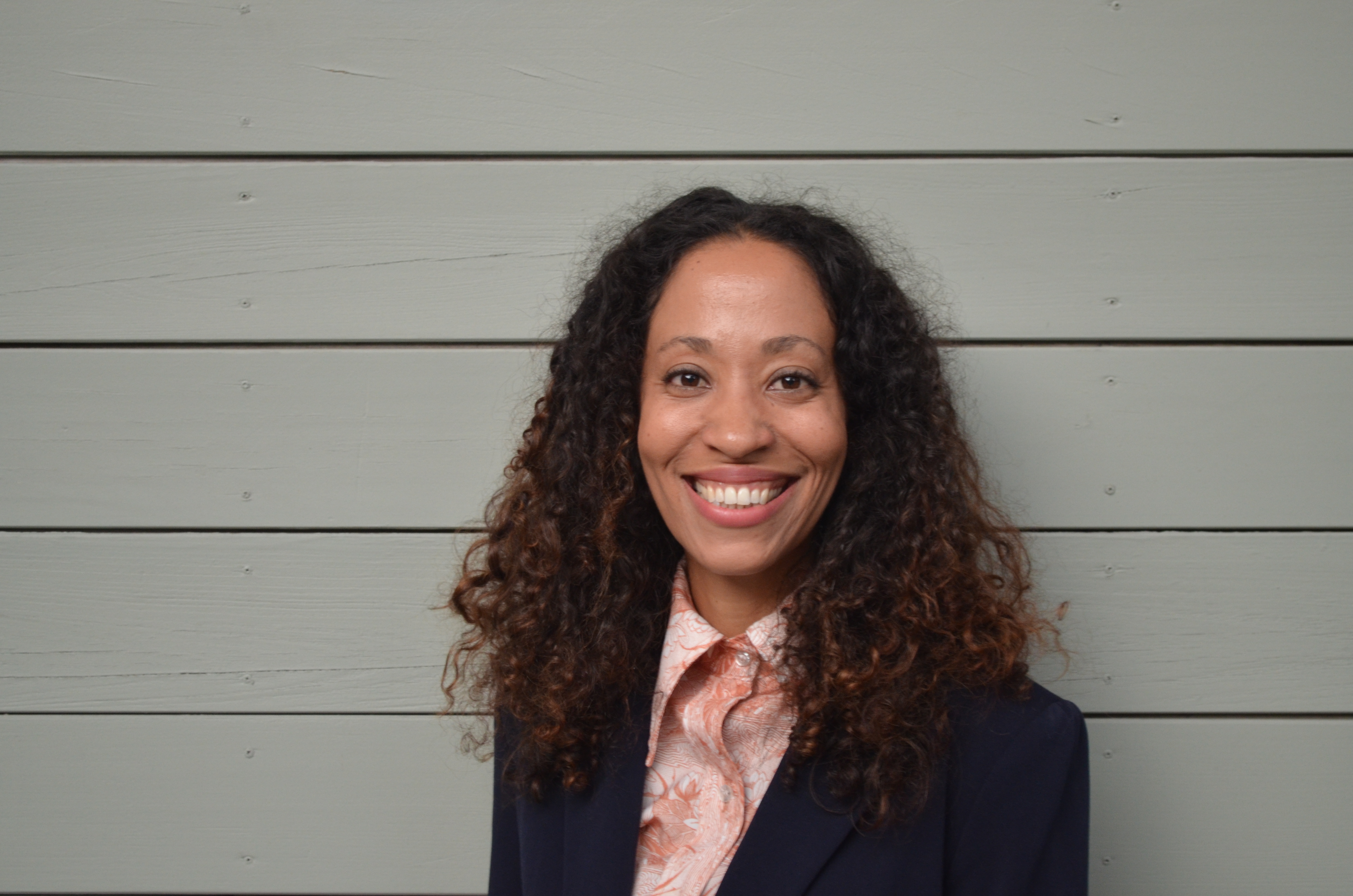
Adrienne Perry serves as the current editor of Gulf Coast, is a Kimbilio Fellow, and a member of the Rabble Collective. She earned her MFA from the Warren Wilson Program for Writers and is a PhD candidate in Literature and Creative Writing at the University of Houston. Perry's work has appeared or is forthcoming from Copper Nickel, Tidal Basin Review, the Journal of Creative Writing Studies, and Indiana Review.
 What makes your organization (press, series, etc.) and its program(s) unique?
Houston, Texas is fortunate to have a vibrant literary community and Gulf Coast hosts just one of its several popular reading series. Over the last few years, the Gulf Coast Reading Series has welcomed to the same stage authors in the Creative Writing Program at the University of Houston, and authors who live and work outside of the Bayou City. At any given reading, we offer a mix of poets and prose writers, some of whom are up-and-coming and others who are—like Jamaal May, Caitlin Horrocks, Wayne Miller, and Wendy Walters—established in their careers. A Gulf Coast reading may take place on the shadowy second floor of Rudyard’s British Pub or among the brightly lined shelves at Brazos Bookstore. Parts of the reading may be in Old English or in Korean. Either way, these readings are entirely student-run and they are fierce. As the only nationally distributed journal of literature and fine art in Houston, we feel a need to make each reading worth folks’ while.
What recent project and/or program have you been especially proud of and why?
Most recently, Gulf Coast partnered with the Failure to Identify Series and Project Row Houses to bring 2015 National Book Award winner Robin Coste Lewis to the Eldorado Ballroom. We’re proud of this reading not simply because it was an honor to have Robin reading beneath the Gulf Coast, Project Row Houses, and Failure to Identify banners, but because we are eager to pair up with other arts and cultural organizations in Houston to produce exceptional programing. People still remember Caitlin Horrocks’s reading from her story “Mermaid and Knife,” and we know people will remember Robin’s reading for a long time, too.
What’s the craziest (or funniest or most moving or most memorable) thing that’s happened at an event you’ve hosted?
This question brings out my inner drama queen. Recalcitrant audiovisual devices, late speakers, readers who hijack the microphone, albeit in a well-meaning way—but all of the ups and downs have actually been run of the mill. That said, during a reading at the Houston Printing Museum, the artist Chitra Ganesh was talking about the virtues of Choose Your Own Adventure books when the sky opened up and rain pounded onto the roof, interrupting her for several minutes. Or, maybe it was when one of our fiction editors, Dino Enrique Piacentini, brought his own prop—a little red Dirt Devil vacuum—to a surrealist-themed reading at the Poison Girl Bar.
How do you cultivate an audience?
This is such a good question and I think this is something we still work on. Because we want to both cultivate an audience and at the same time serve those folks who’ve been devoted to us across time. Cultivating an audience is about making sure that our programming doesn’t just speak to one kind of people. We’re conscious of trying to mix up poets and prose writers, include and acknowledge different identities, aesthetics; and our reading series curators, Martin Rock and Erika Jo Brown have been phenomenal at this. Our events are free, but that doesn’t mean we should be nonchalant about the fact that busy people have taken time out of their day to give a nod to art, to beauty. There’s a kind of responsibility in that. We’ve also learned to stop going it alone. When we pair up with others, our programs are inevitably richer.
What do you consider to be the value of literary programs for your community?
Houstonians love literature in a deliciously unpretentious way. Houston comes out to hear writers who bring them pleasure. We don’t stop enough to consider the vulnerability and pleasure that comes from seeing someone read their work. It’s more than self-expression; it concerns a different way of hearing and seeing and, most importantly, reading.
Photo: Adrienne Perry Photo credit: Lesli Vollrath
Support for Readings & Workshops events in Houston, Texas is provided by an endowment established with generous contributions from the Poets & Writers Board of Directors and others. Additional support comes from the Friends of Poets & Writers.