Adam Johnson Takes Home Story Prize

At a ceremony Wednesday night in New York City, Adam Johnson was named the  winner of the 2016 Story Prize for his collection Fortune Smiles (Random House). The $20,000 award is given annually for a short story collection published during the previous year.
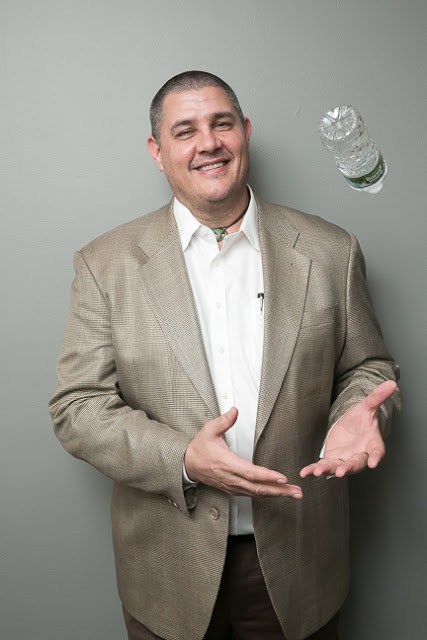
The two runners-up for the prize were Charles Baxter for There’s Something I Want You to Do (Pantheon) and Colum McCann for Thirteen Ways of Looking (Random House). Each finalist received $5,000. The Story Prize Spotlight Award—an additional prize of $1,000, given for a collection of exceptional merit—went to Adrian Tomine for his collection of graphic short stories, Killing and Dying (Drawn & Quarterly). During Wednesday night’s event, all three finalists read from and discussed their work on stage with prize director Larry Dark.

Last November Fortune Smiles took home the National Book Award, which makes Johnson the first author to win the Story Prize and the National Book Award for the same title. He is also now the first author to have won the Story Prize, the National Book Award, and the Pulitzer Prize, which he received in 2013 for his novel The Orphan Master’s Son. Johnson is also the author of the story collection Emporium and the novel Parasites Like Us. He has received a Guggenheim Fellowship, a Whiting Award, a National Endowment for the Arts Fellowship, and a California Book Award, among other accolades. He lives in San Francisco and teaches creative writing at Stanford University.

Dark and Story Prize founder Julie Lindsey selected the three finalists from among a hundred books submitted in 2015, from sixty-four different publishers. A panel of three judges selected the winner: author and previous Story Prize–winner Anthony Doerr; Rita Meade, a librarian at the Brooklyn Public Library; and New Yorker staff writer Kathryn Schulz.

“Fortune Smiles is an electrically imaginative story collection that’s wrestling very hard with the world we’re living in right now,” the judges said. “Johnson writes like Rembrandt painted, richly and specifically, with an inclination toward self-portrait and a gift for making it seem like a whole world carries on not only within but beyond each of these small canvasses.”

Established in 2004 to honor collections of short fiction and to attract more attention to the form, the Story Prize boasts the largest first-prize amount of any fiction award in the United States. Previous winners include Elizabeth McCracken, George Saunders, Claire Vaye Watkins, and Steven Millhauser.

Photo credit: Beowulf Sheehan
Belinda McKeon

Caption: 

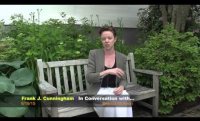
"You have to research the type of people your characters are—you're getting to know them, and you're also discovering the contours of their stories....​"​ Belinda McKeon, author of the novel Tender (Lee Boudreaux Books, 2016), talks to Frank J. Cunningham about her writing background and process at the 2015 Nantucket Book Festival.

Genre: 

Residential Library

“A Book Sanctuary in the Rockies” by Andrew McFadyen-Ketchum in the March/April issue of Poets & Writers Magazine details the project of Jeff Lee and Ann Martin to create a network of three residential libraries, which will be home to tens of thousands of books and will host writers- and artists-in-residence. The libraries will be located in the Rocky Mountain region in and around Denver, Colorado with many of the books, projects, and community partners focused on land, environment, and the West. Write an essay about what your vision of a residential library would be if you were to create one. What might your theme or focus be, and your inspiration? What rural, urban, or suburban space would you want to offer to writers-in-residence at your library?

The Art of Perspective: Who Tells the Story

by
Author: 
Christopher Castellani
Published in 2016
by Graywolf Press

"There is no more important decision the writer makes than who tells the story because, whoever that narrator is, he will compel us to tell it his way..." writes Christopher Castellani in the newest book in Graywolf's "Art of" series. The award-winning novelist and artistic director of GrubStreet examines and analyzes the ways in which writers such as E. M. Forster, Zoë Heller, Mustafa Sa'eed, and Virginia Woolf have effectively used and manipulated narrative point of view in their stories.

And the Award Goes to...

The Academy Awards, National Book Awards, James Beard Awards, Grammy Awards, Nobel Prizes, and Super Bowl MVP Awards all recognize and celebrate the achievements of their recipients annually with great fanfare. Write a short story that begins with the main character winning a major award. Describe the award, real or imagined, and whether there is an accompanying prize in addition to the honor and acclaim. Does your character prove to be camera-shy or fame-hungry? Does the award ultimately change her circumstances for better or for worse? Are there surprising consequences?

Windham Campbell Prize Winners Announced

The recipients of the 2016 Windham Campbell Prizes for Literature have been announced. Administered by Yale’s Beinecke Rare Book & Manuscript Library, the annual awards are given to English-language writers of fiction, nonfiction, and drama for outstanding literary achievement or great potential. Each writer receives $150,000.

The winners in fiction are Tessa Hadley (U.K.), C. E. Morgan (U.S.), and Jerry Pinto (India); the winners in nonfiction are Hilton Als (U.S.), Stanley Crouch (U.S.), and Helen Garner (Australia); and the winners in drama are Branden Jacobs-Jenkins (U.S.), Hannah Moscovitch (Canada), and Abbie Spallen (Ireland).

The Windham Campbell Prizes were established in 2013 by Donald Windham and Sandy M. Campbell to “call attention to literary achievement and provide writers with the opportunity to focus on their work independent of financial concerns.” The prizes are open to writers from anywhere in the world at all stages of their careers. There is no application process for the prize; the awards are made by a group of nominators, a three-member jury in each category, and a nine-member selection committee. Past winners have included Teju Cole, Geoff Dyer, John Jeremiah Sullivan, James Salter, and Naomi Wallace. The 2017 prizes will expand to include a poetry category.

The winners will receive their prizes during an international literary festival at Yale in September celebrating their work. All festival events are free and open to the public. For more information about the prizes and the 2016 winners, visit the Windham Campbell Prizes website.

Below, watch 2016 nonfiction winner Hilton Als deliver the keynote lecture at last year's Windham Campbell Prizes Festival.

Hilton Als' 2015 Windham-Campbell Lecture from Windham Campbell Prizes on Vimeo.

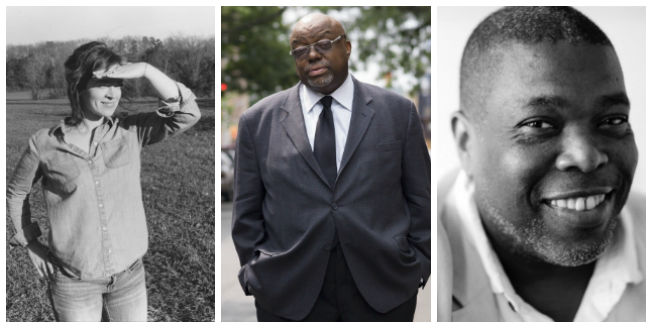
Photos: C. E. Morgan, Stanley Crouch, Hilton Als.

Pages

Subscribe to Poets & Writers RSS