Stanley Crouch

Caption: 

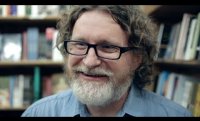
"He always had very intense intellectual pursuits in his personality...today people don't really realize that truly sophisticated artists thought a lot." Novelist and poet Stanley Crouch, a recipient of the 2016 Windham-Campbell Prize for Nonfiction, talks about Charlie Parker, the subject of his most recent book, Kansas City Lightning: The Rise and Times of Charlie Parker (Harper, 2013), the first in a planned two-volume series.

Listen Up

3.10.16

In an essay published in the New Yorker in 2011, Jhumpa Lahiri wrote, "Being a writer means taking the leap from listening to saying, 'Listen to me.'" Jot down a list of several personal beliefs, contemporary topics, or ideas that you feel an especially strong need to express volubly—from the personal to the political, the spectacular to the mundane, the all-encompassing to the minute. Write a personal essay about one of these issues, reflecting on how you arrived at your opinions by first discussing the idea with other people and listening to what they had to say, and then making your own, more specific conclusions. Provide anecdotes from conversations, events, situations, or words you have read or overheard. Make sure that your unique personality and voice are showcased in what you've decided is worthy of being shouted from the rooftops.

Brian Evenson

Caption: 

"The world is always a little bit slippery and strange, and what we think of as real is something that's always contingent in some way." Brian Evenson, author of the story collection A Collapse of Horses (Coffee House Press, 2016), talks about dreams, truth versus fiction, the strangeness of horses, and psychoanalysis before a reading at Skylight Books in Los Angeles.

Genre: 

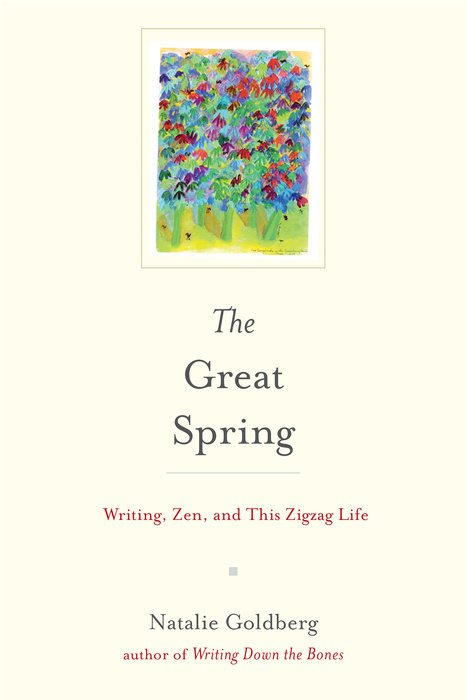
The Great Spring: Writing, Zen, and This Zigzag Life

by
Author: 
Natalie Goldberg
Published in 2016
by Shambhala

From the author of the quintessential writers handbook Writing Down the Bones: Freeing the Writer Within—a thirtieth-anniversary edition of which was also published by Shambhala in February—comes a collection of twenty-two essays about what it takes to have a long writing life. The "great spring" of the title refers to "the great rush of energy that arrives when you think no life will ever come again." Drawing from decades of writing, teaching, and practicing Zen, Goldberg shares the experiences through which she found herself and her voice.

Short Story Vending Machine

Toward the end of last year, French publisher Short Édition unveiled short story vending machines in eight public places around the city of Grenoble in southeastern France. Users can choose either one, three, or five minutes' worth of fiction to read—ideal for waiting or commuting—and one of six hundred community-submitted stories is dispensed for free from the cylindrical orange vending machine on receiptlike paper. Try your hand at writing a short story that can be read in one minute; then write a three-minute story; and finally a five-minute story. How does manipulating diction, tone, and style make sense for different story lengths? Explore the use of dialogue and a limited number of characters necessary to accommodate the restricted length.

A New Color

Visual artists who have been productive over long stretches of time often develop certain periods of work with shared characteristics, such as similar color palettes. For example, Paul Cézanne and Henri Matisse both had dark periods, Pablo Picasso had his blue and rose periods, and Victor Vasarely had a black-and-white period. As we begin to think about the year's transition from winter to spring, bringing along with it seasonal changes in light and sound, consider embarking on a new period of your own work. Write a series of short poems inspired by your observations of the different colors, moods, and scenery around you that signal the forthcoming spring season. To begin a green period, for example, what might be your key points of inspiration, in terms of imagery and vocabulary?

Matthew Salesses

Caption: 

"I liked that ending and I held onto it through draft after draft.... You know we talk about 'kill your darlings' a lot as writers but this was one darling that I wanted to hold on to, and I knew that it was the right thing." Matthew Salesses, author of The Hundred-Year Flood (Little A, 2015), talks about struggling with writing the end of his novel, and knowing when to keep your darlings.

Genre: 

Pages

Subscribe to Poets & Writers RSS