Umberto Eco

Caption: 

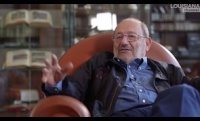
In an interview with Tonny Vorm, Umberto Eco speaks from his home in Milan about the "pleasure of spending six, seven, eight years to prepare a story" and shares other words of wisdom and advice to offer to aspiring young writers. Eco's latest novel, Numero Zero, translated from the Italian by Richard Dixon, was published in November by Houghton Mifflin Harcourt.

Genre: 

Christopher Salerno Wins Inaugural Georgia Poetry Prize

The University of Georgia Press has announced that poet Christopher Salerno of Caldwell, New Jersey, has won the inaugural Georgia Poetry Prize for his collection Sun & Urn. Salerno will receive a cash award of $1,000 and publication by the University of Georgia Press in February 2017. He will also be invited to read his work at the prize’s sponsoring institutions—the University of Georgia, Georgia Tech, and Georgia State University—and will receive an additional $1,000, as well as travel expenses, for each reading.
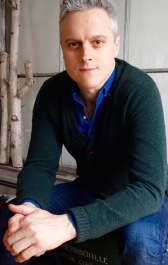
Christopher Salerno is the author of three previous poetry collections: Whirligig (Spuyten Duyvil Press, 2006); Minimum Heroic (Mississippi Review Press, 2010), which won the 2011 Mississippi Review Award; and ATM (Georgetown Review Press, 2014), which was selected by poet D. A. Powell for the 2014 Georgetown Review Poetry Prize. Salerno currently serves as associate professor in the creative writing and MFA programs at William Paterson University in New Jersey.

Thomas Lux, the final judge of this year’s award, said of Salerno’s manuscript, “Christopher Salerno’s Sun & Urn is a highly accomplished (he has learned his trade!), a madly imaginative, and, ultimately, a brilliant and deeply human book. Read it, please, thrice!”

The Georgia Poetry Prize is a national competition established in 2015 to celebrate poetic excellence. The prize is to be administered annually; submissions for next year’s prize will be accepted from October 1 to November 30. Visit the website for submission guidelines and more information.


The Hidden Voice

2.18.16

Go outside, with only yourself. Find an isolated bench. Or stay near and settle into a chair at home. Or climb the rungs to the roof and take your place above the city. Sit. No phone, no laptop. Nothing but you and you. For about thirty minutes or so, sit and do nothing. And when you’ve been there long enough to settle into yourself, to feel the voice that’s deepest inside you, the one that only you know, the one that only you hear, go and take up the page or turn on the screen. Listen. Start an essay from that hidden voice. 

This week’s creative nonfiction prompt comes from Jill Talbot, author of The Way We Weren’t (Soft Skull Press, 2015). Read Talbot’s installment of Writers Recommend for more inspiration.

C. Dale Young

Caption: 

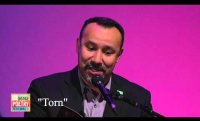
"I love. Wouldn't we all like to start / a poem with 'I love...'? I would." C. Dale Young reads his poems "The Bridge" and "Torn" from his book Torn (Four Way Books, 2011) at the 2014 Geraldine R. Dodge Poetry Festival. Young's fourth collection of poems, The Halo (Four Way Books, 2016), is featured in Page One in the March/April issue of Poets & Writers Magazine.

Genre: 

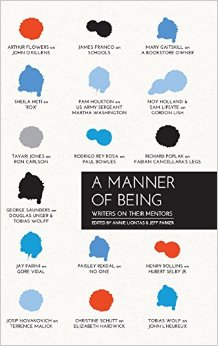
A Manner of Being: Writers on Their Mentors

by
Author: 
Annie Liontas and Jeff Parker, editors
Published in 2015
by University of Massachusetts Press

In this book, editors Annie Liontas and Jeff Parker collect over sixty personal essays written by contemporary authors on the mentors who have contributed significantly to their writing development. The selections, including Rodrigo Rey Rosa on Paul Bowles, Christine Schutt on Elizabeth Hardwick, and Henry Rollins on Hubert Selby Jr., provide insights into the complex relationships between writer and mentor, and act as a source of writing inspiration and guidance.

Helping

2.17.16

“‘Working in a soup kitchen is great for a writer or any artist. There are many unproductive days when you might hate yourself otherwise. You are eating the food, using the water, breathing the air—and NOT HELPING. But if you feed the hungry, you can’t deny you’re doing something worth doing,’” writes Annie Dillard to John Freeman in “Such Great Heights” by Freeman in the March/April issue of Poets & Writers Magazine. Write a scene in a short story in which a character with creative inclinations feels like he’s not being a helpful member of society. How does he shake himself out of it? Does his chosen course of action help his productivity as an artist? What does this change reveal about his place in the world of the story?

Pages

Subscribe to Poets & Writers RSS