Recovering the Classics, Political Poetry Generator, and More
#1000BlackGirlBooks campaign; study suggests white women account for majority of publishing positions; fractal patterns in classic texts; and other news.
Jump to navigation Skip to content
#1000BlackGirlBooks campaign; study suggests white women account for majority of publishing positions; fractal patterns in classic texts; and other news.
Borat, RuPaul, and Ziggy Stardust are some well-known and colorful alter egos whose identities have served a purpose for their creators. Have you ever imagined or assumed an alternate identity? Write an essay about this character—or who this character could be, if you’re imagining for the first time—and where she stands in relation to your own psyche and personality. What does this second self allow you to express, and why?
Egyptian poet sentenced to jail for blasphemy; Alice Walker and Colm Tóibín in conversation; fiction writer Morgan Jerkins on the struggle to describe blackness; and other news.
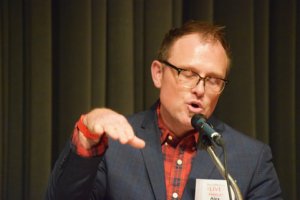
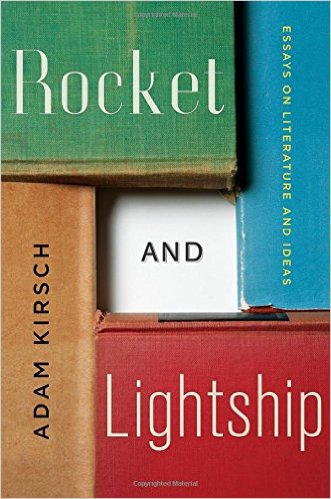
In this collection of essays, literary critic and poet Adam Kirsch expounds on such wide-ranging subjects as Saul Bellow, Slavoj Žižek, Giacomo Leopardi, and Susan Sontag. The eponymous essay that anchors the collection manages to touch on writing, oblivion, and the fundamental contradictions of a literary life.
In The Dictionary of Imaginary Places (Houghton Mifflin Harcourt, 2000), Alberto Manguel and Gianni Guadalupi catalog the fictional places of world literature. From Italo Calvino’s invisible cities to Umberto Eco’s abbey in The Name of the Rose, Crusoe’s island to the vast worlds of Middle Earth and Narnia, the volume explores how so many worlds of the imagination have come to influence our own. For an exercise, write your own guide for a fictional locale of your creation or one that you’ve recently encountered in reading. Consider what most characterizes this space: Is it the unique architecture of a structure, a brutal climate in harsh terrain, or the unique customs of an isolated people?
"There are traditional distinctions and there is a cultural distinction [between genre and literary fiction], but I think at the moment it's breaking down quite a lot." China Miéville, author of the new novella, This Census-Taker (Del Rey, 2016), talks about current perspectives in contemporary literature and his own creative inspirations.
"'Old people,' whispers Anna to her brother, 'are actually half robot. Only a robot could walk that slow.'" Amber Sparks reads "Cocoon" from her first story collection, May We Shed These Human Bodies (Curbside Splendor, 2012). Her second story collection, The Unfinished World: And Other Stories (Liveright, 2016), explores star-crossed lovers, taxidermists, time travelers, and space janitors.
PEN to honor J. K. Rowling at annual literary awards ceremony; Janet Malcolm finds fault in Ted Hughes biographer; poet Ada Limón on the value of not writing; and other news.
Artist Cheryl Pope speaks about working with youth in Chicago on an interactive poetry project "that responds to issues of segregation, gun violence, inequality, and systems that abuse power." The exhibit and performances were held at the Poetry Foundation.