Resolutions

1.21.16

While some people vow not to make any resolutions for the New Year, others are busy drawing up fresh goals—often involving self-improvement measures such as diet and exercise regimens; reading more; picking up a new language or hobby; or improving a financial situation. For 2016, turn your gaze outward and write a list of three resolutions, each focused on a different person in your life. It may be a close friend or family member, or someone you come into contact with on a daily basis but with whom you are only superficially acquainted—a neighbor, coworker, mail carrier, or coffee-shop barista. Write a trio of short essays in which you imagine what you can add to your encounters with each person in the coming year to invigorate your interactions. Predict how small gestures can potentially propel you into a dynamic new direction.

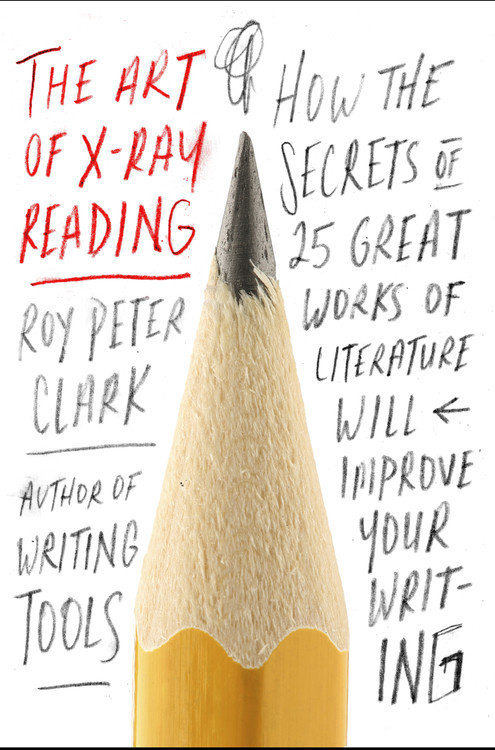
The Art of X-Ray Reading: How the Secrets of 25 Great Works of Literature Will Improve Your Writing

by
Author: 
Roy Peter Clark
Published in 2016
by Little, Brown

Roy Peter Clark, senior scholar at the Poynter Institute and the author of seventeen books on writing and journalism, examines the work of more than twenty-five writers, including Ernest Hemingway, Zora Neale Hurston, Shirley Jackson, William Shakespeare, and Donna Tartt, to reveal the strategies and techniques deployed in examples of great literature. With lessons at the end of each chapter serving as insightful summaries of the methods explored in the text, The Art of X-Ray Reading demonstrates how in-depth reading can ultimately inform and transform the process of authoritative writing.

Sunil Yapa

Caption: 

"I set out in this book to write beyond my experience. As Colum McCann says...'Write towards what you want to know.'" Sunil Yapa recounts wisdom he learned from his mentors, and describes the inspiration for his debut novel, Your Heart Is a Muscle the Size of a Fist (Little, Brown, 2016), which is featured in Page One in the January/February issue of Poets & Writers Magazine.

Genre: 

National Book Critics Circle Finalists Announced

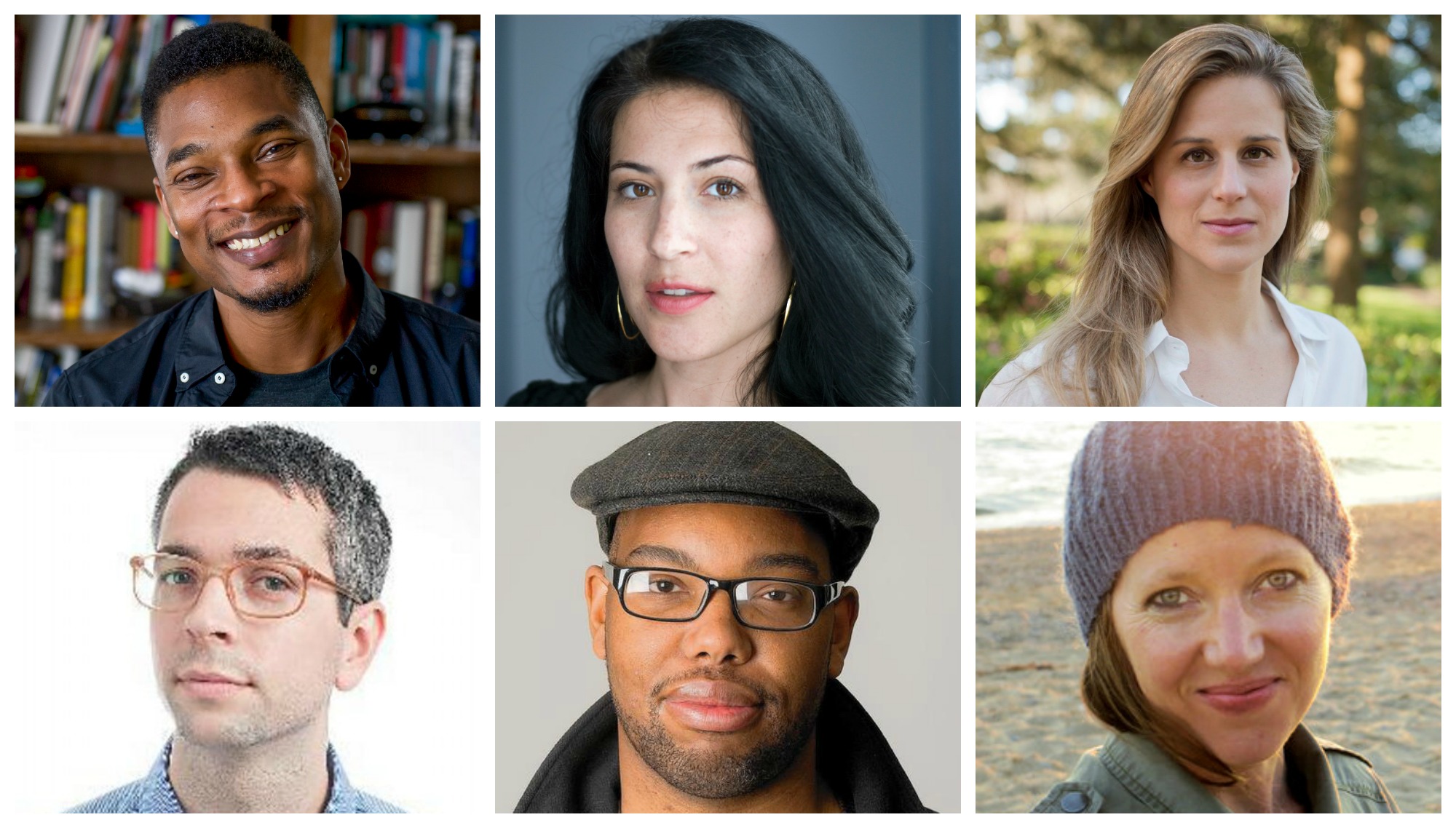
The National Book Critics Circle (NBCC) announced the finalists for its 2015 awards yesterday. Poets Terrance Hayes and Ada Limón, fiction writers Lauren Groff and Anthony Marra, and nonfiction writers Ta-Nehisi Coates and Maggie Nelson are among the thirty finalists. The annual awards are given in poetry, fiction, nonfiction, criticism, autobiography, and biography.
The poetry finalists are Ross Gay for Catalogue of Unabashed Gratitude (University of Pittsburgh Press), Terrance Hayes for How to Be Drawn (Penguin), Ada Limón for Bright Dead Things (Milkweed Editions), Sinéad Morrissey for Parallax: And Selected Poems (Farrar, Straus and Giroux), and the late Frank Stanford for What About This: Collected Poems of Frank Stanford (Copper Canyon Press).

The fiction finalists are Paul Beatty for The Sellout (Farrar, Straus and Giroux), Lauren Groff for Fates and Furies (Riverhead), Valeria Luiselli for The Story of My Teeth (Coffee House Press), Anthony Marra for The Tsar of Love and Techno (Hogarth), and Ottessa Moshfegh for Eileen (Penguin Press).

The autobiography finalists are Elizabeth Alexander for The Light of the World (Grand Central Publishing), Vivian Gornick for The Odd Woman and the City (Farrar, Straus and Giroux), George Hodgman for Bettyville (Viking), Margo Jefferson for Negroland (Pantheon), and Helen Macdonald for H Is for Hawk (Grove Press).

Other finalists include Ta-Nehisi Coates for Between the World and Me (Spiegel & Grau) and Maggie Nelson for The Argonauts (Graywolf Press) for the criticism prize. Farrar, Straus and Giroux led the field with five of its titles nominated for awards. Small presses with titles up for awards include Graywolf Press, Copper Canyon Press, Coffee House Press, and Milkweed Editions.

The NBCC also announced that Kirstin Valdez Quade is the recipient of the John Leonard Prize for her debut story collection, Night at the Fiestas (Norton). Carlos Lozada, an associate editor and nonfiction book critic at the Washington Post, won the Nona Balakian Citation for Excellence in Reviewing, and writer Wendell Berry will receive the Ivan Sandrof Lifetime Achievement Award.

First given in 1975, the National Book Critics Circle awards are nominated and selected by the NBCC board of directors, which is made up of twenty-four critics and editors. The 2014 winners included Claudia Rankine in poetry for Citizen: An American Lyric (Graywolf Press), Marilynne Robinson in fiction for Lila (Farrar, Straus and Giroux), and Roz Chast in autobiography for Can’t We Talk About Something More Pleasant? (Bloomsbury). This year’s winners will be announced on March 17 at the New School in New York City.

Clockwise from top left: Hayes (MacArthur Foundation), Limón (Sarah Shatz), Groff (Megan Brown), Nelson (Harry Dodge), Coates (Liz Lynch), Marra


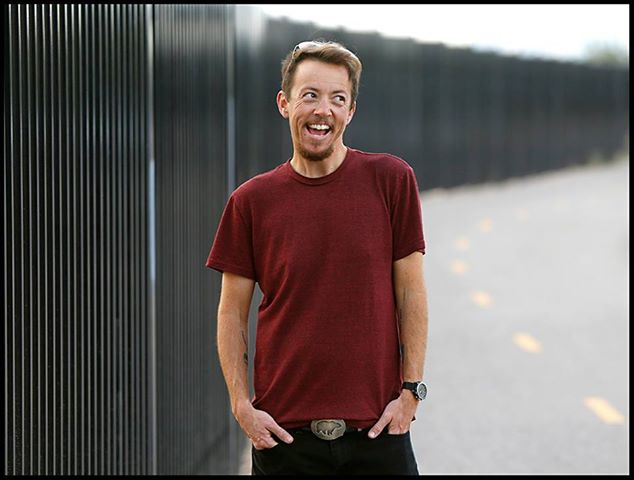
TC Tolbert on Courting Risk in Tucson

TC Tolbert often identifies as a trans and genderqueer feminist, collaborator, dancer, and poet but really s/he’s just a human in love with humans doing human things. The author of Gephyromania (Ahsahta Press 2014) and three chapbooks, Tolbert also coedited (with Trace Peterson) the anthology Troubling the Line: Trans and Genderqueer Poetry and Poetics (Nightboat Books 2013). His favorite thing in the world is Compositional Improvisation (which is another way of saying being alive).

The Courting Risk reading series annually presents the work of emerging writers working in multiple modes and art forms—from drama and music to visual art, film, and new media. The particular focus is on work that engages with difficult subject matter, writers who are LGBTIQ, women writers, and writers of color. The series has been proud to showcase many writers in the early stages of brilliant careers, and to present a lively, moving and engaging multi-genre performance for audiences.

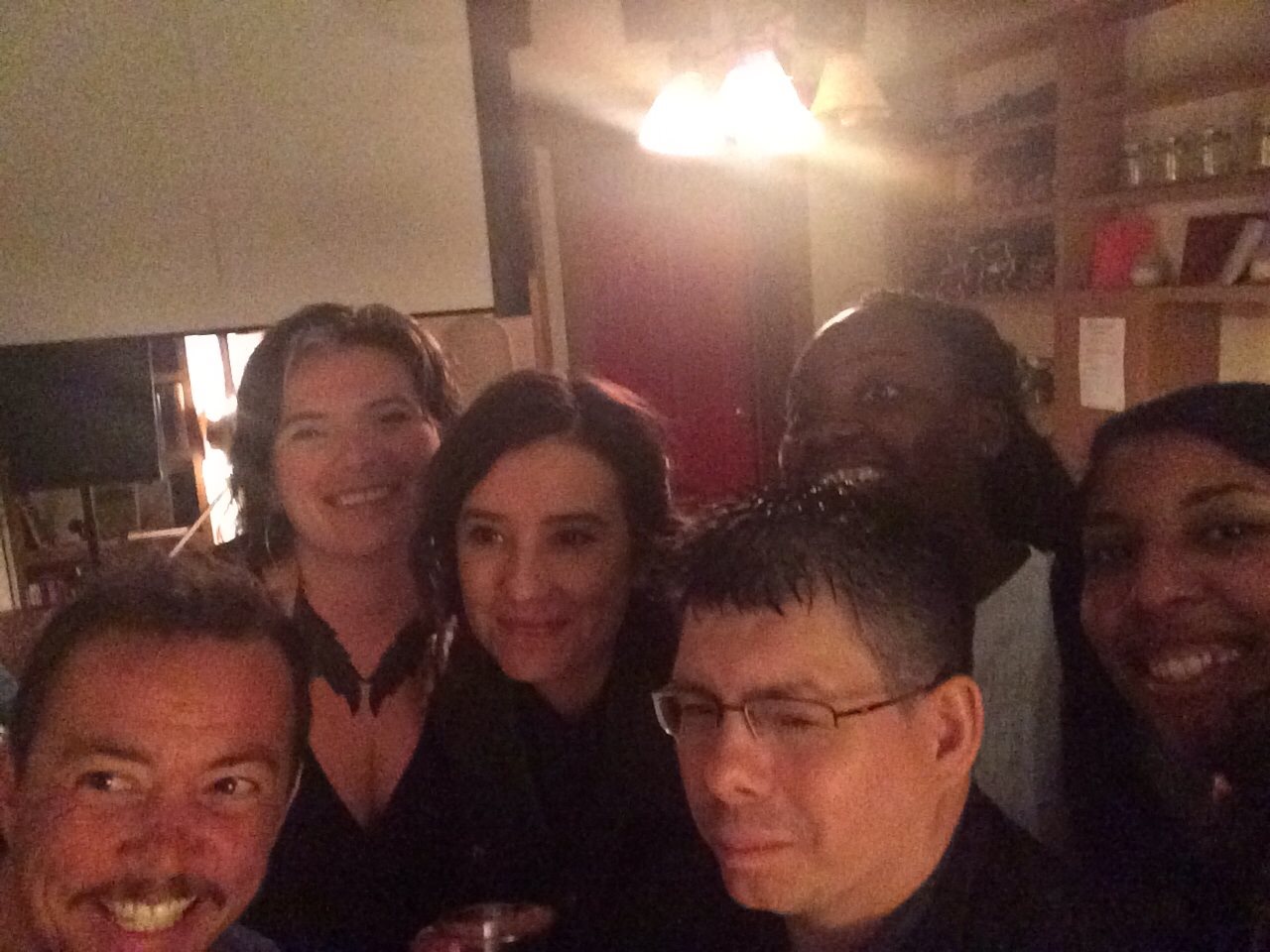
Courting Risk Group SelfieDear reader,

My job was to describe the incredible time we had back in April at Casa Libre in Tucson, Arizona. Khadijah Queen was visiting—she had curated a Courting Risk reading and there were six of us sharing the bill. The evening was wonderful. It was well attended and it brought folks to Casa Libre we’d never met before. The readers read new work and experimented with old work. It brought people together in the midst of uncertainty. Fear and joy were shared. In other words, it did exactly what the best poetry events will do. 

I’m failing at my job already because I absolutely suck at narrative. Maybe that’s related to my trans-ness. The body did one thing; the voice did another. We keep changing. I trust it’s not the summary that matters. Let’s begin again. And again. I wrote an essay after that evening. I’d like to share it now. Enacting the principle of Courting Risk.

—TC Tolbert

"The sound of snow letting go/What are mountains"

I remember sitting at Bentley’s with my mom and my girlfriend. It was my mom’s first visit to Tucson. I hadn’t started testosterone yet, but I was wearing a compression shirt and consistently being referred to as “he.” I’m still a little bit suspicious when things are easy or good. I didn’t understand why she no longer seemed angry with me. When I say I want to be a nurse, what I really mean is that I want to live closer to mystery. I think (too much) about security but I don’t actually care about a career. The other day I woke up at 3:00 AM because a jackrabbit landed on me.

For a long time after rolling a friend over to discover that what was supposed to be her face had been replaced by a mess of blood and dirt and swollen skin, I asked every health care provider I could find if the human body is more fragile or more resilient than it seems. Last week, B took his shirt off in the snow and I couldn’t help staring at his little man-belly. A day later, an avalanche covered where we were standing, and we were all sunburnt. Lidia Yuknavitch says: The body is the ultimate container for the disparate. I didn’t know I could love J, K, or B because I thought I knew them already. The only moments that matter to me are when I realize I don’t actually know anything.

I’m a little freaked out about my climbing assessment tomorrow. But academia has felt so sad lately. Which is another way of saying wasteful. I keep buying apples and then eating the meals provided for us here on base. Psychotherapy taught me that I need people. But M says it’s not an “evidence-based practice.” I'm terrified of substituting efficiency for effectiveness. Every time I realize how accustomed I am to approximation, I can’t decide if that’s surrender or despair. Actually, I don’t have to climb anything. I just need to be able to identify good anchors. And I need to manage some risks while avoiding others. And I need to inspire at least a little bit of confidence. And I need to know how to rescue someone on a releasable rappel. TC Tolbert

My mom (hell, my entire family back in Tennessee) is religious. Pentecostal. I’ve spoken in tongues before. The tension over me coming out as queer and then trans had been there for years. She said she’d been praying for God to change me for as long as she could remember. Then she said: I found a new prayer. (All the doctors said the answer is “more resilient.”) She asked God to change her. As it turns out, no amount of insurance will actually keep you safe. I’ll buy it because I tend to follow directions but my only real comfort is this.

Photos (top: left-right): TC Tolbert, Kristen Nelson, Shelly Taylor, Bill Wetzel, Amy Lukau, Khadijah Queen. Photo credit: TC Tolbert; (bottom): TC Tolbert. Photo credit: Mamta Popat

Support for Readings & Workshops events in Tucson is provided by an endowment established with generous contributions from the Poets & Writers Board of Directors and others. Additional support comes from the Friends of Poets & Writers.

Groundhog Day

1.19.16

On February 2, according to popular folklore, a groundhog that emerges from its burrow and sees its shadow signifies six more weeks of winter; if it's cloudy and no shadow is present, spring will arrive early. Other animals, too, are said to exhibit weather-forecasting attributes: sneezing cats, fat rabbits, and howling wolves, for example. Write a poem based on one of these legends, perhaps experimenting with an unexpected point of view, such as having the speaker of the poem be the animal, or an onlooker who is completely unfamiliar with the myth behind it. What textures, sights, and sounds would be unique to the occurrence? Explore the emotional resonances and psychological underpinnings of superstitions and folklore.

Pages

Subscribe to Poets & Writers RSS