Short Story Vending Machine

Toward the end of last year, French publisher Short Édition unveiled short story vending machines in eight public places around the city of Grenoble in southeastern France. Users can choose either one, three, or five minutes' worth of fiction to read—ideal for waiting or commuting—and one of six hundred community-submitted stories is dispensed for free from the cylindrical orange vending machine on receiptlike paper. Try your hand at writing a short story that can be read in one minute; then write a three-minute story; and finally a five-minute story. How does manipulating diction, tone, and style make sense for different story lengths? Explore the use of dialogue and a limited number of characters necessary to accommodate the restricted length.

A New Color

Visual artists who have been productive over long stretches of time often develop certain periods of work with shared characteristics, such as similar color palettes. For example, Paul Cézanne and Henri Matisse both had dark periods, Pablo Picasso had his blue and rose periods, and Victor Vasarely had a black-and-white period. As we begin to think about the year's transition from winter to spring, bringing along with it seasonal changes in light and sound, consider embarking on a new period of your own work. Write a series of short poems inspired by your observations of the different colors, moods, and scenery around you that signal the forthcoming spring season. To begin a green period, for example, what might be your key points of inspiration, in terms of imagery and vocabulary?

Matthew Salesses

Caption: 

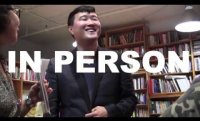
"I liked that ending and I held onto it through draft after draft.... You know we talk about 'kill your darlings' a lot as writers but this was one darling that I wanted to hold on to, and I knew that it was the right thing." Matthew Salesses, author of The Hundred-Year Flood (Little A, 2015), talks about struggling with writing the end of his novel, and knowing when to keep your darlings.

Genre: 

Adam Johnson Takes Home Story Prize

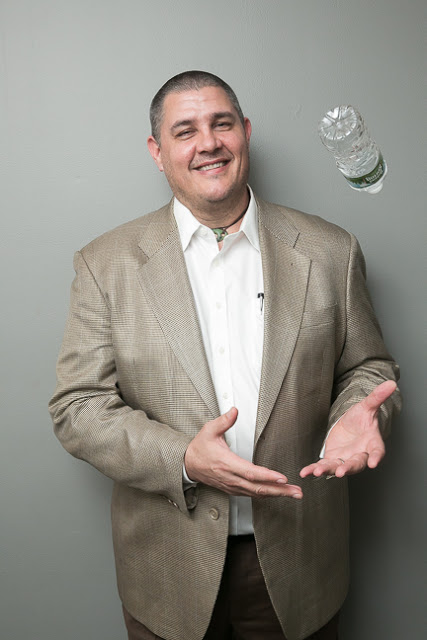
At a ceremony Wednesday night in New York City, Adam Johnson was named the  winner of the 2016 Story Prize for his collection Fortune Smiles (Random House). The $20,000 award is given annually for a short story collection published during the previous year.
The two runners-up for the prize were Charles Baxter for There’s Something I Want You to Do (Pantheon) and Colum McCann for Thirteen Ways of Looking (Random House). Each finalist received $5,000. The Story Prize Spotlight Award—an additional prize of $1,000, given for a collection of exceptional merit—went to Adrian Tomine for his collection of graphic short stories, Killing and Dying (Drawn & Quarterly). During Wednesday night’s event, all three finalists read from and discussed their work on stage with prize director Larry Dark.

Last November Fortune Smiles took home the National Book Award, which makes Johnson the first author to win the Story Prize and the National Book Award for the same title. He is also now the first author to have won the Story Prize, the National Book Award, and the Pulitzer Prize, which he received in 2013 for his novel The Orphan Master’s Son. Johnson is also the author of the story collection Emporium and the novel Parasites Like Us. He has received a Guggenheim Fellowship, a Whiting Award, a National Endowment for the Arts Fellowship, and a California Book Award, among other accolades. He lives in San Francisco and teaches creative writing at Stanford University.

Dark and Story Prize founder Julie Lindsey selected the three finalists from among a hundred books submitted in 2015, from sixty-four different publishers. A panel of three judges selected the winner: author and previous Story Prize–winner Anthony Doerr; Rita Meade, a librarian at the Brooklyn Public Library; and New Yorker staff writer Kathryn Schulz.

“Fortune Smiles is an electrically imaginative story collection that’s wrestling very hard with the world we’re living in right now,” the judges said. “Johnson writes like Rembrandt painted, richly and specifically, with an inclination toward self-portrait and a gift for making it seem like a whole world carries on not only within but beyond each of these small canvasses.”

Established in 2004 to honor collections of short fiction and to attract more attention to the form, the Story Prize boasts the largest first-prize amount of any fiction award in the United States. Previous winners include Elizabeth McCracken, George Saunders, Claire Vaye Watkins, and Steven Millhauser.

Photo credit: Beowulf Sheehan

Belinda McKeon

Caption: 

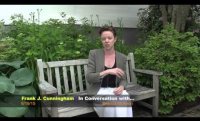
"You have to research the type of people your characters are—you're getting to know them, and you're also discovering the contours of their stories....​"​ Belinda McKeon, author of the novel Tender (Lee Boudreaux Books, 2016), talks to Frank J. Cunningham about her writing background and process at the 2015 Nantucket Book Festival.

Genre: 

Residential Library

“A Book Sanctuary in the Rockies” by Andrew McFadyen-Ketchum in the March/April issue of Poets & Writers Magazine details the project of Jeff Lee and Ann Martin to create a network of three residential libraries, which will be home to tens of thousands of books and will host writers- and artists-in-residence. The libraries will be located in the Rocky Mountain region in and around Denver, Colorado with many of the books, projects, and community partners focused on land, environment, and the West. Write an essay about what your vision of a residential library would be if you were to create one. What might your theme or focus be, and your inspiration? What rural, urban, or suburban space would you want to offer to writers-in-residence at your library?

Pages

Subscribe to Poets & Writers RSS