




Audience for Audiobooks Grows
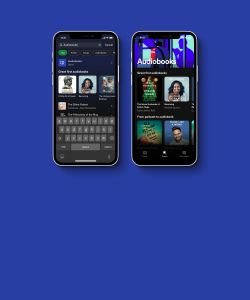
Services such as Findaway Voices and ACX, a subsidiary of Amazon’s Audible, enable independent authors to reach the expanding audience for audiobooks.
Tags:
Jump to navigation Skip to content
Articles from Poet & Writers Magazine include material from the print edition plus exclusive online-only material.
Services such as Findaway Voices and ACX, a subsidiary of Amazon’s Audible, enable independent authors to reach the expanding audience for audiobooks.
For more than a decade the nonprofit publisher Nomadic Press has accepted “invitations” to collaborate with writers in an effort to cross boundaries geographically, philosophically, and creatively.

The Oxford Dictionary of African American English, slated for release in 2025, will involve a three-year-long multidisciplinary research project compiling terms popularized by speakers of African American English.

Black Lawrence Press’s Immigrant Writing Series was launched in response to a lack of book-publication options for immigrant writers, whose unique perspectives might not resonate with nonimmigrant editors.
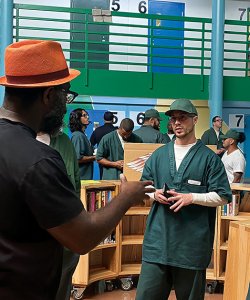
An organization founded and directed by Reginald Dwayne Betts seeks to bring the spirit of literature into prisons by installing libraries and inviting theater productions, book clubs, and world-class writers inside carceral walls.

The author of In the Current Where Drowing Is Beautiful highlights five journals that first published her poems, including Peripheries and the Capilano Review.
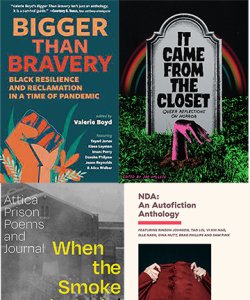
A look at four new anthologies, including Bigger Than Bravery: Black Resilience and Reclamation in a Time of Pandemic and When the Smoke Cleared: Attica Prison Poems and Journals.

Graywolf Press’s new publisher and executive director discusses the shifting landscape of literary publishing, her multidisciplinary career, and what collaboration means to her.
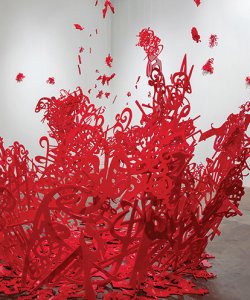
Dallas artist Simeen Farhat crafts text-inspired sculptures in a complex process that blends literary and figurative composition and reminds viewers of language’s physicality.
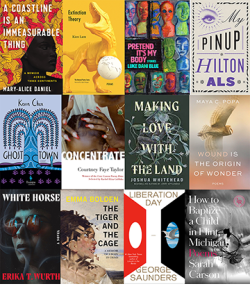
The first lines of a dozen noteworthy books, including Extinction Theory by Kien Lam and Liberation Day by George Saunders.

The Fall 2022 issue of Crazyhorse will be the last under a name that the editors now recognize as a “longstanding appropriation of Lakota culture.”
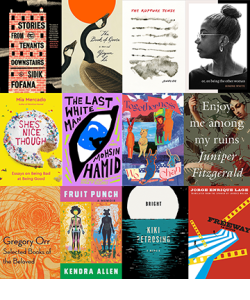
The first lines of a dozen noteworthy books including The Book of Goose by Yiyun Li and Togetherness by Wo Chan.

Amy J. Wong and Andrew Fung Yip founded Matilija Lending Library to “reflect our people of color communities in the San Gabriel Valley, and build multiracial solidarity.”

The author of What We Fed to the Manticore highlights five journals that published her stories, including the Minnesota Review and Ecotone.
Since 2020 #BookTok, the hashtag that represents the book-loving community on TikTok, has emerged as a powerful force.

The new editor of Poetry shares his aspirations for shaping the 110-year-old magazine to reflect an expansive literary landscape.

Seven Kitchens has cultivated a diverse roster of writers through the fifteen or so chapbooks it publishes each year, including through its eight chapbook series, each appealing to a different community.

A special “unburnable” edition of Margaret Atwood’s The Handmaid’s Tale was crafted to raise awareness about recent efforts to ban books from schools and libraries.

A look at three new anthologies, including New Weathers: Poetics From the Naropa Archive, edited by Anne Waldman and Emma Gomis.

Banned Books Week raises awareness of the rise in attempts to remove titles from schools and public libraries through a series of special events to be held across the country starting on September 18.
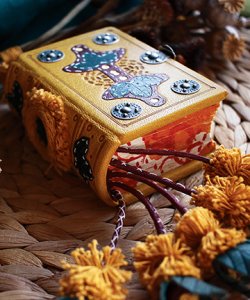
The celebrated Bulgarian bookmaker Stopan calls on his country’s craft traditions to create fantastical artist’s books that are “both in and out of folklore.”
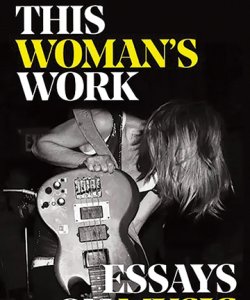
A look at three new anthologies, including Body Language: Writers on Identity, Physicality, and Making Space for Ourselves, edited by Nicole Chung and Matt Ortile.
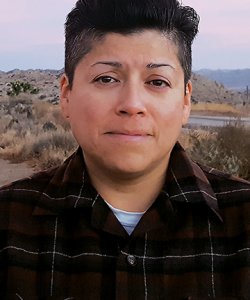
The author on the journals and zines that published essays from their collection, Brown Neon.
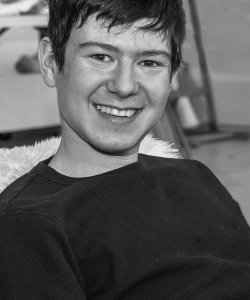
The Multiverse book series from Milkweed Editions spotlights the work of neurodivergent poets and powerful new ways of “languaging.”
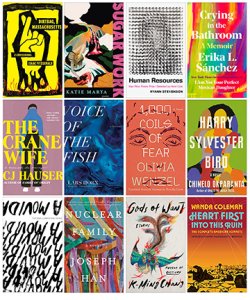
The first lines of a dozen noteworthy books including The Crane Wife: A Memoir in Essays by CJ Hauser and Gods of Want by K-Ming Chang.