




Press Dresses Up the Queens of Pulp

This month the world’s first independent publisher of women’s writing, the Feminist Press, launches a steamy—and unlikely—series of pulp fiction titles.
Tags:
Jump to navigation Skip to content
Articles from Poet & Writers Magazine include material from the print edition plus exclusive online-only material.
This month the world’s first independent publisher of women’s writing, the Feminist Press, launches a steamy—and unlikely—series of pulp fiction titles.
Literary MagNet chronicles the start-ups and closures, successes and failures, anniversaries and accolades, changes of editorship and special issues—in short, the news and trends—of literary magazines in America. This issue's MagNet features Poetry, Poems & Plays, the Sow’s Ear Poetry Review, Bloom, the Harvard Advocate, Harvard Review, Meanjin, and Vallum.
Carol Seajay, former publisher of Feminist Bookstore News, a San Francisco–based magazine that covered the feminist, gay, and lesbian book industry until folding in 2000, recently launched Books to Watch Out For, a series of monthly e-mail newsletters featuring reviews of gay and lesbian books.
Page One features a sample of titles we think you'll want to explore. With this installment, we offer excerpts from Bring Me Your Saddest Arizona by Ryan Harty, Indiana, Indiana by Laird Hunt, and Eyeshot by Heather McHugh.
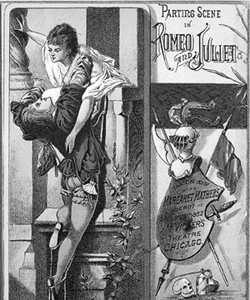
Since Dana Gioia was named chairman of the National Endowment for the Arts in January, the organization has awarded nearly $1 million to poets and translators of poetry and over $2 million to literary arts organizations. But the highest profile project of Gioia’s term so far begins this month, when six theater companies—from New York City; Chicago; Minneapolis; Little Rock, Arkansas; and Portland, Oregon—will begin a yearlong tour of 100 small and midsized cities across the U.S. to perform a selection of plays by William Shakespeare. A seventh theater company will tour 16 U.S. military bases.
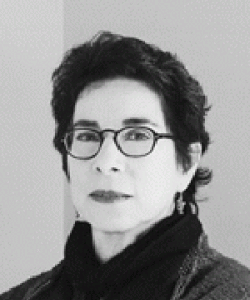
Laura Furman, the first female O. Henry series editor in more than forty years, has instituted some changes to the process of selecting stories for her first volume, due out next month from Anchor.

David Foster Wallace’s long-awaited sixth book will arrive in bookstores next month. But it’s not what some might expect from the author of Infinite Jest and A Supposedly Fun Thing I’ll Never Do Again.
Page One features a sample of titles we think you'll want to explore. With this installment, we offer excerpts from A Million Little Pieces by James Frey and Big Back Yard by Michael Teig.
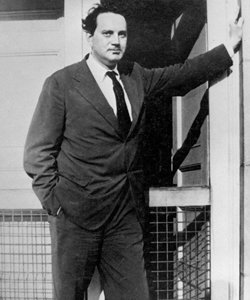
Five years ago, in the early morning of July 24, 1998, Thomas Wolfe’s childhood home in Asheville, North Carolina, was nearly destroyed by fire. Since then, conservation specialists and staff at the Thomas Wolfe Memorial have worked to reconstruct the museum and hope to reopen it this fall.
They don’t command the best-seller lists, nor do they show up on reviewers’ desks, but the classics—those books of enduring quality that year after year grace high school and college syllabi and circulate in community book clubs—are the cash cows of the publishing industry: reliable, predictable, and above all, steady sources of revenue. Penguin Classics, Oxford World’s Classics, Bantam Classics, Dover Publications, and the Modern Library are among the leading publishers of their kind in the United States. This spring, Barnes & Noble joined them with its own imprint: Barnes & Noble Classics.

mong organizations hit hardest during the post-9/11 era, in which funding for the arts has been sharply curtailed, literary nonprofits are struggling to simultaneously serve their missions and remain solvent. Despite the economic downturn, two nonprofit organizations—Milkweed Editions, a small press based in Minneapolis, and the St. Mark's Poetry Project in New York City—have maintained financial stability, but more challenges lie ahead: The directors of both organizations, Emilie Buchwald and Ed Friedman, recently retired.
Literary MagNet chronicles the start-ups and closures, successes and failures, anniversaries and accolades, changes of editorship and special issues—in short, the news and trends—of literary magazines in America. This issue's MagNet features the Believer, Partisan Review, Mid-American Review, the Paris Review, One Story, 32 Poems Magazine, and Tin House.
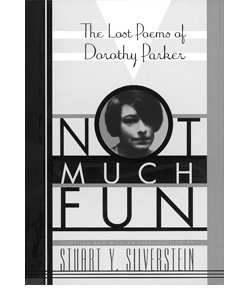
On April 4, United States District Court Judge John F. Keenan ruled in favor of Stuart Y. Silverstein in a plagiarism suit he filed against Penguin Putnam in 2001. Silverstein, who compiled Not Much Fun: The Lost Poems of Dorothy Parker (Scribner, 1996), claimed in his lawsuit that Penguin infringed on his copyright by publishing Dorothy Parker: Complete Poems, which includes a section titled “Poems Uncollected by Parker,” the identical poems published in Not Much Fun.

The UN has declared the next ten years the UN Literacy Decade. During this period the United Nations Educational, Scientific, and Cultural Organization will initiate its "International Plan of Action," designed to mobilize national governments, public and private organizations, universities, and local communities to create literacy programs, research who will most benefit from such programs, and find ways to monitor their success so that they can be improved upon and replicated elsewhere.
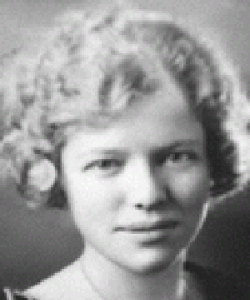
This year marks the centennial of Niedecker's birth. To celebrate, libraries and bookstores in her home state are planning a series of events that will draw poets, scholars, and readers to the places that inspired and influenced her poetry.
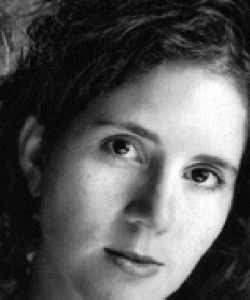
Amanda Davis, author of the short story collection Circling the Drain and cornerstone presence to many in and beyond the literary world, died in a plane crash on March 15, 2003, while on tour promoting her first novel, Wonder When You'll Miss Me.
Literary MagNet chronicles the start-ups and closures, successes and failures, anniversaries and accolades, changes of editorship and special issues—in short, the news and trends—of literary magazines in America. This issue's MagNet features Maize, Our Time Is Now, UR-VOX, Smartish Pace, and the Beloit Poetry Journal.
Last month Jonathan Tasini, who is recognizable to most writers due to his association with the high-profile lawsuit against the New York Times, resigned as president of the National Writers Union, an advocacy group for freelance writers and is now heading the Creators Federation, an international coalition of writers and artists working in all media and the organizations that represent them.
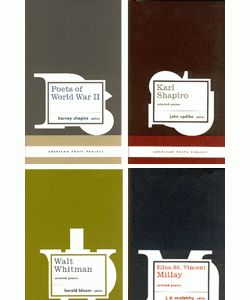
To coincide with National Poetry Month, the Library of America, a nonprofit publisher of American classics, will launch the American Poets Project, a new series of books devoted to individual poets and anthologies exploring particular themes, genres, and eras.
Anthologies compiled annually by editors who scan diverse sources and publish the poems they deem “the best,” are quickly gaining popularity worldwide. The latest of these is an online publication called Best New Zealand Poems.
Literary MagNet chronicles the start-ups and closures, successes and failures, anniversaries and accolades, changes of editorship and special issues—in short, the news and trends—of literary magazines in America. This issue's MagNet features Rosebud, Pleiades, Fizgig, American Letters & Commentary, Shiny, Brevity, and Canary River Review.
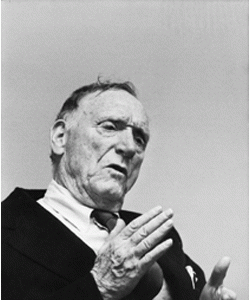
During the past year, poets laureate have been the unlikely recipients of national media attention. New Jersey's Amiri Baraka was excoriated for reading a poem that some labeled anti-Semitic, and California's Quincy Troupe resigned after inaccuracies were discovered on his resumé. With their public profiles growing, the role of poets laureate is being called into question. In April the nation's first conference for state poets laureate will convene in Manchester, New Hampshire, where they will discuss poetry and their responsibilities as public representatives of their art.
Careful storytelling, along with careful marketing, has helped American Lives—the memoir series at the University of Nebraska Press—attract the attention of talented authors, national reviewers, and bookstore sales reps.
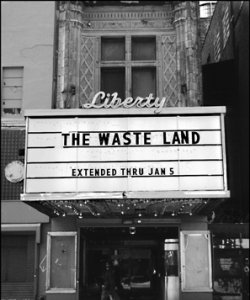
Last spring I embarked on a modest project. Having photocopied 10 of my favorite poems—by poets living and dead, from several different countries—I stapled them into an anthology and stood on a sidewalk in Times Square, where I read the poems aloud. I had no other gimmicks and no amplification. I did this on several occasions, always bringing a friend along for moral support and to assist in handing out free copies of the anthology, which I titled "Antidote."
Naropa University has established the Naropa Audio Preservation and Access Project to archive the program's vast holdings of recorded readings, lectures, panel discussions, and workshops.