




Q&A: Hall Takes Laureateship in Stride
Two weeks after he was chosen to succeed Ted Kooser as poet laureate, Donald Hall spoke about his newfound responsibilities.
Tags:
Jump to navigation Skip to content
Articles from Poet & Writers Magazine include material from the print edition plus exclusive online-only material.
Two weeks after he was chosen to succeed Ted Kooser as poet laureate, Donald Hall spoke about his newfound responsibilities.
Although Janet Fitch's Paint It Black, published this month by Little, Brown, is a work of fiction, the author drew inspiration from many genres, most notably poetry, while she was working on her follow-up to White Oleander.
Literary MagNet chronicles the start-ups and closures, successes and failures, anniversaries and accolades, changes of editorship and special issues—in short, the news and trends—of literary magazines in America. This issue's MagNet features the Paris Review, McSweeney's Quarterly Concern, the Iowa Review, and Speakeasy.
As the number of poetry readings in communities across the country continues to grow, a format that was once relatively rare—the marathon—is becoming increasingly popular.
Small Press Points highlights the happenings of the small press players. This issue features Seal Press and Bear Star Press.
Fueled by equal parts biodiesel gas and small press ambition, the Wave Books 2006 Poetry Bus Tour is scheduled to roll through forty-nine cities during the next two months, beginning in Seattle on September 4.
This installment of Page One features excerpts from The Exquisite by Laird Hunt and A Three Dog Life by Jack Pendarvis.
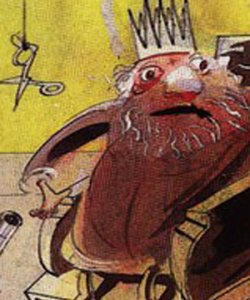
Workman Publishing imprint Black Dog and Leventhal reissues King Lear and Macbeth, the illustrated Shakespeare plays originally published in the 1980s—before graphic novels acquired a mainstream audience—as part of its Graphic Shakespeare series.
This installment of Page One features excerpts from Hillbilly Gothic: A Memoir of Madness and Motherhood by Adrienne Martini and The Yellow-Lighted Bookshop by Lewis Buzbee.
A computer programmer and former employee of Houghton Mifflin launches Library Thing, a Web site designed to re-create library-gazing online.
For the second installment of this occassional feature, in which we ask authors to list the movies,
music, artwork, and books that inspired them during the course of
writing their new books, we asked two-time Booker
Prize–winning author Peter Carey, whose ninth novel was published by
Knopf in May, for his list; he replied with this essay.

During her third month on the job, Jacobs spoke about her new position as executive director of the oldest independent publisher of women's writing in the world.
Poetry in America, the 2006 report released by the Poetry Foundation, has spurred efforts to revitalize an interest in poetry among the general population, and in doing so, has also sparked a debate among those in the literary community.
Literary MagNet chronicles the start-ups and closures, successes and failures, anniversaries and accolades, changes of editorship and special issues—in short, the news and trends—of literary magazines in America. This issue's MagNet features the Gettysburg Review, Prairie Schooner, Fence, Harpur Palate, Slate, and Ellipsis.
Penguin and the National Basketball Association (NBA) recently teamed up to launch a literacy campaign featuring the retired Earvin "Magic" Johnson, Ray Allen of the Seattle SuperSonics, Dwyane Wade of the Miami Heat, and Becky Hammon of the New York Liberty, a team in the Women's National Basketball Association.
Small Press Points highlights the happenings of the small press players. This issue features Blue Moon Books, Soft Skull Press, Grove Press, Grove/Atlantic, Inc. Clear Cut Press, and Broadsided Press.
Six months after announcing that there would be no winner chosen for their First Book Award in Fiction competition, Winnow Press struggles to fulfill their uncommon promise to refund entry fees.
This installment of Page One features excerpts from A Strange Commonplace by Gilbert Sorrentino, Genealogy by Maud Casey, and Visigoth by Gary Amdahl.
Sadly, recent revelations are forcing readers—confronted by a brand-new band of literary scallywags, hucksters, and hoaxers—to reconsider the veracity of the story as well as that of the storyteller.

At the end of Folio Literary Management’s second month in operation, Scott Hoffman, who represents writers of fiction and nonfiction and receives between two hundred and five hundred queries a week, spoke about the role of agents in today’s publishing marketplace.
For this inaugural installment of More to the Story—an occasional feature in which we ask authors to list the movies, music, artwork, and books that inspired them during the course of writing their new books—we asked A.M. Homes about her fifth novel,This Book Will Save Your Life, which was published by Viking last month.
Literary MagNet chronicles the start-ups and closures, successes and failures, anniversaries and accolades, changes of editorship and special issues—in short, the news and trends—of literary magazines in America. This issue's MagNet features One Less Magazine, the Women's Review of Books, Cream City Review, Global City Review, Bat City Review, Backwards City Review, and Poetry.
As marketing director of Copper Canyon Press, the thirty-four-year-old independent publisher of poetry in Port Townsend, Washington, I am required to read a lot. While most of the titles on my reading list are poetry collections, I recently read two nonfiction texts that got me thinking about the "economics" of creative writing.
Small Press Points highlights the happenings of the small press players. This issue features Seven Stories Press, Impassio Press, and BOA Editions, Ltd.

Two years after the failure of Zoo Press's fiction contests in 2004, founder Neil Azevedo responds about more controversy surrounding its poetry contests.