



The Nothing That Is: A Profile of Matthew Sharpe

In his new novel, Jamestown, small press superstar Matthew Sharpe turns to history—sort of.
Tags:
Jump to navigation Skip to content
Articles from Poet & Writers Magazine include material from the print edition plus exclusive online-only material.
In his new novel, Jamestown, small press superstar Matthew Sharpe turns to history—sort of.
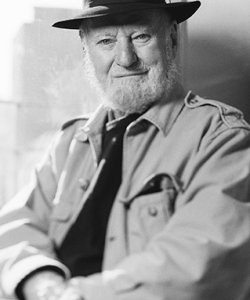
An interview with poet Lawrence Ferlinghetti about the Beat generation, City Lights Bookstore, and Ezra Pound.
In ten years, Tom Bissell went from being a directionless dropout to the acclaimed author of four books.
This Page One features excerpts from Neck Deep and Other Predicaments by Ander Monson and The Unbinding by Walter Kirn.
Literary MagNet chronicles the start-ups and closures, successes and failures, anniversaries and accolades, changes of editorship and special issues—in short, the news and trends—of literary magazines in America. This issue's MagNet features Document, Doubletake: Points of Entry, Interim, and Poetry Salzburg Review.
Taking their cue from the film industry, in which a well-produced trailer is infinitely more valuable than a print advertisement or press release, commercial publishers such as HarperCollins and Houghton Mifflin are taking advantage of new technology to offer promotional videos on their Web sites to augment their traditional publicity campaigns.

A childhood bike trip leads Whitman impersonator Darrel Blaine Ford to a lifelong dedication to the legendary poet.
Small Press Points highlights the happenings of the small press players. This issue features Steerforth Press, Zoland Books, Zoland Poetry, MacAdam/Cage, and Counterpath Press.
Last Thursday evening in Manhattan a hundred or so literary writers and readers gathered inside Cooper Union’s Great Hall, a magnificent venue that has been host to such historical events as Abraham Lincoln's rousing Cooper Union Address, in which he urged the nation to abolish slavery, in 1860. People rushed in from the cold, scanning the auditorium for empty seats. Heavy winter coats took on lives of their own, refusing to stay within the confines of the narrow wooden chairs. Our collective body heat seemed to rise in direct proportion to the noise.
This Page One features excerpts from Corrections to My Memoirs by Michael Kun and Home Remedies by Angela Pneuman.
Michael Stephen Fuchs doesn't seem particularly naive or susceptible to exploitation. The fast-talking writer has a successful day job as an Internet consultant, peppers his conversation with literary aphorisms, and, like many debut authors, can talk with an eloquence borne from personal experience about the iniquities of the publishing business. But according to some in the book trade, Fuchs has been suckered.
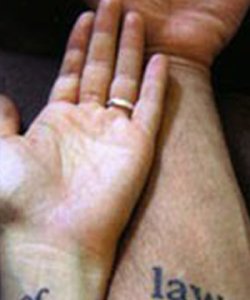
Images of participants who tattooed one word from Shelley Jackson’s 2,095-word story, “Skin,” on their bodies as part of her “mortal work of art” project.
Not unlike European explorers five hundred years ago, the United States publishing industry is looking for a route to China. And, like those explorers, each company seems to be setting a different course.
Executive director of Poets House Lee Briccetti talks about the relocation and expansion of the country's largest poetry library.
Small Press Points highlights the happenings of the small press players. This issue features No Tell Books and Perugia Press.
Literary MagNet chronicles the start-ups and closures, successes and failures, anniversaries and accolades, changes of editorship and special issues—in short, the news and trends—of literary magazines in America. This issue's MagNet features Oxford American, the Believer, Wholphin, McSweeney's, Rattapallax, the Reader, and Poetry Kanto.
The Council of Literary Magazines and Presses unveils the Submission Manager, software used to accept and track online submissions, resulting in less waste and more efficiency for writers and editors alike.
Kathryn Starbuck has been around poets and poetry all her life, but she never wrote a single poem herself until about seven years ago, when she was grieving over the recent deaths of her parents, brother, and especially her beloved husband, the poet George Starbuck, who died in 1996 at the age of sixty-five, after a twenty-two-year battle with Parkinson’s Disease.
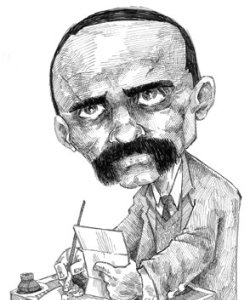
Taking cues from Letters to a Young Poet, published more than seventy years ago, the Letters to Poets project puts an updated spin on Rilke’s experiment in mentorship with organized correspondence between two distinct types of poets.

A decade after the founding of Cave Canem, Eady speaks about the ways in which the organization has developed into a "safe haven for black poets."
Literary MagNet chronicles the start-ups and closures, successes and failures, anniversaries and accolades, changes of editorship and special issues—in short, the news and trends—of literary magazines in America. This issue's MagNet features Ploughshares, Calyx, Gargoyle, and American Short Fiction.
This installment of Page One features excerpts from The Children's Hospital by Chris Adrian and American Genius: A Comedy by Lynne Tillman.

Art from Up Is Up, but So Is Down, a collection of writing and more than 125 photographs, book covers, and flyers that illustrate the dynamic, subversive work of the literary community known as "Downtown."
Last year a total of 172,000 books were published in the United States. Although that number reflects a 10 percent decrease from the previous year, it's easy to see how any one book could get lost in the shuffle—especially if it's one among the many memoirs being published every season. With the idea that there's strength in numbers, four memoirists who published books earlier this year have joined forces to promote their titles, developing a community of like-minded authors—and fostering emerging writers—along the way.