Balakian, Nguyen Win Pulitzer Prizes

Today in New York City, the Pulitzer Prize board announced the winners and finalists of the 2016 Pulitzer Prizes. Of the twenty-one categories, the prizes in letters are awarded annually for works of literature published in the previous year by American authors.

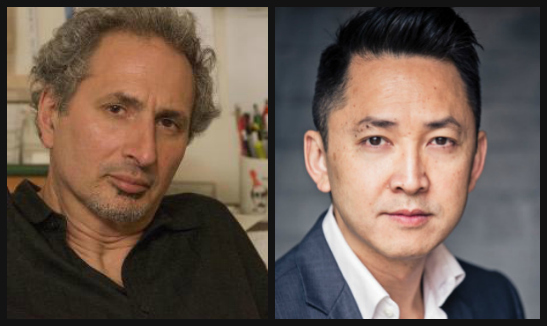
The winner in poetry is Peter Balakian for his collection Ozone Journal (University of Chicago), a collection of poems “that bear witness to the old losses and tragedies that undergird a global age of danger and uncertainty.” The finalists were Diane Seuss for Four-Legged Girl (Graywolf) and Elizabeth Willis for Alive: New and Selected Poems (New York Review Books).

Viet Thanh Nguyen won in fiction for his debut novel, The Sympathizer (Grove), “A layered immigrant tale told in the wry, confessional voice of a “‘man of two minds’—and two countries, Vietnam and the United States.” The finalists were Kelly Link for Get in Trouble: Stories (Random House) and Margaret Verble for Maud’s Line (Houghton Mifflin Harcourt). 

Prize administrator Mike Pride announced the winners and finalists at Columbia University’s School of Journalism. Each winner receives $10,000. A complete list of winners and finalists in each of the twenty-one categories, including journalism, literature, and drama, is available on the Pulitzer Prize website.

The 2015 winners included poet Gregory Pardlo and fiction writer Anthony Doerr.

Hungarian-American newspaper publisher and journalist Joseph Pulitzer established the Pulitzer Prizes in 1911, and the first prize was administered in 1917. In celebration of this year’s centennial, the Pulitzer board has partnered with individuals and organizations across the country for its Campfires Initiative, which hosts events with the aim “to inspire new generations to consider the values represented by Pulitzer Prize–winning work.” 

Nominations for the 2017 prizes will open in May.

Creative Writing for the Underserved: Ideas, Inspiration, Revelation

On March 31, 2016, during the AWP Annual Conference & Bookfair in Los Angeles, Poets & Writers brought together P&W–supported teaching artists Dorothy Randall Gray, Michael Kearns, Mike Sonksen, and Leilani Squire for the panel presentation “Creative Writing for the Underserved: Ideas, Inspiration, Revelation.” Panelists spoke about best practices, what motivates them to do what they do, and how teaching writing to underserved groups has enriched their writing lives. Below are some highlights from the conversation, as compiled by Readings & Workshops (West) director and panel moderator Jamie Asaye FitzGerald.

Classroom Approaches

"I look at longevity as a starting point, and have them write about all of the 'selves' that have gotten them to where they are today."
—Michael Kearns, who works with GLBT seniors

"We spend a lot of time just talking, working through issues, then do a timed writing. I listen and witness. That's a big part of it."
—Leilani Squire, who works with veterans and their family members

"I begin the class with three minutes of silence. I work with teenage identity and bring in poems about that. I've had them read [Paul Laurence] Dunbar's 'We Wear the Mask.' I've even had them make a mask, think about the layers of their identity and list them. I try to show them how poets are always talking to each other and that they are part of the conversation. I also use a little hip-hop, documentaries, current events."
—Mike Sonksen, who works with teens

"Sometimes these populations don't want to feel because it hurts too much. I try to get them to connect with their feelings. Music and visuals help. One reward for doing the writing is letting the kids be DJ and pick out the songs. To get them to open up, be silly, bring a visual, ask an easy question like 'What's your favorite food?' or 'What do you want to eat when you get out of here?'"
—Dorothy Randall Gray, who works with incarcerated youth, women, and the homeless

The Effect on Their Writing Lives

"If I tell them to write deeply, to go for the jugular, how can I not do that myself?"
—Squire

"My stakes are higher. I am deepened by them."
—Kearns

"Not only do I have to deal with the truth; I have to face my own truth. I believe in sticking a pen in my own vein. As they tell their stories, I tell my stories."
—Gray

On Self-Care

"Being in the trenches is taking care of myself. Dealing with horror, pain, and abuse—it's contradictory, but it is comforting that I can hear and be empathetic.... And I have my daughter when I feel overwhelmed."
—Kearns

"You get worn out. Performing poetry and doing freelance writing helps. I keep my writing career active. Then there are the two kids who really get it, there's the e-mail from a kid five years later, and the kid who stays after class to help clean up."
—Sonksen

"Meditation. Adjusting my own beliefs. Compassion is a big part of it, and being as gentle and loving as possible."
—Gray

"I have to walk in centered, whole, and confident or I'll get beat up. I'm a practicing Buddhist. I go to Native American lodges, which helps me gain answers to questions I ask. I cuddle with my dog."
—Squire

Hopes for Their Students

"I hope they find a home in their hearts, where they feel loved and safe."
—Gray

"I hope their voices get louder, not softer; more authentic, more hopeful; more of who they are and not less—because that can often happen as one ages."
—Kearns

"I hope they come to a place of acceptance, understanding; of being listened to, witnessed; to come to some sort of wholeness. My agenda is to promote peace."
—Squire

"I try to give them the tools they need to lift themselves up. Ultimately, I'd like to create lifelong readers and writers. But mainly I use writing as a bridge to help them build identity and future hope."
—Sonksen

We are pleased to be able to support writers who work with underserved groups. For more information about whether your event might qualify for Readings & Workshops support, please see our guidelines or contact us.

Major support for Readings & Workshops in California is provided by the James Irvine Foundation and Hearst Foundations. Additional support comes from the Friends of Poets & Writers.


Rita Dove

Caption: 

Rita Dove reads her poem "American Smooth" at the Geraldine R. Dodge Poetry Festival in 2010. Her new book, Collected Poems: 1974–2004 (Norton, 2016), which is longlisted for the 2016 National Book Award, is featured in Page One in the May/June issue of Poets & Writers Magazine.

Genre: 

Finalists Announced for Man Booker International Prize

The shortlist for the 2016 Man Booker International Prize was announced yesterday, and includes Turkish Nobel Prize winner Orhan Pamuk and pseudonymous Italian fiction writer Elena Ferrante. The prize is given annually for a work of fiction translated into English and published during the previous year. The £50,000 prize is split between the author and translator.

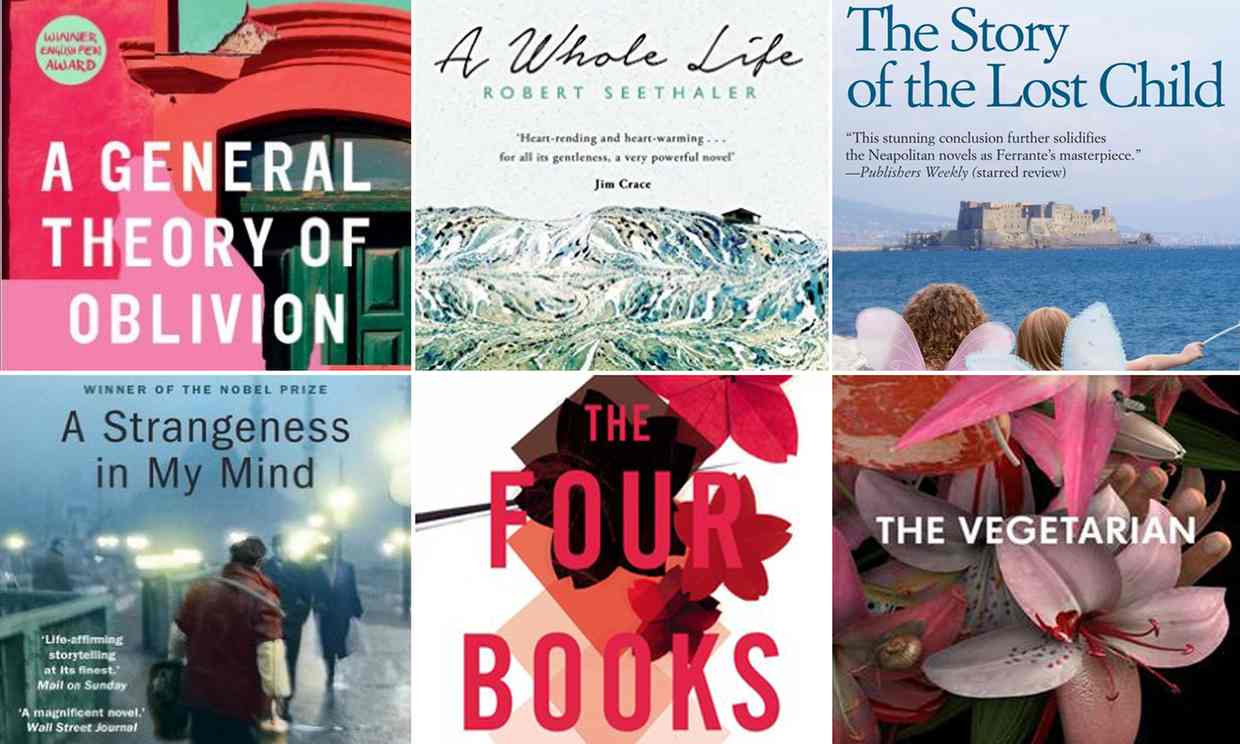
This year’s shortlist includes José Eduardo Agualusa of Angola for A General Theory of Oblivion (Harvill Secker), translated by Daniel Hahn; Elena Ferrante of Italy for The Story of the Lost Child (Europa Editions), translated by Ann Goldstein; Han Kang of South Korea for The Vegetarian (Portobello Books), translated by Deborah Smith; Orhan Pamuk of Turkey for A Strangeness in My Mind (Faber & Faber), translated by Ekin Oklap; Robert Seethaler of Austria for A Whole Life (Picador), translated by Charlotte Collins; and Yan Lianke of China for The Four Books (Chatto & Windus), translated by Carlos Rojas.

“In first-class translations that showcase that unique and precious art, these six books tell unforgettable stories from China and Angola, Austria and Turkey, Italy and South Korea,” says chair of judges Boyd Tonkin. “In setting, they range from a Mao-era re-education camp and a remote Alpine valley to the modern tumult and transformation of cities such as Naples and Istanbul. In form, the titles stretch from a delicate mosaic of linked lives in post-colonial Africa to a mesmerizing fable of domestic abuse and revolt in booming east Asia. Our selection shows that the finest books in translation extend the boundaries not just of our world—but of the art of fiction itself.

Tonkin—along with judges Tahmima Anam, David Bellos, Daniel Medin, and Ruth Padel—selected the finalists from a longlist of thirteen books, which in turn was culled from a group of 155. This year the prize combined with the Independent’s Foreign Fiction Prize, and marks the first time the award has been given annually for a single work of fiction in translation. The prize was previously awarded to a fiction writer for a body of work.

The winner will be announced at an event in London on May 16. Previous winners of the prize include László Krasznahorkai, Lydia Davis, Philip Roth, and Alice Munro.

Image courtesy of the Guardian.

Micro Prose

4.14.16

To celebrate the presentation of the Paris Review’s lifetime achievement award to Lydia Davis, her twenty-word story, “Spring Spleen,” was printed on the label of bottles of mouthwash. Write a few very short pieces of creative nonfiction totaling no more than twenty words that could each fit onto a small bottle label. Taking a cue from Davis’s story, incorporate elements of both nature and social behavior.

Aracelis Girmay

Caption: 

"Whole years will be spent, underneath these impossible stars / when dirt's the only animal who will sleep with you..." Aracelis Girmay reads her poem, "Kingdom Animalia," for the Page Meets Stage reading series in 2013. Her new poetry collection, The Black Maria (BOA Editions, 2016), is featured in Page One in the May/June issue of Poets & Writers Magazine.

Genre: 

Pages

Subscribe to Poets & Writers RSS