Shakespeare Memories

April 2016 marks four hundred years since the death of William Shakespeare. Write a personal essay that reflects on your first or most memorable encounter with Shakespeare’s work, whether reading or watching a film adaptation of one of his plays, or hearing a recitation of one of his sonnets. For inspiration, visit Folger Shakespeare Library’s website where others have shared their favorite Shakespeare stories.

If You Can Talk, You Can Write: Meera Nair on Writing Workshops for Nepali and Tibetan Workers

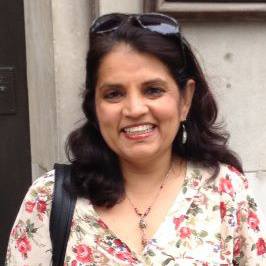
Meera Nair was born in India and moved to the US in 1997. Her first story collection, Video (Pantheon Books, 2003), received the Sixth Annual Asian American Literary Award for fiction, and was a Washington Post Best Book of the Year and a Kiriyama Prize Notable Book. Nair is also the author of the children's book Maya Saves the Day(Duckbill, 2013) and the forthcoming, Maya In a Right Royal Mess. Her fiction and essays have appeared on NPR, the Washington Post, and the New York Times among other publications. She has received fellowships from the New York Foundation of the Arts, MacDowell Colony, and the Queens Council of the arts.

What makes your workshops unique?
I've taught or continue to teach writing to undergrads and graduates at places like NYU, Brooklyn College, and Fordham, but recently I've had to rethink my pedagogy. Now I'm creating workshops for people who don't think of themselves as writers—who have no preconceived notions of craft, or conveyance, who have never agonized over choosing a point of view.

I'm currently doing a four-week workshop series for Nepali and Tibetan domestic and nail salon workers at Adhikaar, a nonprofit organization, where participants are writing personal essays on living and working as immigrant, POC workers in America. I want to give a big thanks to Muna Gurung, who has helped to interpret at the workshops, and Ryan Wong, and Kundiman who helped to set all this up. The challenge is to create a space where writing is no longer seen as “a mystery, a privilege of caste” as David Barthlomae called it. Which means I have to find methods by which participants are guided to privilege their own experiences, histories, oral testimonies, and the act of “talking to themselves” as something that is important and necessary.

I've tried to go back to the way South Asian people interact, how they are generous, expansive talkers and natural storytellers. The writers generate material using oral history methods, where I, as the facilitator, try to ask the questions and then disappear into silence while the participants talk. Once the words are said, once they exist in that shared space, once the writer has generated them, it's easier to take the next step—that of writing the words down in sentences. That step requires the writer to think about language and shaping the material, to think about rhythm and structure, but it also invites the writers to see that they already possess story, words, excitement, details, arcs—all those craft-y things.

What has been your most rewarding experience as a teacher?
I love that moment when the student understands that all writing is revision. It takes guts to revise and student-writers resist touching those initial, God-given sentences—but it's a beautiful thing when they look at that final draft and see that it's good because they learned to be brutal and ruthless with the work.

What affect has this work had on your life and/or your art?
I hear stories about people's lives that I would never have access to without the work I do outside the academic setting. Like all writers, I am a voyeur and a listener at keyholes, so to speak—and everything is material for my writing, whether I use it or not. I'm currently working on a collection of stories set in Jackson Heights, Queens, and I am getting insights and access into the lives of my characters I wouldn't have otherwise.

What is the wildest thing that’s happened in one of your workshops?
One semester I taught a workshop on writing about food and love, and three students, or maybe it was four, discovered for the first time in my workshop that they had issues with food/eating/body image and had to start therapy. I have retired that particular curriculum since.

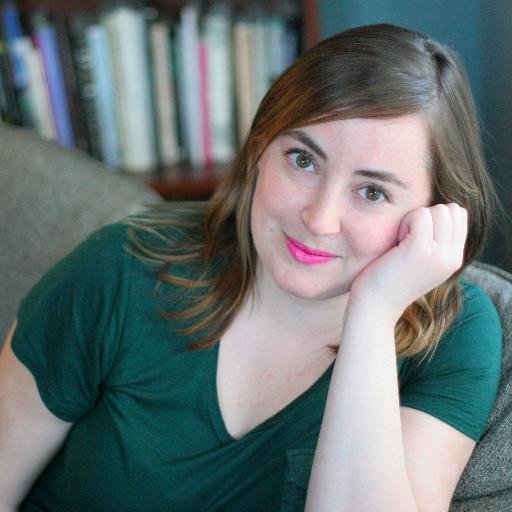
Photo: Meera Nair.  Photo credit: Meera Nair.

Support for Reading & Workshops in New York City is provided, in part, by public funds from the New York State Council on the Arts, and the New York City Department of Cultural Affairs, with additional support form the Louis & Anne Abrons Foundation, the Axe-Houghton Foundation, the A.K. Starr Charitable Trust, and the Friends of Poets & Writers.

Allergies

Many people experience seasonal allergies during spring caused by the increased amount of pollen and grass present in the air. Write a short story in which one of your characters is affected by seasonal allergies. Is it a condition that proves to have surprisingly dramatic consequences, or one that simply adds a layer of pathos, humor, or realism to the story or character?

Writing the Australian Crawl: Views on the Writer's Vocation

by
Author: 
William Stafford
by University of Michigan Press

In this classic 1978 book of essays in the University of Michigan Press's Poets on Poetry series, William Stafford explores the craft of writing as a process of discovery, and encourages writers to think deeply and to keep an open mind. Readers will be inspired by Stafford's clear and direct approach to being patient and welcoming of new ideas and creative modes.

James Hannaham Wins PEN/Faulkner Award

The PEN/Faulkner Foundation has announced James Hannaham as the winner of the 36th annual PEN/Faulkner Award for his novel Delicious Foods. The $15,000 award is given annually for a book of fiction by an American author published in the previous year.

Delicious Foods (Little, Brown), Hannaham’s second novel, tells the story of an African American boy who tries to save his mother—who struggles with drug addiction—from a farm where she is held captive. Hannaham, who is interested in experimentation in prose, wrote the novel from the perspective of the boy, the mother, and crack cocaine. Hannaham lives in New York City and teaches at the Pratt Institute.

“This exceptional novel is impressive for many reasons and speaks to the American experience today in a variety of ways, from the entrapment of perspective because of poverty and drug use to the heroic perseverance of character even after the worst of choices and atrocities,” says Sergio Troncoso, who judged this year’s prize along with fiction writers Abby Frucht and Molly McCloskey. “Delicious Foods is a standout work of fiction that will surely expand a reader’s empathy for the struggles of a variety of groups and individuals freeing themselves from modern enslavement.”

The finalists for the prize were Julie Iromuanya for Mr. and Mrs. Doctor (Coffee House Press); Viet Thanh Nguyen for The Sympathizer (Grove Press); Elizabeth Tallent for Mendocino Fire (HarperCollins); and Luis Alberto Urrea for The Water Museum (Little, Brown). Each finalist will receive $5,000. The judges­ selected the finalists from nearly five hundred novels and story collections from 165 publishing houses.

Hannaham and the four finalists will be honored at an awards ceremony at the Folger Shakespeare Library in Washington, D.C., on May 14. Recent winners of the prize include Atticus Lish for his novel, Preparation for the Next Life; Karen Joy Fowler for her novel We Are All Completely Beside Ourselves; and Benjamin Alire Sáenz for his story collection Everything Begins and Ends at the Kentucky Club.

Summer

Matthew Zapruder, poetry editor for the New York Times Magazine, says of Eileen Myles’s poem “Summer”: “Its drifting, elusive movement defines and also conjures the feeling of experiencing summer itself.” This week, make a short list of adjectives and phrases that signify to you the feeling of experiencing summer. Then write a poem that mimics the motions, rhythms, or sensations of the season. Be sure to include personal impressions or events that make your observations unique.

Pages

Subscribe to Poets & Writers RSS