Manly Book Clubs, Demystifying Publishing, and More
Literary gardens; Google AI reads romance novels to learn language; Joan Didion’s California notes; and other news.
Tags:
Jump to navigation Skip to content
Literary gardens; Google AI reads romance novels to learn language; Joan Didion’s California notes; and other news.
"I want to be able to have some impact on the Nigerian youth, and I want to be able to go back home and do something inspiring..." Chigozie Obioma talks about the response to his debut novel, The Fishermen (Little, Brown, 2015), which was shortlisted for the 2015 Man Booker Prize and won the 2016 Los Angeles Times Book Prize/Art Seidenbaum Award for First Fiction.
Many people were overjoyed to learn several weeks ago that Inky, an octopus at the National Aquarium of New Zealand, had escaped from his tank, wiggling through a drainpipe in the floor that eventually led him out into the ocean. NPR reporter Scott Simon commented, “it's hard not to note that Inky chose to bolt from surroundings in which he was safe, secure, and hand fed, for the dangers of an open sea that teems sharks, seals, and whales that might eat him. Inky chose liberty over security.” Write a personal essay about a time when you chose freedom, whether via a daring escape or by bravely walking away, from a lifestyle you weren’t satisfied with that may have seemed like a safer, more stable route. Were there risky obstacles to overcome? What are your thoughts about your decision in hindsight?
Author day jobs; Jacqueline Woodson on James Baldwin’s influence; transgender writers and required reading lists; and other news.
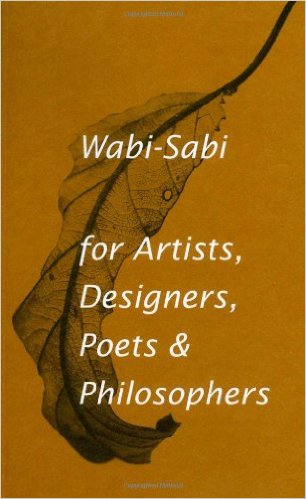
"I have since come to believe that wabi-sabi is related to many of the more emphatic anti-aesthetics that invariably spring from the young, modern, creative soul: beat, punk, grunge, or whatever it's called next." In this book, artist and writer Leonard Koren introduces the concept of the Japanese tradition of wabi-sabi: the beauty of incomplete, imperfect, impermanent things. Readers and writers interested in a new perspective on artistic practice will find inspiration in Koren's application of wabi-sabi to contemporary, Western approaches to the creative process, and the focus on transcending conventional ways of observation.
“Can we really mold a narrative around something that defies narrative itself?... How can we re-create an experience that eludes the conscious mind?” In “This Is Your Brain on Fear” in the May/June issue of Poets & Writers Magazine, J. T. Bushnell asks these questions as he explores the relationship between narrative storytelling and the often fragmentary, uncertain nature of memory and observation when people experience trauma. Write a scene of high stress, fear, or trauma for a first-person narrator that makes use of “selective description of external details.” Resist the temptation to fill in the blanks or describe the passage of time in a linear way. Explore the way the human brain processes events, and incorporate your findings into your storytelling.
Submissions are currently open for the BOMB magazine poetry prize, which is given biennially for a group of poems. The winner will receive $1,000 and publication in BOMB magazine. Bhanu Kapil will judge.
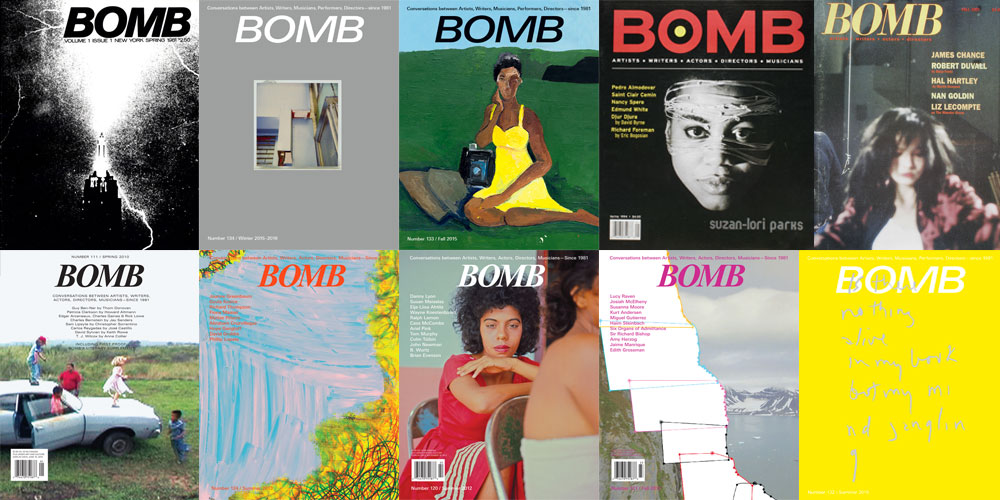
Using the online submission manager, submit up to five poems totaling no more than 10 pages and a $20 reading fee, which includes a one-year subscription to BOMB, by May 15. Simultaneous submissions are accepted. The winner will be announced on July 31. For questions, e-mail [email protected].
Bhanu Kapil is the author of five full-length hybrid works of poetry and prose, including Schizophrene (2011) and Ban en Banlieue (2015). She teaches writing at Naropa University’s Jack Kerouac School of Disembodied Poetics, and at Goddard College’s low-residency MFA program.
Founded in 1981, BOMB is an independent nonprofit magazine that publishes conversations between artists of various disciplines; original works of fiction and poetry; novel excerpts; and first-time translations into English. The magazine also sponsors a fiction prize, which is given in alternating years. Previous winners of BOMB’s poetry contest include Daniel Poppick, Steve Dickison, Amanda Auchter, J. R. Thelin and Matthew Reeck.
Shelfie app partners with U.S. bookstore; Ruth Ozeki on embodied writing; on avoiding childbirth scenes in fiction; and other news.
In part one of an extended interview, Man Booker Prize–winning author Iris Murdoch discusses the differences between writing literature and philosophy. Two of her most celebrated novels, A Severed Head (Chatto & Windus, 1961) and The Sea, the Sea (Chatto & Windus, 1978), have just been rereleased in a combined hardcover edition by Everyman's Library.
For a period of eighteen months in the late 1970s, an unexpected pairing of communities took place: the building that housed the San Francisco Club for the Deaf, a social club for the deaf community, became the venue for notable punk rock shows and album recordings. In an article about a Deaf Club event in T: The New York Times Style Magazine, Opal Gordon, a deaf performer, said, “Music is strong, [deaf people] can feel the vibrations. Punk is perfect because it’s loud, it’s heavy, it’s in your face.” Write a poem in which you imagine experiencing a musical performance—whether punk, classical, country, or jazz—that you can see and feel, but not hear. Think about the ways in which music can transcend sound, focusing on the visual or literal attitude of the performance.