




How to Live: Lessons From Last Night’s Reading
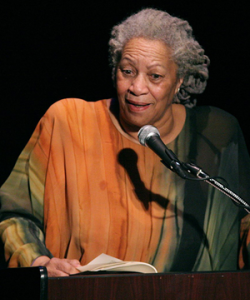
The author reflects on what he’s learned about writing and life from attending readings for the past twenty-five years.
Tags:
Jump to navigation Skip to content
Articles from Poet & Writers Magazine include material from the print edition plus exclusive online-only material.
The author reflects on what he’s learned about writing and life from attending readings for the past twenty-five years.
Follow three Philadelphia writers as they join a community of more than three hundred thousand writers participating in NaNoWriMo, a challenge to write a fifty-thousand-word novel during the month of November.

Contributors to the anthology Indelible in the Hippocampus discuss some of their thoughts on the current state of the #MeToo movement and their experiences writing on the topic.

How do you handle research? How indebted do you feel to stick to the historical record? Two novelists discuss their experiences researching, imagining, and depicting earlier times.

We return to certain novels not only to be enchanted and inspired, to be transported out of ourselves, but also to know ourselves more deeply.

The author reflects on his growing collection of books and what it shows about his life as a reader and writer.
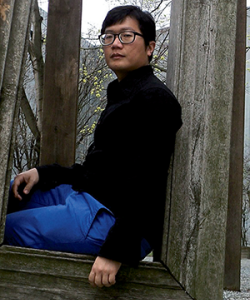
A translator examines the many shapes a language can take, and how cultural influence and interpretation can affect the translation process.
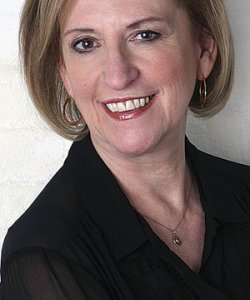
An author considers the process of converting rooms from the past into creative spaces for the future.
A fiction writer breaks up with her novel and learns that sometimes it’s more important to follow your intuition than take advice.
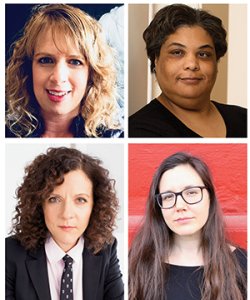
Using elements of craft to tell powerful stories about sexual assault and trauma, with examples from work by Roxane Gay, Alexandria Marzano-Lesnevich, Megan Stielstra, and others.
A defense of books that whisper in an increasingly noisy world.

A former writing teacher explores the best methods for encouraging new talent.

How important is it for characters to be likeable? A look at a controversial question, and how literature’s darker actors can pose useful lessons about both the craft of writing and ourselves.

Writing through trauma isn’t always a healing experience. A poet and novelist investigates the complexities and challenges of writing with post-traumatic stress disorder.

Best-selling author Daniel Wallace (Big Fish) has been submitting short stories to the New Yorker for more than thirty years, and has yet to receive a letter of acceptance. What he did receive, however, was a surprising friendship...

It took Joyce Maynard twenty-five years of reflection, distance, and understanding to write her first memoir. But when tragedy struck later in life, her second memoir came much more quickly.

After the sudden death of his sister, an author shifts his focus from trying to write through grief to writing a book for the person he lost.

For the author whose new novel, The Gypsy Moth Summer, is out now, it took over two decades of writing and rewriting the same scene from her childhood to fully understand—and make peace with—her past.

A poet explains how allowing ourselves to write badly is not only generative, but can also break the habit of self-censorship and can lead to our best work.

Novelist Elizabeth Nunez discusses the historical and contemporary challenges that Black writers face in the publishing industry, and urges publishers to address those challenges by publishing more diverse authors.
A poet, novelist, and memoirist investigates the experience of imposter syndrome—that insidious feeling of being a fraud—and poses the question, What would happen if writers stopped viewing their careers as a series of happy accidents?

A personal and in-depth look at the life and poetry of John Berryman, with particular focus on The Dream Songs.
A writer and workshop instructor grapples with what he sees as an increasing resistance toward the work of established authors among writing students.
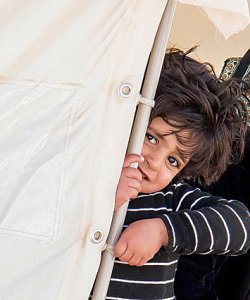
In a continuing series examining the state of literature abroad, poets Amjad Etry and Hala Mohammad and filmmaker Muhammad Bayazid discuss the challenges that writers and artists face amidst ongoing political turmoil in Syria.
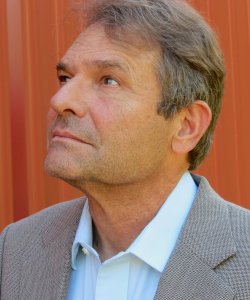
The strange and beautiful universe of Denis Johnson’s fiction is marked by the enduring appeal of his 1992 story collection, Jesus’ Son.