Bloom Readings at the Lounge
Sam Perkins is a freelance writer, poet, translator, and editor who has worked in magazines for two decades. His nonfiction work has appeared in the New York Times, Next Avenue, Atlas Obscura, and numerous travel magazines. His poetry translations from Chinese, done in collaboration with Joan Xie, have appeared in Exchanges: A Journal of Literary Translation and in the collection Thirteen Leaves (Three Owls Press, 2018).
 Bloom Readings is a series that takes place monthly, always on Sundays at 5:00 PM, in “The Lounge,” an elegant 1920s event space in the Hudson View Gardens apartment complex on 183rd Street and Pinehurst Avenue in New York City. As curators of Bloom, Sarah Van Arsdale and I invite writers of prose and poetry from Washington Heights and beyond to share their work.
One of the most appealing features of Bloom is that we really aim to get the small details right: We have a printed program with suggested reading, we keep the inevitable white wine cold enough to drink without wincing, we have chips and dip, and we enlist the local bookshop co-op Word Up to sell the books of our featured readers. After the reading we go to one of the organizer’s apartments for a simple, leisurely meal.
Sarah, the Bloom team, and I want to make our readings an enjoyable, memorable moment for the readers. One of our challenges is that we’re a bit of a hike for readers coming from Brooklyn, Queens, or New Jersey. We like to think these details count. This year, thanks to Poets & Writers, we’ve been able to offer readers a small honorarium. It’s a wonderful feeling.
Bloom is proud of the roster of writers who have come to read, established voices like Rachel Hadas, Cornelius Eady, Jeanne Marie Beaumont, and Teresa Svoboda, and emerging voices like poets Rico Frederick and Sarah Jewell, and at our most recent reading, short story writer Dennis Norris II. Wherever they are in their careers, all are dedicated to their craft and calling.
For our reading on September 23, translator, scholar, and essayist Leah Souffrant read from her book, Plain Burned Things: A Poetics of the Unsayable, and performed “Thread: Attention to Loving,” a selection from her new manuscript Entanglements, which was accompanied by a video piece “Visual Entanglements 9.” Leah’s reading focused on the difficulty of expressing what is sensed but ultimately unknowable. As she read, Leah projected a series of flowing images on the wall behind her. Straddling the border between abstract and representational, the arresting video sequence reinforced and expanded the themes she tackles in her writing—the frustration and fascination we feel as writers, trying to explain the objective and subjective worlds we occupy.
Dennis Norris II read “Last Rites,” a moving, meditative short story recently published in the anthology Everyday People: The Color of Life (Atria Books, 2018) edited by Jennifer Baker. The narrative moves through the thoughts of a father, “The Reverend,” waiting to be rescued from a car crash. Toggling back and forth through time, we follow the Reverend’s memories of his son as a child, his late wife, and the demons that resurface as he tries to come to terms with his past as a husband and father. Dennis’s career is taking off. It’s a wonderful feeling to give young writers a boost.
Although Meena Alexander was unable to attend the reading, we were treated to a selection of poems from her recent collection, Atmospheric Embroidery (TriQuarterly Books, 2018), read by Leah Souffrant and Sarah Van Arsdale. Even in her absence, Meena’s words filled the room with, as she puts it in her poem “Darling Coffee,” “the periodic pleasure of small happenings.”
Interspersed with the other readers, Joan Xie, a poet who writes in Chinese and English, and I read from our recently published collaborative translation, Thirteen Leaves, an anthology of contemporary Chinese poetry. We chose poems from Lan Lan, Guma, and Arxin, none of whom are well-known in the United States but are widely recognized in China. Arxin’s poem, “Those Years on the Bank of Sanduo River,” sums up a feeling many poets and other creative writers have when they consider the writing life:
... I saw my house on the beach
— a lone cabin
surrounded, battered
by snow on all sides.
Running a monthly series takes extra work, which couldn’t be managed without our great team: Kate Hogan, Joan Greenbaum, Barbara Blatner, and Gabriella Barnstone. Together, we divide and conquer, and get it done.
This October, we have a great line-up of readers: Nathan McClain, Tishon Woolcock, Glynn Pogue, and Carol Potter. We look forward to having a great 2018–2019 season enhanced by funding provided by the Poets & Writers’ Readings & Workshops program. We’re so grateful for the support!
Support for the Readings & Workshops Program in New York City is provided, in part, by public funds from the New York State Council on the Arts, and the New York City Department of Cultural Affairs, with additional support from the Frances Abbey Endowment, the Cowles Charitable Trust, and the Friends of Poets & Writers.
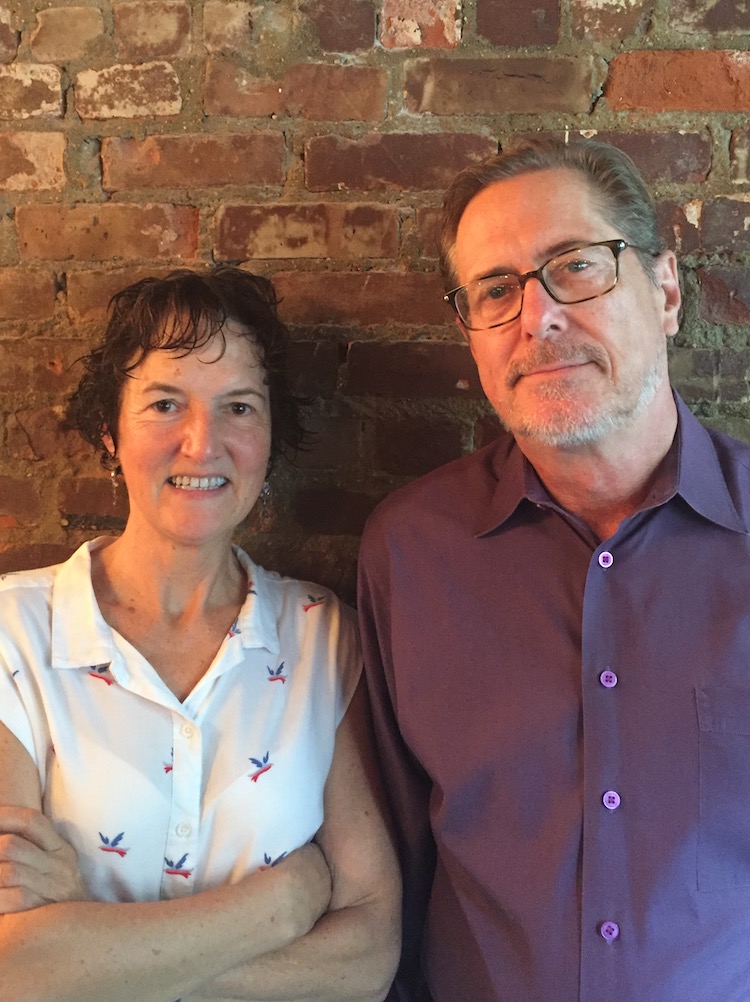
Photo: Sarah Van Arsdale and Sam Perkins (Credit: Wesley Schmidt).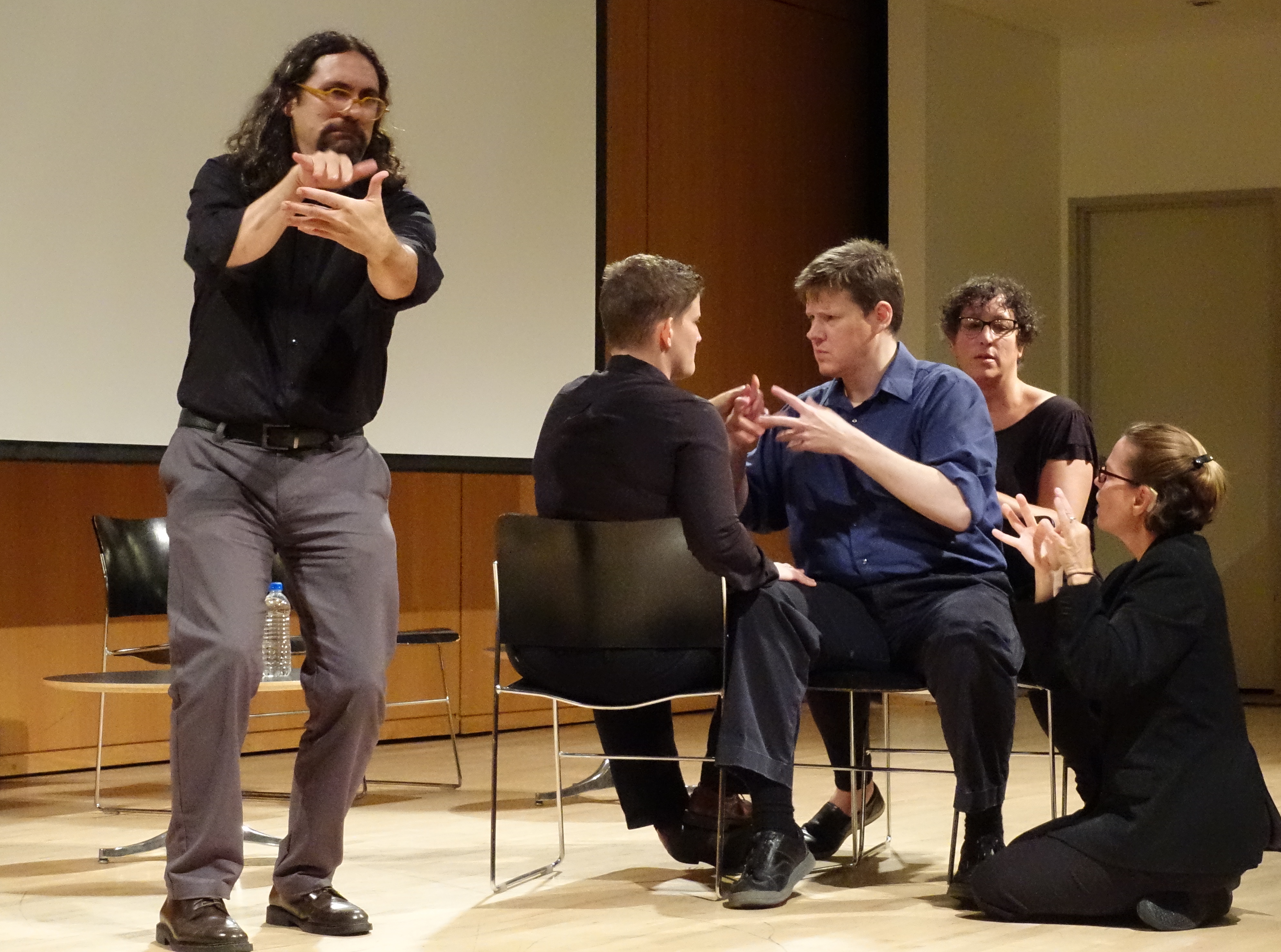 On September 13, scholars, authors, and poets came together for a workshop and performance in New York City that approached the question, “How can American Sign Language poetry be published?” In the afternoon workshop, this question was addressed through several angles, from interactive digital publications and the preservation of video “texts” to pop-up books, flip books, and comic strips.
 The Healing by Writing workshops and reading held this past June were attended by Sonoma residents who experienced the October 2017 Northern California wildfires. Most of the participants did not see themselves as writers, but as residents of the county seeking healing from the trauma of the fires.
 Every day, from the early 1900s to the last quarter of the twentieth century, the hundred-foot-tall concrete grain silos along Buffalo, New York’s namesake river and Lake Erie thrummed and hushed with rushing grain. At the city’s peak, thirty-eight of these towering elevators held forty-seven million bushels, and helped to feed the world. Now, on three nights a year, every summer since 2012, those same grain silos hum and echo with poetry.
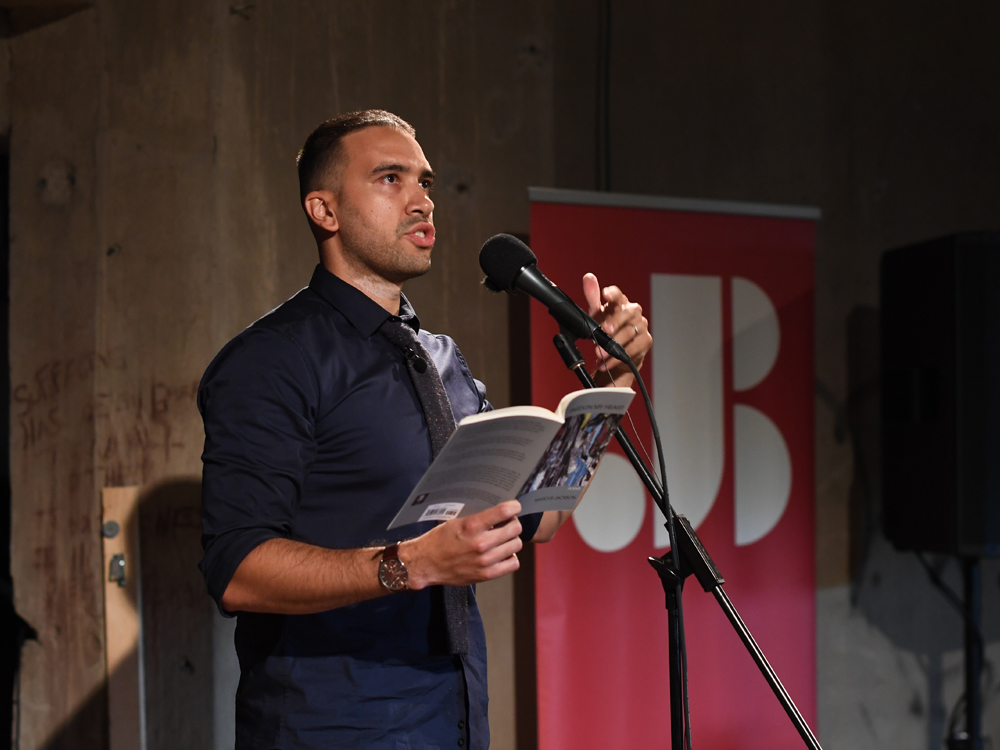 On August 18, the city’s grain silos held a “micro-arts festival” to honor the work of Frank Stanford and herald the publication of a book that takes its title from one of his posthumous manuscripts, Constant Stranger. With the support of Poets & Writers, the festival brought the poets Kazim Ali, Marcus Jackson, and Matt Henriksen to Buffalo for one extraordinary night of performances, which included readings by Stanford’s close friend Bill Willett and a theatrical performance by Torn Space Theater.
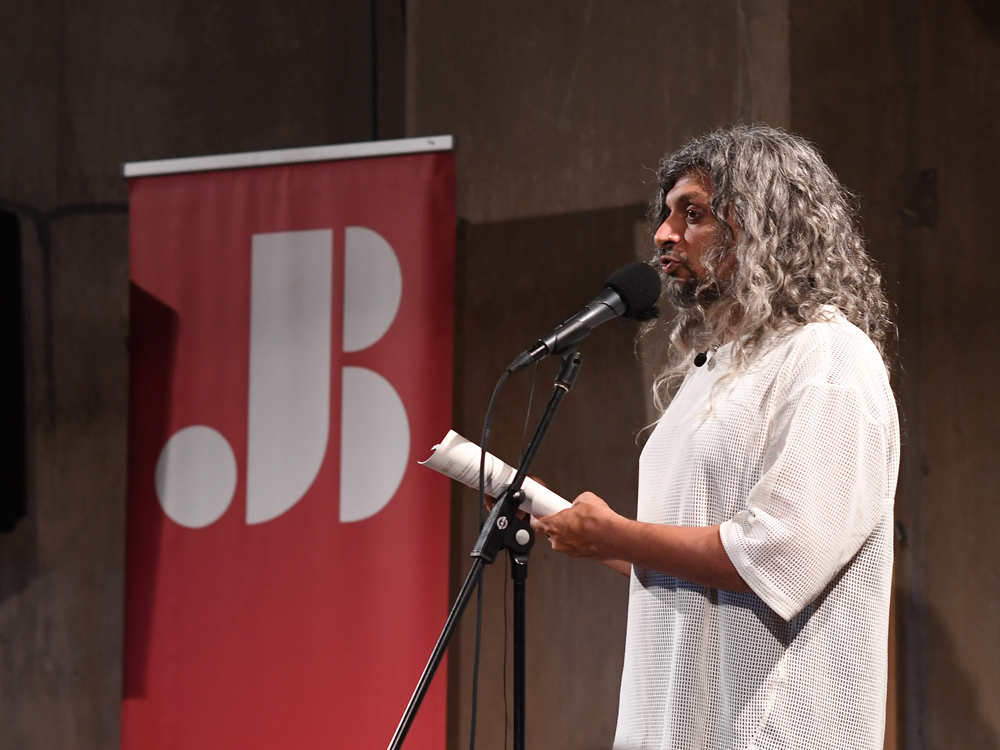 Marcus Jackson opened the evening, using the intimate circle of the Marine A silo to read poems from his collection Pardon My Heart (Northwestern University Press, 2018). Following a set by the electronic music group UVB76 and then a short break, Kazim Ali took the stage to read a mix of poetry from his latest collection, Inquisition (Wesleyan University Press, 2018), and unpublished work—including, and very much in the spirit of Stanford, poems conceived that day.
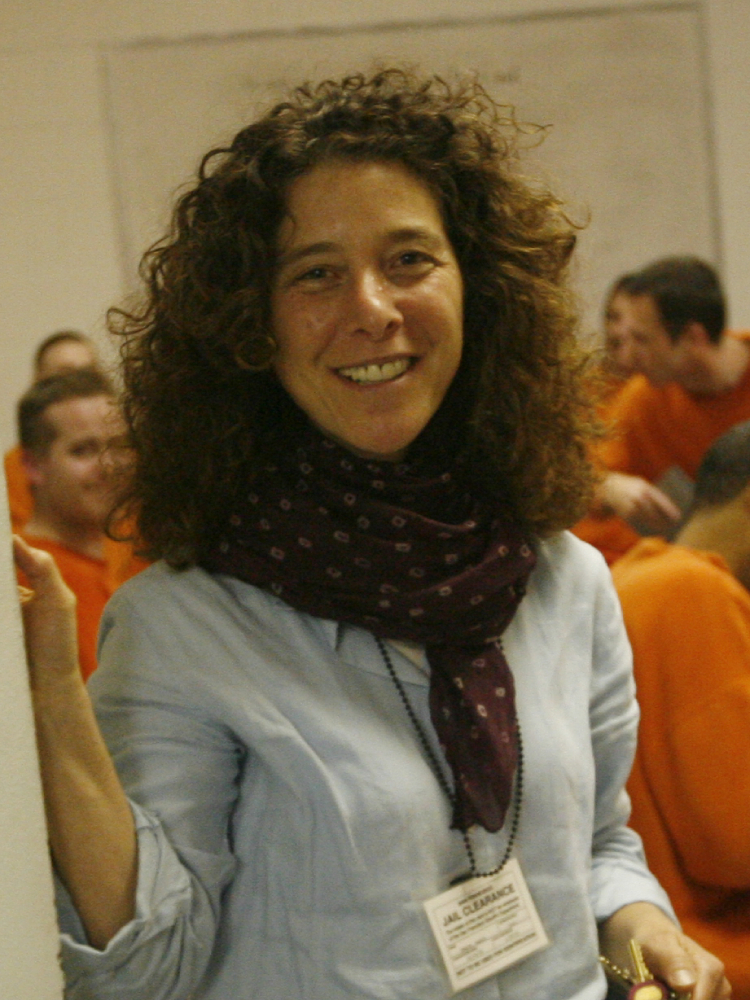
 The very energy of prison is punitive, designed to drive love out. Perhaps this is why implementing the Roots and Wings Project’s ASCENSION, a P&W–supported theater and writing pilot workshop series at the California State Prison in Lancaster, a men’s prison, and the California Institution for Women, a women’s state prison in Chino, was nearly impossible.
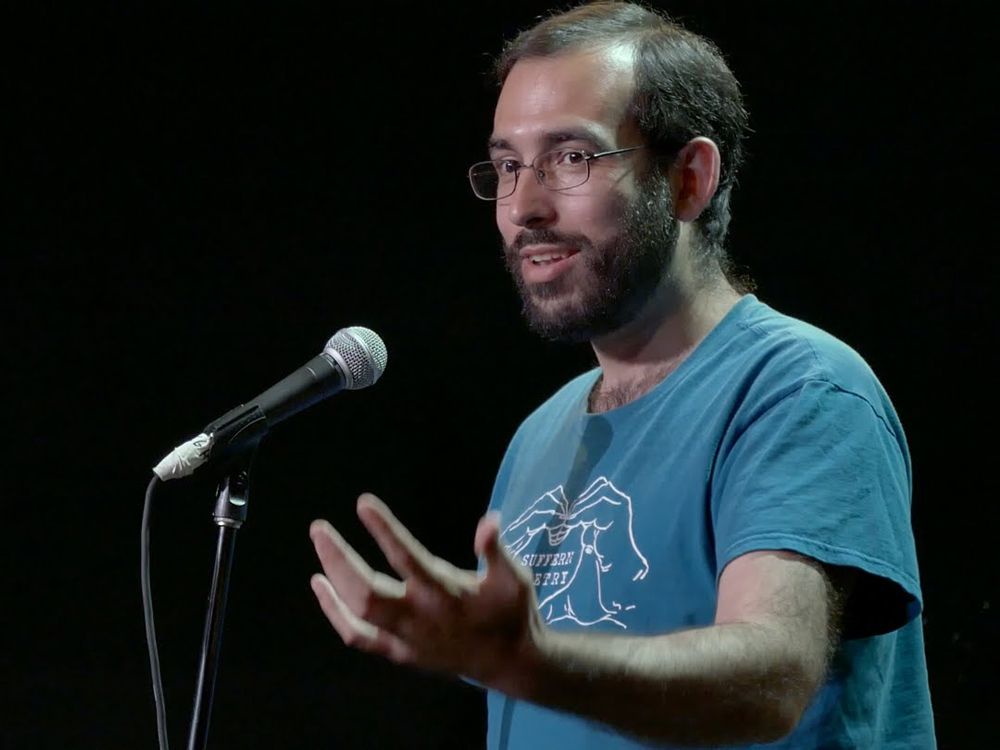 Rockland Poets, formerly known as Suffern Poetry, has been hosting monthly poetry open mics and slams in the Lower Hudson Valley’s Rockland County since 2011. We’re a pretty small organization, currently run by seven volunteers, all of whom are residents of Rockland County or northern New Jersey. We run our events because art and community are vital. Poetry is an accessible art form in that you don’t need any special training or tools to create poems or to appreciate them. In the spirit of that accessibility, all of our events are open to the public and almost all incorporate open mics, where anyone can sign up to share their work. The grants we’ve received through Poets & Writers over the years have been of great importance to keep these events open and running.
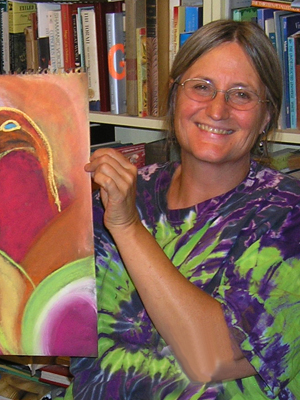 Anyone who has survived more than a decade or two on this planet has stories to tell. Often, however, people who struggle with addiction have not had the opportunity to sit down and write their stories, not even for themselves. For the clients I have worked with in recovery, any available energy they have is directed at surviving challenging life circumstances. Some have been incarcerated, and when the prison doors open, they land in a halfway house or in day treatment for addiction. Then suddenly, there is time and room to reflect on experiences, to tell the stories that need to be told.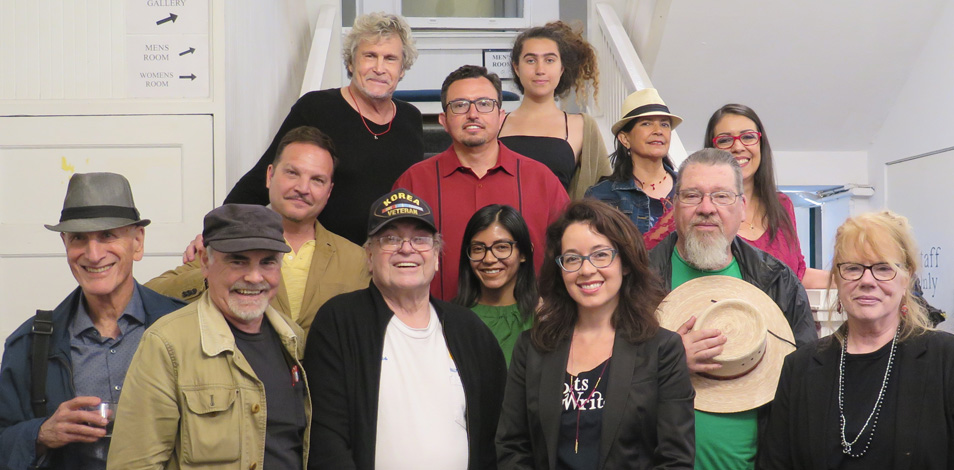
 When we set out to build WEIRDD, our monthly poetry reading series held at Books Are Magic in Brooklyn, we had a few apophatic rules of thumb. No flimsy introductions. No parched mouths. No inhospitable (and inexplicable) non-hosting. No regurgitated blurbs. We knew exactly what we wanted to avoid, having been through that wringer, and though our first season hasn’t been without its bumps, on the whole we feel the series has found its early footing in a well-ordered sensibility.
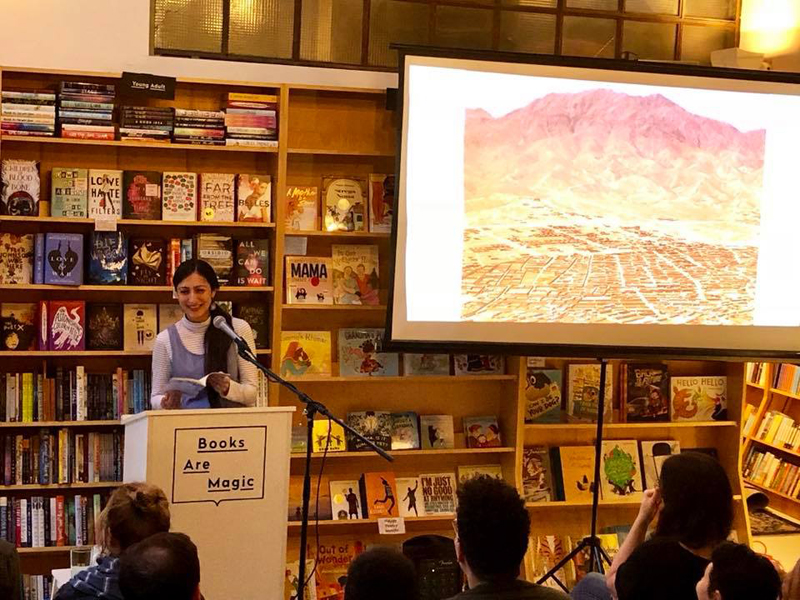 With these guidelines holding space, we’ve learned so much from so many: Jenny Xie’s gnomic scrying, Ricardo Maldonado’s elfin sonatas, Marwa Helal’s recognitive cataracts, Yanyi Luo’s arch scrutiny, Rio Cortez’s yawning infinity, Jayson P. Smith’s quenching jewels, Paul C. Stone’s mastery of the leap, Jen Hyde’s affinity for apertures, Sahar Muradi’s sense of strata, Valerie Hsuing’s sentient microphones, Chase Berggrun’s climbable wordscapes, Wren Hanks’s unflinching apparatus, Amy Meng’s history of rue, Julia Guez’s kaleidoscopic array, Jen Levitt’s droll orbitals, Jerome Murphy’s painterly ambulation, and Joey De Jesus’s omnivolent manticore.
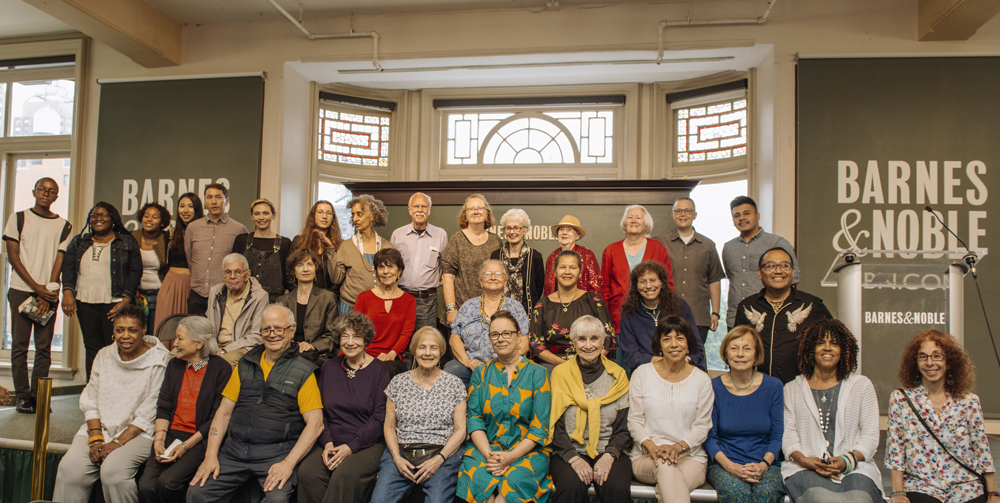
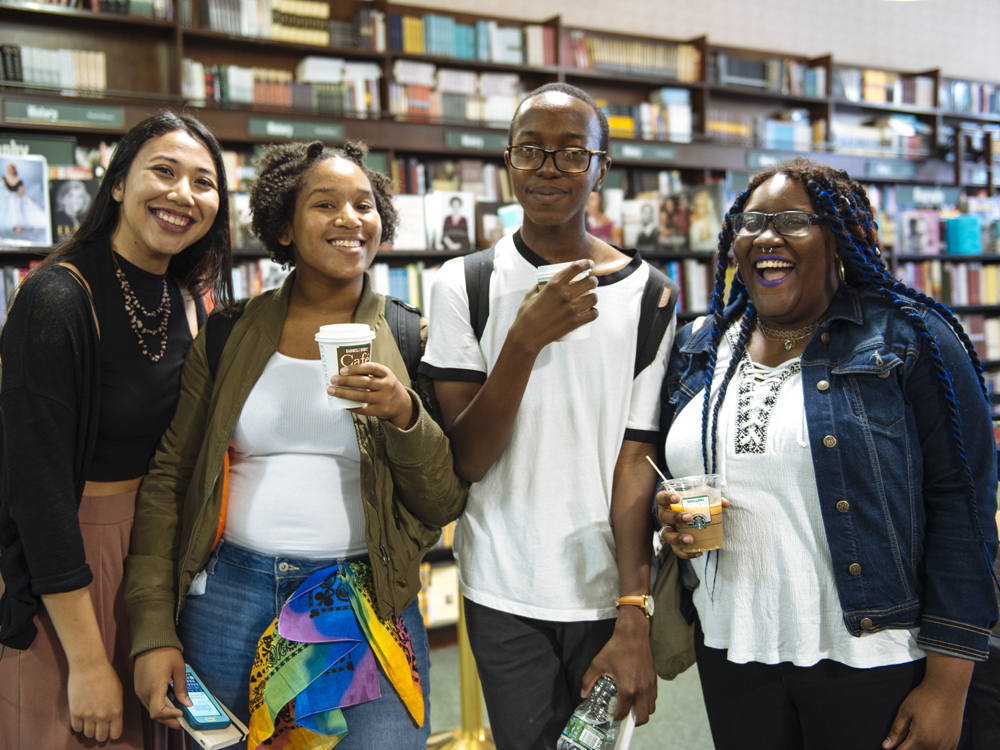 On Saturday, June 23, Poets & Writers held its seventeenth annual Intergenerational Reading at Barnes & Noble at Union Square, where we’ve held the reading for the past seven years. As I listened to the thirty-six writers from the ages of eleven to eighty-six, I thought back to the beginnings of this celebratory reading, when we were given a grant in 2001 from the Louis and Anne Abrons Foundation to conduct writing workshops at senior and teen community centers. Visiting the programs, I was moved by the diversity of voices, and the similarities and differences in the generations. I thought it would be inspiring to bring these generations together. The first Intergenerational Reading was held in a community room at the Goddard Riverside Community Center’s NORC Program, with about six readers and an audience of about twenty.