Asian American Poets Encounter the South
Tiana Nobile is a Kundiman Fellow and lives in New Orleans. Her poetry has appeared in the Collagist, Phantom, Bone Bouquet, TENDE RLOIN, and others. Her chapbook, The Spirit in the Staircase, a collaboration with visual artist Brigid Conroy, is forthcoming in spring 2017.
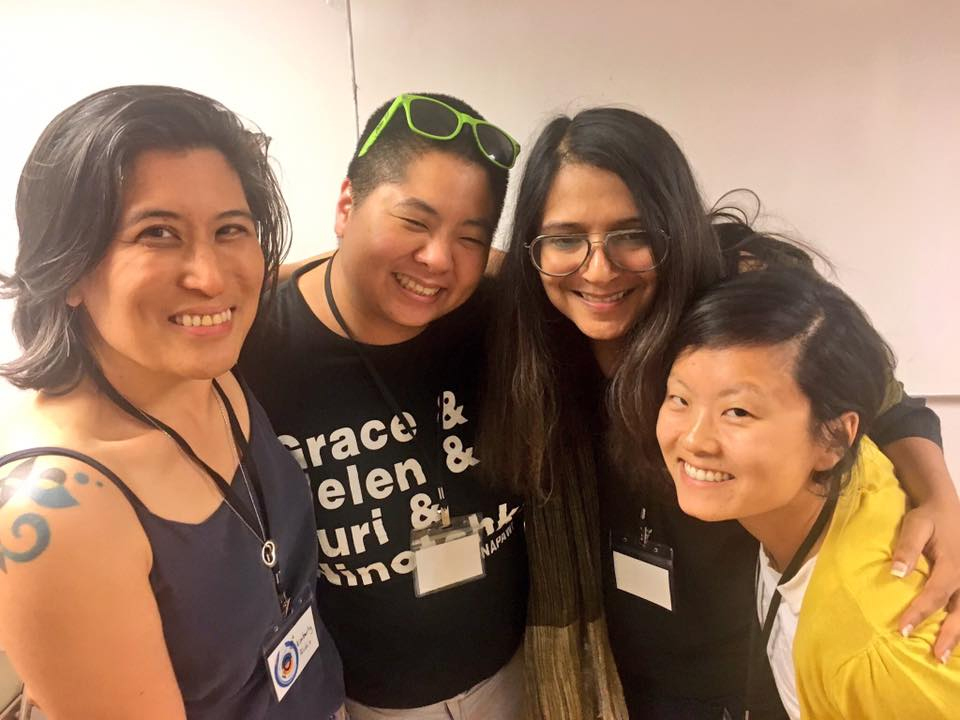 The history and reality of being Asian American in the South are often rendered invisible when it comes to mainstream discourse. Four Kundiman fellows worked to challenge this erasure by uplifting the voices of Asian American poets in the South through the panel, “Self-Articulation and Solidarity: Asian American Poets Encounter the South,” a hybrid poetry reading and discussion at the New Orleans Poetry Festival on April 21.
Within the vast terrain that constitutes the South, we all hail from distinct locations—Ching-In Chen from Houston, Kimberly Alidio from Austin, Vidhu Aggarwal from Orlando, and I’m from New Orleans—and our experiences and histories within these places vary greatly. This panel was not an attempt to seek or define a singular narrative; rather, we discussed the diversity of experience and our personal relationships with the South, whether that be as newcomers, natives, or transplants. While our various participations range, they include actively acknowledging and illuminating the deep, complex histories of Asian American existence in southern communities as teachers and standing in solidarity with the Black Lives Matter movement as activists through Asians 4 Black Lives. During the panel we shared poems and engaged in a critical dialogue in order to call attention to the fact that yes, we are here, we have been here, and we aren’t going anywhere.
Below, the panelists share their thoughts on the experience.
“Our panel was a map across Texas, Louisiana, Florida, and Maryland. It stitched many Asian American Souths: rural and urban, spectacular and invisible. It is intimate and curious. How we commute between communities in a politically diverse South. How we return again and again to crisis encounters in responses to street harassers and scammers profiting from gentrification schemes. How childhoods in the South birth postcolonial futures. How technologies can translate and transmit the migrant condition. Our panel pushed against various narrows and traps. We don’t claim space for permanent, historical settlements atop indigenous land. We refuse to compete with Black communities for civic attention and resources in the South. This is difficult and collaborative work. Thanks to Poets & Writers for making this glimpse of possibility possible.”
—Kimberly Alidio, author of After projects the resound (Black Radish, 2016)
“For Ching-In and I, the New Orleans Poetry Festival was the third iteration of the ‘Self-Articulation’ panel. For me it felt different speaking in New Orleans, where I grew up, learned to ride a bike, worked in street fairs, and where Tiana Nobile has lived for the last ten years. Kimberley Alido read/spoke brilliantly of the Texas landscape. Tiana read from her manuscript The Spirit in the Staircase, ‘l’esprit d’escalier,’ the French term for the perfect comeback, arriving woefully too late, after the fact. We’ve all had our share of jibes, insults on the street, and the impossibility of ready answers. Ching-In asked me about comebacks I might have up my sleeve, and I blanked. A comeback to what? My instinct was to invite folks in the room to hurl insults at me, so I could test my wits in real time! But I couldn’t even do that. I was too slow! The conversation moved on: to the freeze response. Or whether or not our works were a type of response. But would that always put our work/ourselves in a defensive/offensive posture? In argument? We could have talked more, and did over drinks and crawfish at Tiana’s. It was okay to be slow, to take our time, to meet up again and again and figure it out.”
—Vidhu Aggarwal, author of The Trouble With Humpadori (The (Great) Indian Poetry Collective, 2016)
“It’s rare to be seen and allowed space to reflect upon where you live, where you spend time, what you are burning to say and ask. While living in the South, I have felt between spaces, between binaries, between stories. One of the challenges about making sense of our experiences living in the South is that they are so varied and feel singular. Though our experiences living/working in Baltimore; Austin, Houston, and Huntsville in Texas; Orlando, Florida; and New Orleans were varied, to talk, eat, laugh, and poem with other Kundiman South poets at the New Orleans Poetry Festival was to recognize and make sense of each other, to put story to our questions, dialogues, and encounters, to practice generosity with each other and with those we live in community.”
—Ching-In Chen, author of recombinant (Kelsey Street Press, 2017)
Support for Readings & Workshops in New Orleans is provided by an endowment established with generous contributions from the Poets & Writers Board of Directors and others. Additional support comes from the Friends of Poets & Writers.
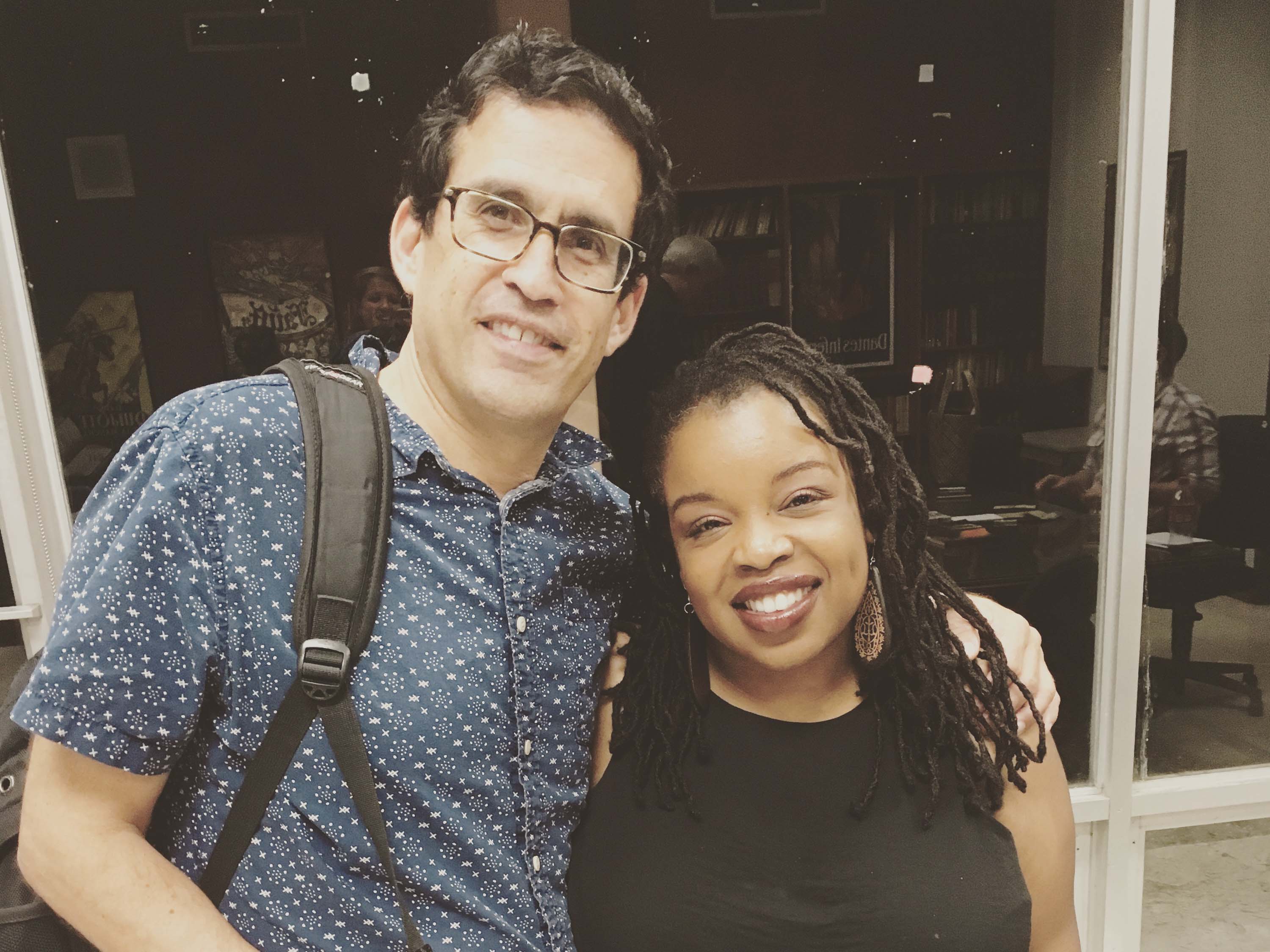
Photo: Kimberly Alidio, Ching-In Chen, Vidhu Aggarwal, and Tiana Nobile (Credit: Cathy Linh Che). I have the honor and privilege of being chosen by the
  The University of New Orleans (UNO) English Department and the Creative Writing Workshop, our MFA program, hosts readings and lectures by local and national poets. In recent years, Marilyn Chin, Shara McCallum, Laura Mullen, Marjorie Perloff, Metta Sáma, and Richard Siken have presented their work at UNO. Our poetry readings are held in the Liberal Arts building, Room 197, aka “the Lounge.” Complete with a kitchenette, restrooms, a brick courtyard, filled bookshelves, conference tables, couches, comfy chairs, restrooms, and seven entrances, this communal space serves as a casual dining area, a workshop classroom, and the site of the annual MFA prom. Reflective of the culture of our program and the city, a motto that suits our events might be: Come as you are. Bring what you can. Students and faculty arrange the furniture and contribute homemade food and refreshments.
 Creative Writing Workshop alumnus Spencer Silverthorne then introduced Rodrigo Toscano. A polyphonic poet with an experimental bent, the longtime Brooklyn resident and recent New Orleans transplant gave a memorable performance from his fifth poetry collection, Explosion Rocks Springfield (Fence Books, 2016). Like Harris, Toscano read from a stack of loose pages. A line from a newspaper article, “The Friday evening gas explosion in Springfield leveled a strip club next to a day care,” serves as the title of each of the book’s eighty poems—a title he delivered with varied nuance each time.
 In 2015, a group of artists, educators, activists, writers, doulas, and healthcare workers came together for an informal think tank to discuss social, cultural, and political issues that surround HIV/AIDS—which include criminalization, stigma, and ways AIDS history is being remembered and disremembered. From there we formed a collective, and started meeting monthly. What became obvious to us soon in the process was that we, as a group, had to check in with each other to figure out what we knew and felt about HIV. Each of us—whether living with the virus or being deeply impacted by it—had different experiences and awareness of the epidemic. At the same time, doula work had become ever more present in our communities—birth doulas, end of life doulas, abortion doulas, gender doulas—folks who fundamentally hold space for someone during a time of transition. We came to understand that we needed to doula ourselves, that is, to hold space for each other in order to better understand the current reality of the virus, to better consider what contemporary responses to AIDS should look like. To do this, we began with a question: What would an HIV doula do?
 With the support of Poets & Writers, we created a five-part workshop series titled HIV WITH. For each session, a different theme—trauma, spirituality, public health, language, witnessing—and its relation to HIV would be explored under the guidance of a writer and a cofacilitator. For the second workshop of the series, poet and educator Timothy DuWhite and dancer and healer iele paloumpis came together to explore HIV through the interconnected systems of the mind, body, soul, and government. After delivering a powerful presentation on
  New to Altadena, and still new as its poet laureate, this past fall I tried to think about what programming would best serve this community—an unincorporated area in Los Angeles County, nestled in the San Gabriel foothills and blending into the borders of Pasadena. I decided a poetry workshop in February would be just the thing to build community and generate interest in poetry in advance of National Poetry Month and other planned literary events. Who might come in to teach enthusiastic poets who write for the joy of expression, the desire to play with words, and the chance to connect with community, I wondered.
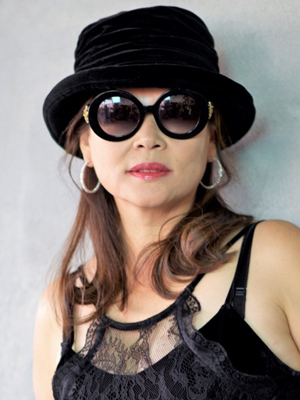 On a chilly January evening, the Korean language reverberated through the Poet’s Garden at Beyond Baroque in Venice, California for the “Bittersweet: The Immigrant Stories” event. In all the mainstream poetry readings I’ve attended, the voices of these first-generation immigrants have been absent. Many immigrants want to express themselves but cannot due to language, social, and cultural barriers. In the Korean writer circles, the few who give voice to the immigrant experience aren’t even confident that their stories are worthy of translation or performance in English. Without translation, these original stories are in danger of dying out with the immigrant generation. I want to prevent that. As Toni Morrison said, “If there is a book that you want to read, but it hasn't been written yet, you must be the one to write it.”
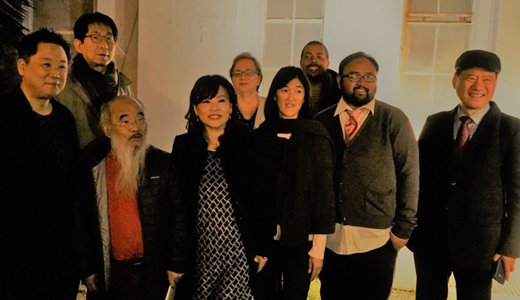 I thank all the participants; my cohost Julayne Lee; and the artists So Hyun Chang, Alexis Rhone Fancher, Christine Gonzalez, liz gonzales, June C. Kim, Soo Bok Kim, Duk Kyu Park, Kuya Paul, and Hiram Sims for making “Bittersweet” such a special night.
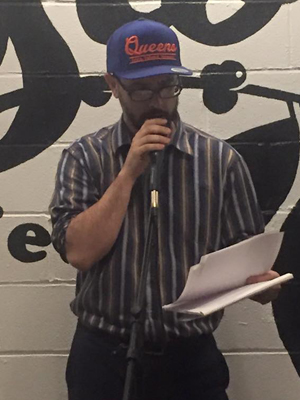 Shortly after graduating from the New School, I started to think about how I could continue the same sense of community, support, creative energy, and stimulation that I received from my fellow students and professors. I saw a post on Facebook that was searching for someone to host and curate a reading series/open mic at a new comedy and creative venue in Astoria. The idea was to feature a diverse mix of Queens and non-Queens-based writers, and get local writers from my New School MFA connections and on social media to bring another reading series to the often overlooked borough of Queens and its budding literary scene, which happens to be my home and birthplace.
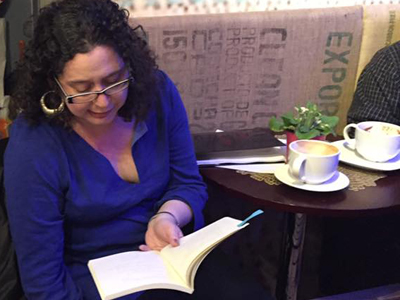 The “Risk” and “Discovery” in the reading series title was inspired by essays on writing by Yusef Komunyakaa, which emphasize the surprise that can come in one’s writing when challenging subjects or ideas are tackled in an unorthodox or imaginative way. At the most recent incarnation of my reading series, I give my attendees a handout with poetry prompts that asks them to write instant poems (the discovery), and then read them aloud (the risk). These poetry prompts have also been an effective way to jumpstart my own writing and bring things out of me from angles and perspectives that wouldn’t have otherwise been extracted or mined. Featured readers, such as Mathew Yeager, Nicole Goodwin, and Ryan Black, have taken the challenge and read their “instant poems” aloud.
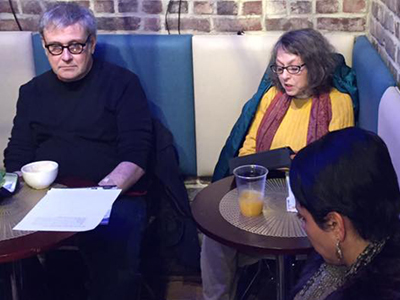 Featured poets who are paid an honorarium are thrilled that this reading series has received grants from the Readings & Workshops Program at Poets & Writers, which encourages writers to travel and go on tours to promote their collections. The option to pay featured readers attracts a wide range of writers to my reading series, and it has grown and built a regular audience over the last three years.
 Dixon Place is one of New York’s oldest art spaces dedicated to creating new work. Since 1986, we have been a nonprofit institution committed to supporting the creative process by presenting original works of theatre, dance, music, puppetry, circus arts, and visual art at all stages of development. We hope to encourage diverse artists of all stripes and callings to take risks, generate new ideas, and consummate new practices.
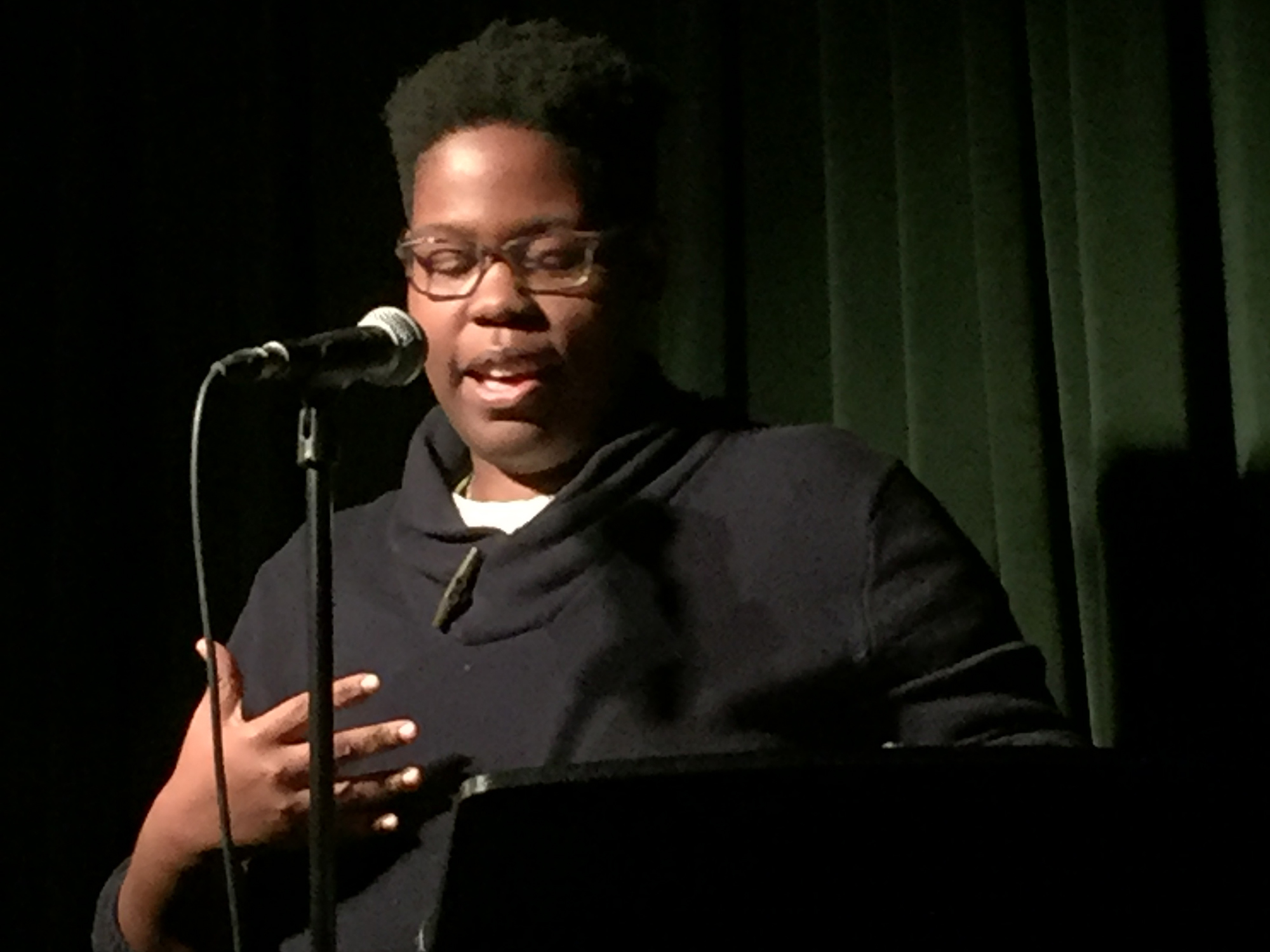 Experiments & Disorders is Dixon’s longest continuously running literary series; Tom Cole and I have been curating it together for the last seven years. Each year we have six to eight readings, depending on budgets and scheduling. Usually, Experiments & Disorders is the second or third Tuesday of the month. Tom and I are committed to new work—we always find some writers through submissions, and we often like to pair a less experienced writer with a more experienced writer, though that doesn’t always happen. We love to pair works across genres, so that in one evening we might have fiction read by the author and a performance text read by actors, or a poet and an essayist.
 It’s a home for experiments. I love all of the new work! Last month, we had Heidi Julavits and Leslie Jamison, and they both read work that they’d never read before. It was such an intimate gift.
 What makes your workshops unique?
 Six years ago, I sat on a flight back to California from Hawai‘i, flipping through the inflight magazine. A photo captured my attention: Musicians in the 1970s gathered with string instruments on the Windward side of O‘ahu, in a town south of my elementary school. I left Hawai‘i for college a dozen years before, and what was once a mainland adventure had long been replaced by homesickness.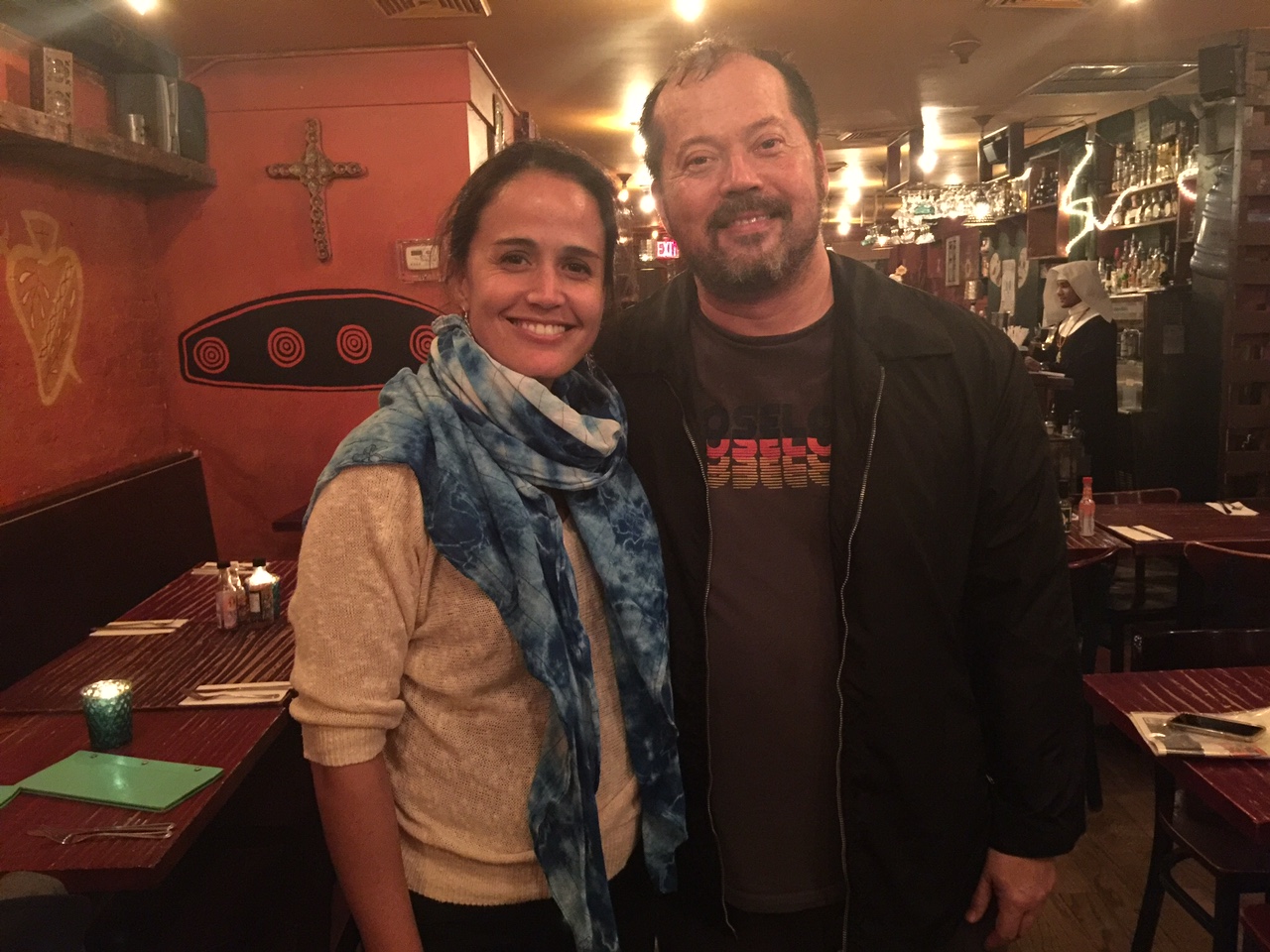
 In New York, I felt surrounded by people who love books, as I do. I share this award with poetry winner
 In the winter of 2016, my life changed. With a generous grant from Poets & Writers, our local mountain town library sent me into our high schools, singing the praises of poetry. I visited classes in public and charter schools, sharing with students my love of poetry and how it saved my life. I read poems and invited them to join me for weekly sessions to write poems together. An overwhelming number of students signed up and a dedicated, talented, inspiring group met with me for several hours each week.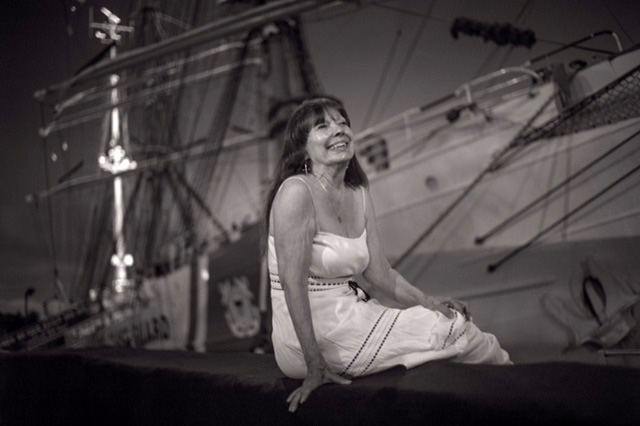
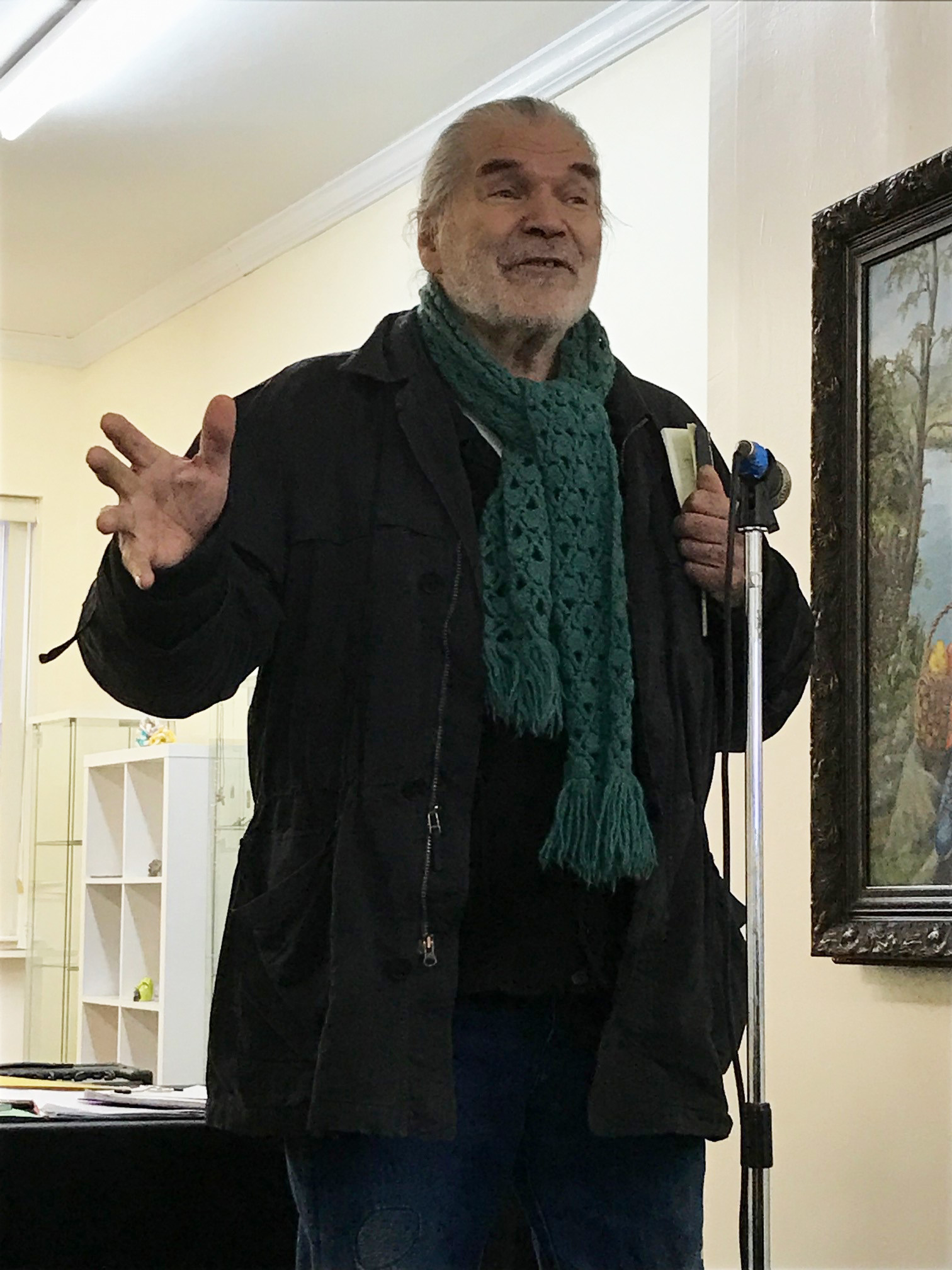 In June of 2015, the event was attended by ten poets, and we were each other’s audience. In February 2016, we received the first of four Readings & Workshops grants. Since then we have been able to fund a poet who once lived in Staten Island but now lives in Manhattan, a poet who writes in both English and Spanish, and a poet who writes in both Japanese and English. Our audience as well as our pool of writers has grown.
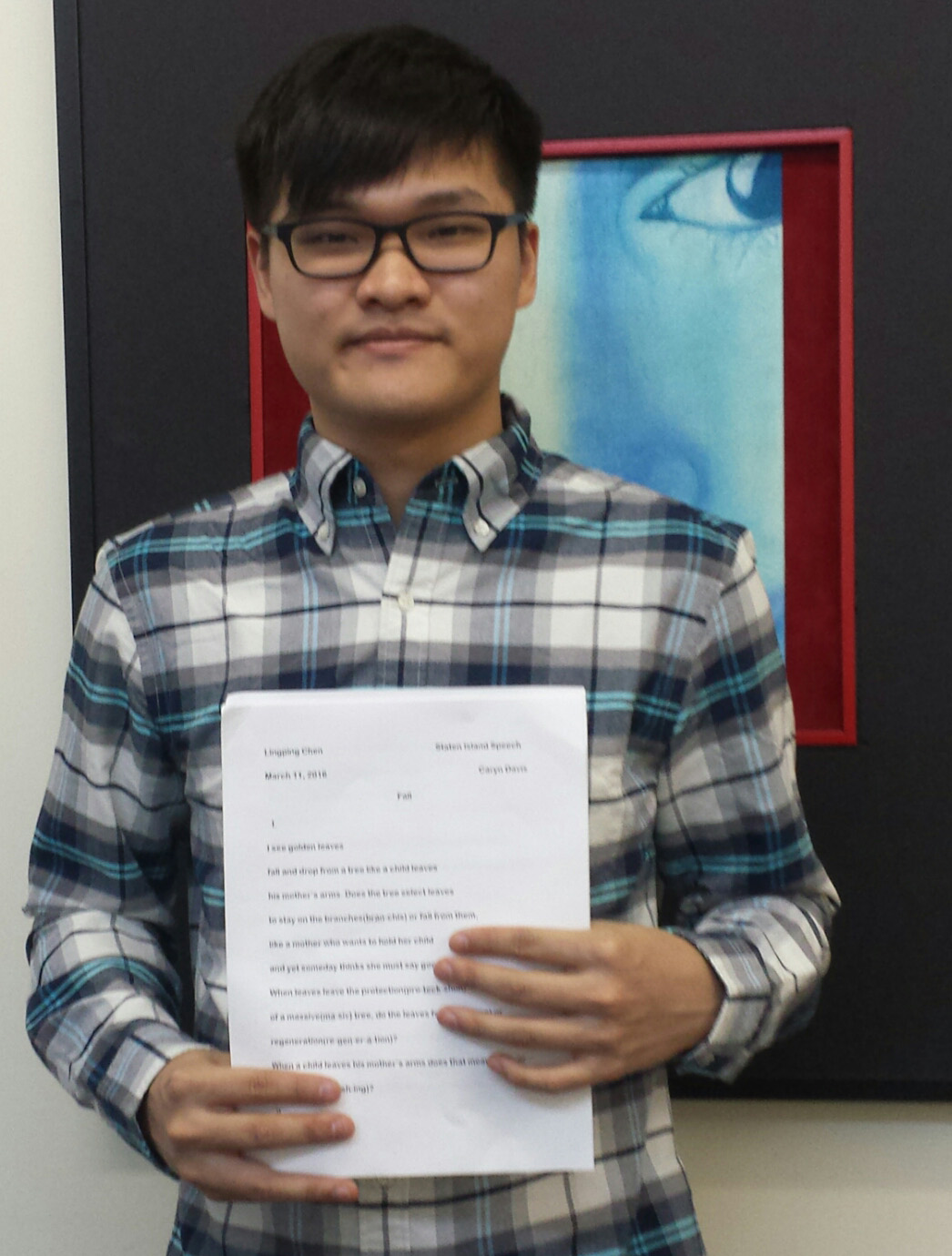 At 2:00 PM the gallery was empty. We shoveled the sidewalk and salted the ramp. An hour later, the gallery was full. Marilyn Kiss read in Spanish, Kevyn Fairchild in Hungarian, Malachi McCormick in Irish, Dominic Ambrose in Italian, Lorenzo Hail in French, and Lingping Chen, who had come in on the ferry, read in Chinese.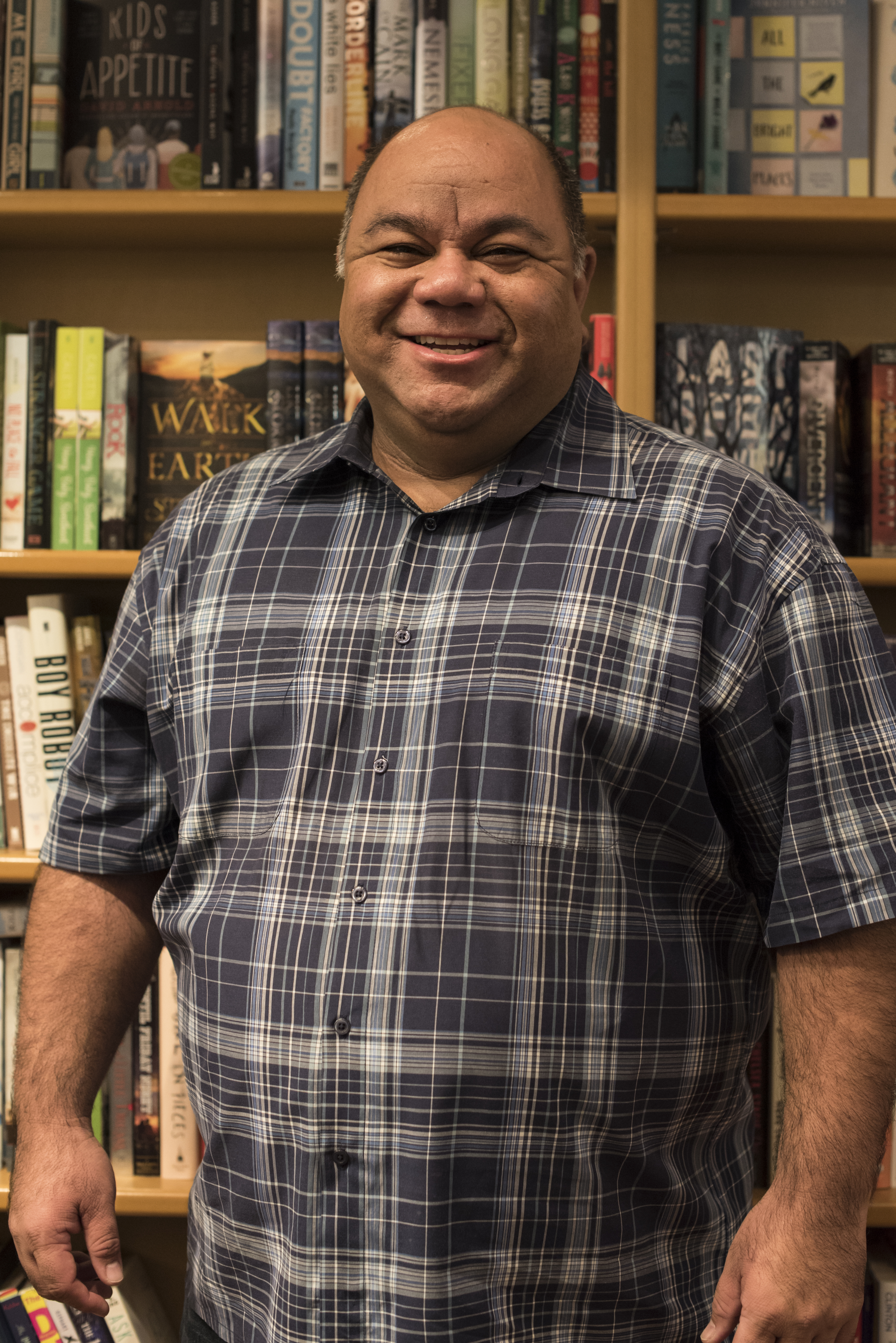
 Now, I am in New York City. I am excited and terrified. I have just arrived on the red-eye into JFK.
  Alicia meets me at the hotel. We cab to Chinatown and eat an amazing lunch. We sightsee before heading back to the hotel for our initial meeting with Bonnie Rose Marcus and Wo Chan, who work in the Readings & Workshops (East) department at Poets & Writers.