Genre: Fiction

Poison Pen Reading Series

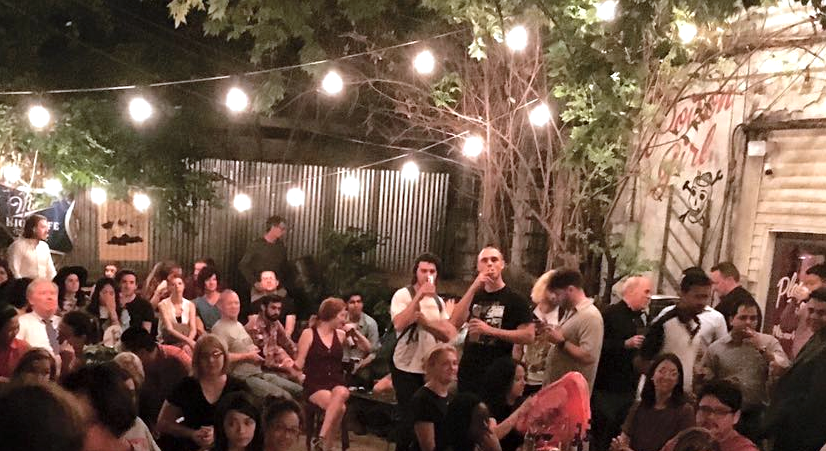
The Poison Pen Reading Series holds events in a bar called the Poison Girl Cocktail Lounge. The series has been going for twelve years, just a little longer than Houston VIP Slam (which I featured last week), but functions in a very different way. The series brings three writers together who read on the outside patio of the lounge. Audience members get to relax in a space under the stars and listen to literary works from writers from Houston and beyond.

The readings are usually hosted by Scott Repass, one of the owners of the lounge, and start at 8:00 PM on every third Thursday of the month. The featured readers vary for each event, but most times, audience members will get the opportunity to hear from at least one writer from the University of Houston Creative Writing Program, a writer from the Houston literary community, and a visiting writer from outside of Houston. Writers share work from all genres including poetry, fiction, and nonfiction.

I have been to many Poison Pen readings and have had the pleasure of being a featured reader, the last time was this past July when I was honored to share the stage with poet Natasha Carrizosa and fiction writer Robert Liddell. The readings are always jam-packed, standing room only in most cases, so if you plan to attend, get there early for a drink and to find a good seat for the reading. It’s worth it.

The Poison Pen Reading Series at Poison Girl in Houston.
 
Lupe Mendez is the literary outreach coordinator for Poets & Writers in Houston. Contact him at Houston@pw.org or on Twitter, @houstonpworg.
Richard Powers on The Overstory

Caption: 

“We like to think about people and nature as two separate things,” says Richard Powers speaking about his Pulitzer Prize–winning novel, The Overstory (Norton, 2018), in this PBS NewsHour interview. “This book is precisely a book that challenges that notion of human separatism.” For more Powers, read “A Talk in the Woods: Barbara Kingsolver and Richard Powers” from the November/December 2018 issue of Poets & Writers Magazine.

Genre: 

Orion in the Wilderness

The Orion in the Wilderness retreat, cosponsored by the Omega Institute, was held from March 8 to March 14 at the American Museum of Natural History’s Southwestern Research Station in Cave Creek Canyon in Portal, Arizona, surrounded by the Chiricahua Mountains, known for their abundant bird life and hiking trails. The retreat included workshops, readings, lectures, manuscript consultations with faculty, presentations on local ecology and lore, and optional birding and hikes for poets, fiction writers, and nonfiction writers.

Type: 
CONFERENCE
Ignore Event Date Field?: 
yes
Event Date: 
December 28, 2025
Rolling Admissions: 
ignore
Application Deadline: 
December 28, 2025
Financial Aid?: 
no
Financial Aid Application Deadline: 
December 28, 2025
Free Admission: 
no
Contact Information: 

Orion in the Wilderness, Orion Magazine, 187 Main Street, Great Barrington, MA 01230.

Contact City: 
Portal
Contact State: 
AZ
Country: 
US

Upcoming Contest Deadlines

As we enter the last month of 2019, the time is right to submit to contests with a deadline of December 15. These poetry, fiction, and nonfiction awards include opportunities to attend a residency in upstate New York and to have your work reviewed by a literary agency. Most offer a prize of $1,000 or more. 

Center for Book Arts Letterpress Poetry Chapbook Competition: A prize of $500 and letterpress publication by the Center for Book Arts is given annually for a poetry chapbook. The winner will also receive an additional $500 to give a reading with the contest judge at the Center for Book Arts in New York City in fall 2020, and a weeklong residency at the Winter Shakers program at the Millay Colony for the Arts in Austerlitz, New York. Entry fee: $30.

Commonwealth Club of California Book Awards: Five prizes are given annually for a poetry collection, a book of fiction, a first book of fiction, a book of creative nonfiction, and a book of fiction or nonfiction that relates to California published during the previous year. Books written by authors residing in California are eligible. Entry fee: none.

F(r)iction Short Story Contest: A prize of $1,000 is given three times a year for a short story. Entry fee: $15.

LitMag Virginia Woolf Award for Short Fiction: A prize of $3,500 and publication in LitMag is given annually for a short story. A second-place prize of $1,000 will also be given. The winners will have their work reviewed by Sobel Weber Associates literary agency. The editors will judge. Entry fee: $20. 

Mid-American Review Poetry and Fiction Contests: Two prizes of $1,000 each and publication in Mid-American Review are given annually for a poem (the James Wright Poetry Award) and a short story (the Sherwood Anderson Fiction Award). Entry fee: $10. 

Silverfish Review Press Gerald Cable Book Award: A prize of $1,000, publication by Silverfish Review Press, and 25 author copies is given annually for a first poetry collection. Entry fee: $25, which includes a copy of the winning book.

Willow Books Literature Awards: Two prizes of $1,000 each and publication by Willow Books are given annually for a book of fiction and a book of creative nonfiction by writers of color. Entry fee: $25.

Visit the contest websites for complete guidelines, and check out the Grants & Awards database and Submission Calendar for more contests in poetry, fiction, and creative nonfiction.

Deadline Approaches for Columbia Journal’s Winter Contest

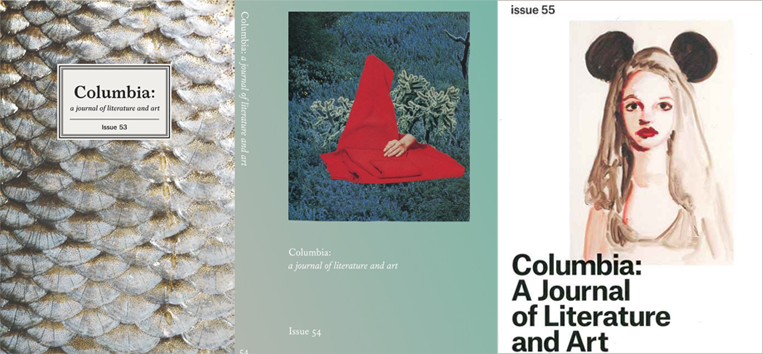
Submissions are currently open for Columbia Journal’s 2019 Winter Contest, which features awards for poetry, fiction, and nonfiction. One winner in each genre will receive a $1,000 cash prize and publication in Columbia Journal in spring 2020. At least two runners-up will also be selected and announced for each category.  

Using only the online submission system, submit a cover letter and up to five poems totaling no more than five pages or a piece of prose of up to 5,000 words with a $15 entry fee by December 15. Ruth Madievsky, Ottessa Moshfegh, and Ada Calhoun will judge for poetry, fiction, and nonfiction, respectively. Visit the website for complete guidelines.

Founded in 1977, Columbia Journal is edited by students in the Columbia University School of the Arts MFA program. The journal, which publishes a print edition every spring and online content throughout the year, seeks to “showcase the best poetry, nonfiction, fiction, translation, and visual art.” Previous issues have featured Raymond Carver, Joyce Carol Oates, and Sharon Olds, among others. 

Tiny Tales

12.4.19

If you’re looking for a change in perspective, why not try from the mind of a tiny animal? In a New York Times By the Book interview, when asked what subjects she wants more authors to write about, actor and writer Phoebe Waller-Bridge says, “I wish more people would write from the point of view of tiny, witty animals.” Write a story from a diminutive, bright critter’s point of view. Consider whether this animal observes a larger story enacted by human beings, or if the story’s universe is comprised solely of tiny animals. Try incorporating humor in the voice of this quick-witted creature while still retaining its animal-like nature in unexpected ways.

Ten Questions for Jeff VanderMeer

by
Staff
12.3.19
Jeff VanderMeer

“Writing—the writing it down—has increasingly become the least important part of the process. Living in the world of the novel, existing as the characters, viewing the day-to-day from their perspective, is the most important thing.” —Jeff VanderMeer, author of Dead Astronauts

A Literary Home

Lia Greenwell is a poet and essayist currently living in Detroit. We work together at InsideOut where Lia is the operations coordinator. Recently I was able to speak with Lia, who offered fresh insight on how Southeast Michigan has influenced her writing.

Originally from Adrian, Michigan, Lia first discovered the magic of writing in The House on Mango Street by Sandra Cisneros, which she describes as full of “colorful, lyrical prose.” Although the novel was assigned for school, it felt different from the other books she had been reading. “I had never seen language used like that before, especially in something that I was reading for school. Cisneros’s prose took away the idea that books all had to look and feel the same.”

Although Lia began writing as a poet, she says, “poetry felt like I had to fit my writing into too small of a format—it felt strict. Prose allowed my writing to be weird.” I personally found this very relatable as someone who started out writing (very bad) fan fiction, and thought my path in writing would be confined to novels. Much like Lia, the discovery of a new genre (for me it was poetry) allowed me to go in new directions.

Lia is a graduate of the MFA Program for Writers at Warren Wilson College in North Carolina and worked with youth writers through the Girls Write Now program in New York City. When asked about how leaving and returning to Michigan has affected her as a writer, Lia says, “I had to leave and come back to see what the landscape meant to me.” Lia has lived in Detroit for over three years, but still feels like a newcomer and enjoys discovering local venues and writers. “I think of places like Room Project. I feel like there is always something new being revealed there.”

I enjoyed the opportunity to speak with Lia and discuss the long-term transitions that a writer goes through to find their niche and community. It was encouraging and made me think of how writers often feel isolated on the journey to find their place in the literary world. In Detroit, there is a home for writers.

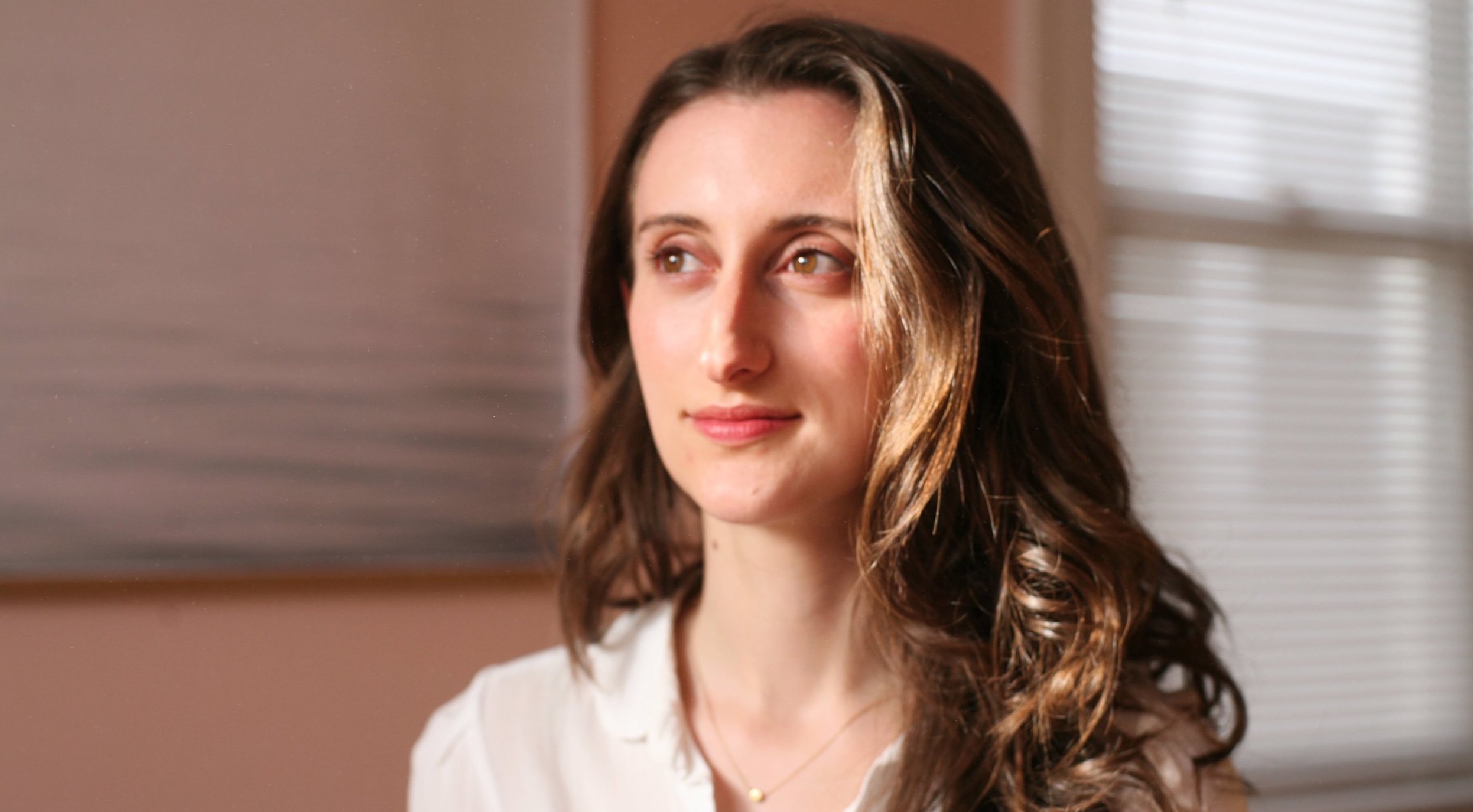
Lia Greenwell. (Credit: Tyler Klifman)
 
Justin Rogers is the literary outreach coordinator for Poets & Writers in Detroit. Contact him at Detroit@pw.org or on Twitter, @Detroitpworg.

Pages

Subscribe to Fiction