GalleyCrush: All Adults Here
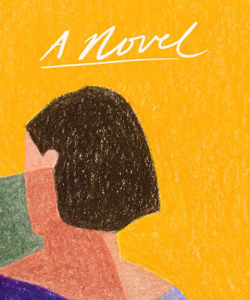
Emma Straub’s All Adults Here, forthcoming from Riverhead Books on May 5, 2020.
Jump to navigation Skip to content
Emma Straub’s All Adults Here, forthcoming from Riverhead Books on May 5, 2020.
Nick Hornby’s first novel, High Fidelity (Riverhead Books, 1995), whose 2000 film adaptation starred John Cusack and moved the story from London to Chicago, has been adapted into a Hulu television show. The series stars Zoë Kravitz as the neurotic owner of a local record store in Brooklyn’s Crown Heights neighborhood who revisits former romantic partners after a recent breakup.
The Georgia Center for the Book is the state affiliate of the Center for the Book at the Library of Congress in Washington, D.C. The Center helped create and remains a major sponsor of the AJC Decatur Book Festival that draws 60,000 people to the city every Labor Day weekend. All events are free and feature author readings and talks.

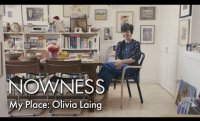
“The combination of gardening and writing works amazingly well for me. It’s such a nice antidote to writing books,” says author and critic Olivia Laing. In this NOWNESS video, Laing, whose most recent book is her first novel, Crudo (Norton, 2018), talks about the Cambridge home and garden she shares with her husband, poet Ian Patterson, and how her surroundings affect her creative life.
“I have to learn that in presence, the rushed, the partial, is still a whole, an experiment in form. In collage, my snippets of repurposed texts, ideas, and observations are not connected seamlessly; I see their edges,” writes Celina Su on the Poetry Foundation’s Harriet blog in “A Collage in Progress,” a piece about her experience of the fragmentation of time and attention alongside new parenthood. “This allows me to cite, attribute, give credit to those who have contributed to my thinking.” Write a short story that consists of snippets that do not fit together seamlessly and feel rushed or partial. How does this collection of fragmented things shape your narrative?
This month I have been featuring a variety of platforms that contribute to the literary community, including the work of Nuestra Palabra: Latino Writers Having Their Say, and blogs and podcasts such as Icess Fernandez Rojas’s Dear Reader and Terrell Quillin’s Bootleg Like Jazz.
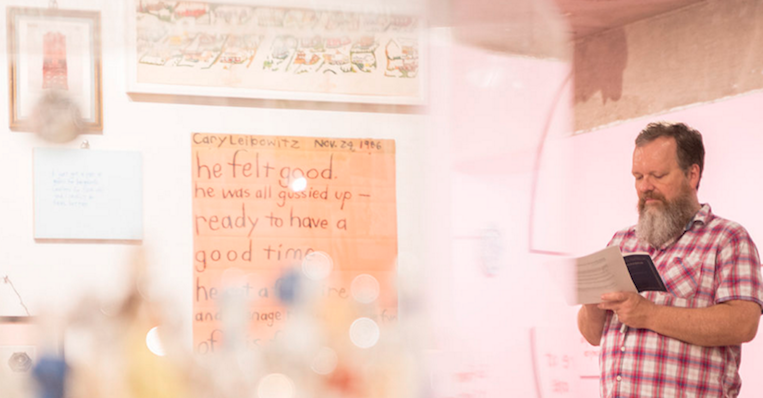
Today I want to shout-out the work of Mary Wimple and her workshop and reading series Words & Art. I’ve known Mary and her partner Chuck Wimple for more than ten years and have had the pleasure of seeing Mary kick major can as a poet performing her work all over town. Mary is soft-spoken, so when you get a chance to see her in action, it’s dynamite. Her energy carries over to Words & Art. The series is all about community and is accessible for any writer with a passion for the arts.
The format for these events is so inviting: Mary will host a writing workshop of sorts, really it’s an art appreciation field trip to a local gallery or museum. Participants will discuss the artwork, work on writing prompts, and discuss the effect of the art on the writing. From there, Mary will set up a future date for a reading that features poetry and prose pieces based on the artwork from the exhibit that was visited. Anyone interested in reading (even if you didn’t attend the workshop) just needs to check out the submission guidelines and submit work to Words & Art by the deadline to be considered. Selected readers will be notified about a week before the event and the public is invited to attend. I attended one of these events a while back and it is powerful work. If you love art and writing, then this is a space for you.
The next deadline for submissions is February 1 and the reading will be held on February 13 at the Contemporary Arts Museum Houston.
“She’s finally met the man of her dreams. There’s just one problem: He’s dead.” Watch the book trailer for Amy Bonnafonns’s first novel, The Regrets, which comes out next week from Little, Brown.
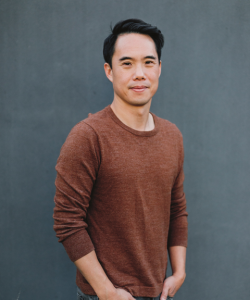
“I had a substantially different version of this book that just wasn’t working, scrapped it, did that again, and then the third time was a charm.” —Charles Yu, author of Interior Chinatown
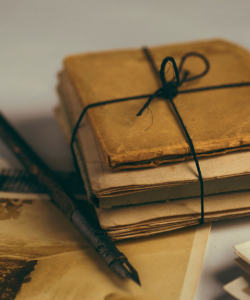
“It’s important to understand why the characters are writing to each other, what kind of language is particular to them, and what the form reveals or hides.” Mimi Lok contemplates the challenges and rewards of the epistolary form.
As the end of the month approaches, consider submitting fiction, poetry, or nonfiction to one of the following contests. Each has a deadline of January 30 or January 31, and all but one offer a prize of $1,000 or more.
Austin Community College Balcones Prizes: Two prizes of $1,500 each are given annually for a poetry collection and a book of fiction published during the previous year. Deadline: January 31. Entry fee: $25 for poetry, $30 for fiction.
Autumn House Press Rising Writer Contest: A prize of $1,000 and publication by Autumn House Press is given annually for a debut poetry collection by a writer age 33 or younger. Yona Harvey will judge. Deadline: January 31. Entry fee: $25.
Bauhan Publishing Monadnock Essay Collection Prize: A prize of $1,000, publication by Bauhan Publishing, and 50 author copies is given annually for an essay collection. Áine Greaney will judge. Deadline: January 31. Entry fee: $25.
Black Lawrence Press Big Moose Prize: A prize of $1,000, publication by Black Lawrence Press, and 10 author copies is given annually for a novel. The editors will judge. Deadline: January 31. Entry fee: $25.
Caine Prize for African Writing: A prize of £10,000 (approximately $12,600) is given annually for a previously published short story by an African writer. Shortlisted candidates will receive £500 (approximately $550). The winner and shortlisted writers will be invited to participate in workshops in Africa and London. Deadline: January 31. Entry fee: none.
Chattahoochee Review Lamar York Prizes: Two prizes of $1,000 each and publication in Chattahoochee Review are given annually for a short story and an essay. Anthony Varallo will judge in fiction and Alice Bolin will judge in nonfiction. All entries are considered for publication. Deadline: January 31. Entry fee: $18.
Crazyhorse Literary Prizes: Three prizes of $2,000 each and publication in Crazyhorse are given annually for a poem, a short story, and an essay. Cyrus Cassells will judge in poetry, Jamel Brinkley will judge in fiction, and Sue William Silverman will judge in nonfiction. All entries are considered for publication. Deadline: January 31. Entry fee: $20 (subscription included).
Fish Publishing Short Memoir Prize: A prize of €1,000 (approximately $1,100) and publication in the Fish Publishing anthology is given annually for a short memoir. David Shields will judge. Deadline: January 31. Entry fee: €17 (approximately $19) for online entries or €19 (approximately $21) for postal entries.
Iowa Review Iowa Review Awards: Three prizes of $1,500 each and publication in Iowa Review are given annually for works of poetry, fiction, and nonfiction. Stephanie Burt will judge in poetry, Lan Samantha Chang will judge in fiction, and Leslie Jamison will judge in nonfiction. All entries are considered for publication. Deadline: January 31. Entry fee: $20.
Little Tokyo Historical Society Short Story Contest: A prize of $500 and publication in Rafu Shimpo and on the Discover Nikkei website is given annually for a short story that takes place in the Little Tokyo district of Los Angeles. Deadline: January 31. Entry fee: none.
Masters Review Short Story Award for New Writers: A prize of $3,000 and publication in Masters Review is given twice yearly for a short story by an emerging writer. The winning story will also be reviewed by a select group of literary agents. Kimberly King Parsons will judge. Deadline: January 31. Entry fee: $20.
Money for Women/Barbara Deming Memorial Fund Individual Artist Grants for Women: Grants of up to $1,500 each are given in alternating years to feminist poets, fiction writers, and nonfiction writers who are citizens of the United States or Canada. The current round of grants will be awarded to fiction writers and mixed genre writers working in text and image. Deadline: January 31. Entry fee: $25.
New Millennium Writings New Millennium Awards: Four prizes of $1,000 each and publication in New Millennium Writings are given twice yearly for a poem, a short story, a work of flash fiction, and a work of creative nonfiction. Alexis Williams Carr and Don Williams will judge. Deadline: January 31. Entry fee: $20.
North Carolina Writers’ Network (NCWN) Thomas Wolfe Fiction Prize: A prize of $1,000 is given annually for a short story. The winning story will also be considered for publication in Thomas Wolfe Review. Randall Kenan will judge. Deadline: January 30. Entry fee: $25 ($15 for NCWN members).
Regal House Publishing Terry J. Cox Poetry Award: A prize of $1,000 and publication by Regal House Publishing will be given annually for a poetry collection. Peter Schmitt and the editors will judge. Deadline: January 31. Entry fee: $25.
Schaffner Press Nicholas Schaffner Award for Music in Literature: A prize of $1,000 and publication by Schaffner Press is given annually for a poetry collection, a novel, a short story collection, an essay collection, or a memoir that “deals in some way with the subject of music and its influence.” Deadline: January 31. Entry fee: $25.
Stanford Libraries William Saroyan International Prize for Writing: Two prizes of $5,000 each are given biennially for books of fiction and nonfiction. The awards, cosponsored by the Stanford Libraries and the William Saroyan Foundation, are “intended to encourage new or emerging writers and honor the Saroyan legacy of originality, vitality, and stylistic innovation.” Deadline: January 31. Entry fee: $50.
Winter Anthology Writing Contest: A prize of $1,000 and publication in Winter Anthology is given annually for a group of poems, a story, or an essay. All entries are considered for publication. Sarah Gridley will judge. Deadline: January 31. Entry fee: $10.
Visit the contest websites for complete guidelines, and check out the Grants & Awards database and Submission Calendar for more contests in poetry, fiction, and creative nonfiction.