Critical Fabulation

In much of her work, scholar and author of the award-winning book Wayward Lives, Beautiful Experiments: Intimate Histories of Riotous Black Girls, Troublesome Women, and Queer Radicals (Norton, 2019), Saidiya Hartman writes about the silences, gaps, and omissions present in conventional institutional archives that leave out the voices and lives of marginalized people. In her 2008 essay “Venus in Two Acts,” published in Small Axe: A Caribbean Journal of Criticism, she coined the term “critical fabulation” to describe a research method that combines archival research, critical theory, and storytelling to redresses and reimagine these historical biases. Write a short story that echoes this idea, beginning the process by considering what old textbooks have gotten wrong. What history would you like to retell? How can your story reimagine not only what happened long ago but also imagine a different present?

Gravity of Kindness

Naomi Shihab Nye’s poem “Kindness,” which appears in her 1995 book, Words Under the Words: Selected Poems, begins: “Before you know what kindness really is / you must lose things….” The next two stanzas start similarly with: “Before you learn the tender gravity of kindness / you must travel…” and “Before you know kindness as the deepest thing inside, / you must know sorrow….” Compose a three-stanza poem that takes a cue from this parallel structure, starting the first line of each stanza with: “Before you know _____, you must _____.” Think about a quality, such as kindness, that you highly value and how your understanding of it has changed over time. What are the lessons you have learned and what do you hope to pass on to others?

Fashion Neurosis: Hilton Als

Caption: 

“Until you have language or history or context, you are in the dark.” In this episode of the Fashion Neurosis podcast hosted by Bella Freud, Hilton Als talks about discovering the power of art and language at an early age, how criticism should come from a place of “critical love,” and writing about Prince in his memoir My Pinup (New Directions, 2022).

Vauhini Vara and Karan Mahajan on A.I.-Generated Fiction

Caption: 

In this episode of Literary Hub’s Fiction/Non/Fiction podcast cohosted by V. V. Ganeshananthan and Whitney Terrell, Vauhini Vara talks about her New Yorker essay on A.I.-generated fiction and about how technology might change the future of literature with Karan Mahajan, author most recently of The Complex (Viking, 2026).

Genre: 

Changing With the Seasons

Have you fallen for fall and left spring on the backburner? According to a recent New York Times article, spring used to be “a special favorite of poets and musicians, who were moved by the lush reawakening of the natural world to express their feelings of love and wonderment in verse and song,” but recent surveys have shown a preference for autumn. With its cozy colors and social media-worthy sweaters, ciders, leaves, and pumpkin spice lattes, the crisp season has moved up in the ranks of popularity. This week write a personal essay about how you have experienced seasons differently at various times in your life. You might consider the value in having fluctuating phases of energy or enthusiasm throughout the year, or in being able to count on cycles of the natural world.

Soaping Up

Amnesia, evil twins, baby swaps, love triangles, and fake deaths are common tropes that have been used in American soap operas for decades. According to Jo Walker’s Guardian review of the 2019 South Korean television series Crash Landing on You, which received critical acclaim and gained worldwide popularity after streaming on Netflix, Korean melodrama plot conventions include “forgotten chance meetings, dramatic piggyback rides, and at least one scene per show where the heroine gets totally juiced on beer.” Write a short story that borrows one of these K-drama tropes or a newly discovered one. Give yourself permission to meld “soapy” characteristics with perhaps more nuanced or subtle literary elements. How can the integration of melodrama imbue your story with humor or emotional dynamism?

Talismans

3.31.26

In a recent piece published on Literary Hub, Maggie Smith describes her writing space—the objects she considers talismans, the furnishings, and accessories that surround her as she works. Some notable items include: her clear desk from CB2, black Uni-Ball Vision Elite pens, an Audre Lorde postcard from a friend, a fortune cookie message, and a card from her high school English teacher. Compose a series of short poems that zero in on a few favorite tools or accoutrements that you like to use or have with you when you write. Include details of the brands, types, and personal touches of each item. What memories are associated with them? How can you combine functional physical descriptions in your verse with thoughtful reflections of what these objects bring to mind?

Joshua Bennett: The People Can Fly

Caption: 

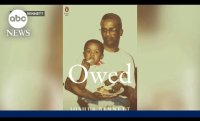
In this ABC News segment, Joshua Bennett talks about how his parents nurtured his interest in African American history leading him to write his new book, The People Can Fly: American Promise, Black Prodigies, and the Greatest Miracle of All Time (Little, Brown, 2026), which is featured in Page One in the March/April 2026 issue of Poets & Writers Magazine.

Pages

Subscribe to Poets & Writers RSS