In our Craft Capsules series, authors reveal the personal and particular ways they approach the art of writing. This is no. 265.
If you’re human, you’ve likely had fraught relationships, and they’ll pop up in your poems whether you want them to or not. Your first impulse is natural. You might want to “kill” someone you once loved: an ex, an estranged family member, or a friend—or at least bite them on the softest part of their throat, then show the world their insides, but I digress.
The good news is that this desire is normal. The bad news is nobody cares, let alone a distant reader. The difficult part is that our truths regarding how we feel about others fluctuate wildly, even if our poems do not. With all these considerations in mind, I ask myself: Am I exposing information given to me in confidence? Am I writing to hurt, or to understand? Am I arguing with an other, or confronting myself? Have I made the subject complex, even as I critique them? Is there some tenderness, either toward the subject or someone else in the poem who deserves it? And then I try to get comfortable with the discomfort of knowing I will never have an answer.
In my experience, however, “being fair” does not mean excusing harm. It also doesn’t mean backing down if the subject was abusive, or being afraid to hold others, especially those in power, responsible. It means knowing how to modulate the heat. It means choosing the subjects who, frankly, may deserve it. It means arriving at a different place than where you began.
In “dear white america,” Danez Smith ramps up the heat to address white people themselves, confessing: “i tried…to love you, but you spent my brother’s funeral making plans for brunch.” Note that the speaker does not, and should not, back down. Yet they then transform the burn of anger into light and heat so it shines on and warms what is being protected, mourned, and loved. The poet writes with declarative tenderness: “& this life, this new story & history you cannot steal or sell or cast overboard…this, if / only this one, is ours.”
In “Asshole,” I have my own hand on the oven knob. As Marie Howe said, holding her hands over a poem many years ago in a Sarah Lawrence College MFA poetry workshop, “let’s find where the heat is.” I’m not here to incinerate my reader or my subject right away. I’m here to fluctuate the aesthetic temperature, paying attention to where my audience, subject, and I are emotionally.
In “Asshole,” right off the bat, the title cranks the heat up high. Then, I turn it down with funny euphemisms:
Dank star, body’s outcast, no man’s land,
everyman’s refuge, place for two fingers,
place for Number Two…
Then, I pivot to an affectionate, silly memory: “‘This is how far I’ve had someone go…’ he stuck two fingertips in my armpit.”
From there, I return to heat. I call him an asshole. Mid-poem, I’ve actually earned the burn of the name, and the surprise return to the title after a humorous interlude is welcome. But then, I subtly retreat into another tender memory before delving into several other violent, unpleasant moments.
A poem isn’t always worth hurting anyone’s feelings, but should it protect those who were supposed to protect you and didn’t? And what about if we can’t even arrive at a place of tenderness?
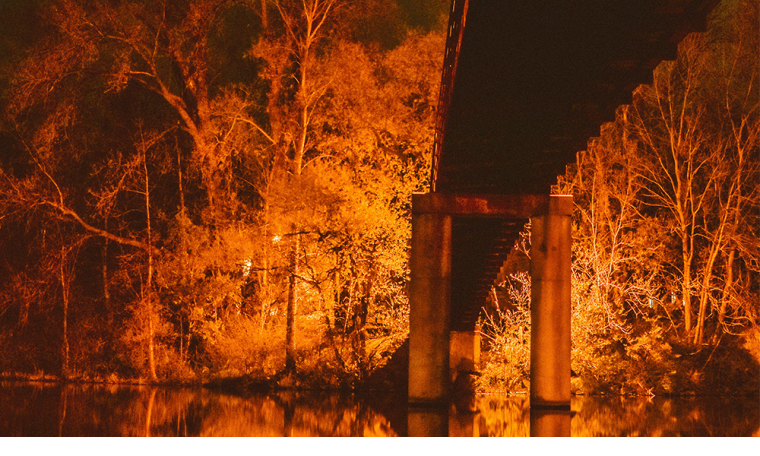
There is no clear-cut destination; only a flaming bridge where we’re forced to linger, hoping that our work can cross over into light and heat.
Maria Nazos grew up in Athens, Greece, and Joliet, Illinois. Her work has been published in the New Yorker, TriQuarterly, World Literature Today, and elsewhere. She is the author of the poetry collection Pulse (Omnidawn, 2026) and the translator of the poetry collection The Slow Horizon That Breathes (World Poetry Books, 2023) by Dimitra Kotoula, longlisted for the Anglo-Hellenic League Runciman Award. Maria has worked almost every job, including as a whale-watching boat attendant, table dancer, teacher, barista, sunglasses salesperson, bartender, and, arguably, the worst waitress in the entire history of the Eastern seaboard. If she spilled Pinot Noir on you, she would like to apologize.
image credit: Pawel Czerwinski