Summer Senses

6.16.26

Jane Kenyon’s poem “Three Songs at the End of Summer” features three portraits of late summer, each evoking its own distinct sounds, moods, and atmosphere. The first section of the poem begins with “a second crop of hay” and “five gleaming crows,” continues through the sights and sounds of summer camp, and ends with a couplet that gestures to autumn: “Schoolbooks, carpools, pleated skirts; / water, silver-still, and a vee of geese.” The second section consists of two three-line stanzas infused with the sound of cicadas, and in the final section, Kenyon explicitly reaches back in time to the speaker’s childhood and the scent of a damp dirt road on a foggy morning. Taking inspiration from this structure, write a three-part poem that explores a few resonant memories of the end of summer—fleeting images and sounds and smells of various activities. Experiment with sections of varying lengths to create dramatic effect.

R. F. Kuang on Living a Good Life

Caption: 

“Curiosity requires discipline. It’s an active act of throwing your mind at an object that deserves your attention and rising to its challenge.” In this interview for Vogue Australia, R. F. Kuang, author most recently of Katabasis (Harper Voyager, 2025), talks about how she cultivates curiosity, her artistic inspirations, and what it means to live a good life.

Genre: 

Edwidge Danticat, Andrew Sean Greer, and Ruth Ozeki

Caption: 

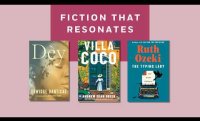
In this Spring 2026 Book and Author Festival virtual event hosted by Penguin Random House, Library Journal, and School Library Journal, Edwidge Danticat, author of Dèy (Knopf, 2026), Andrew Sean Greer, author of Villa Coco (Doubleday, 2026), and Ruth Ozeki, author of The Typing Lady: And Other Fictions (Viking, 2026), talk about their new books with librarian Jen Jumba.

Genre: 

Mischief

6.11.26

When asked in an interview published on Creative Independent whether there is a common thread throughout the works that he’s translated from various languages, Max Lawton mentions that there is usually “an element of transgression, whether that’s on the level of language or on the level of content” and that “shocking movies, transgressive music, loud music, not as a form of real rebellion, just mischievousness” are what brought him into art. Taking inspiration from this prioritization of transgression and mischief, write a personal essay that uses language in a shocking way or recounts something shocking in its content. Allow yourself to experiment with syntax in a way you’ve never tried before, or to write about a memory you’ve never dared to touch. How can you strike a balance between a playful sense of mischief and an intense subject matter?

Steven Pfau: Say Nephew

Caption: 

In this Green Apple Books event moderated by Brendan McHugh, Steven Pfau reads from his debut book, Say Nephew: On Boyhood, Unclehood, and Queer Mentorship (Catapult, 2026), and discusses his desire to write a book about his uncle in the style of “autotheory,” inspired by  Maggie Nelson’s The Argonauts and Brian Blanchfield’s Proxies.

The Poem’s Heartbeat: A Manual of Prosody

by
Author: 
Alfred Corn
Published in 2008
by Copper Canyon Press

Written by prolific poet, novelist, and essayist Alfred Corn, this is an invaluable guide to the art and science of poetic meter—the very foundation of writing (and reading) poetry. In ten progressive chapters, Corn covers everything from metrical variation and phonic echo to the basics of line and stanza in this manual first published in 1997. “What’s really needed,” he writes in the preface, “is a study that assumes no knowledge of meter on the part of the reader but then provides accurate information.” Included in the book is an appendix of sample scansions, an index of terms, a bibliography, and exemplary poems illustrating a wide range of concepts, including iambic pentameter and slant rhyme. This guide provides information and inspiration for any poet or enthusiast of poetry.  

Backrooms

6.10.26

Kane Parsons’s debut horror film Backrooms revolves around the discovery of a labyrinthine parallel universe of mysteriously empty rooms and hallways which are entered through the basement of a furniture store. The concept originates from “Backrooms” website threads in which users post and contribute writing—essentially cocreating fictional horror accounts akin to urban legends—about an otherworldly dimension that exists in a liminal space, inspired by a photo depicting several empty rooms tinged in fluorescent yellowish lighting. This week, think of a space that feels mundane or familiar to you, such as a furniture store, the corridors of an expansive hotel, or a school basement. Then write a short story inspired by the image of the space when it’s devoid of any activity. Consider the lighting, furnishings, and sounds that accompany the space and what might enhance a menacing or unsettling scene.

A Different POV

In a recent New York Times Magazine article, Nitsuh Adebe speaks with a linguist about the ways in which words evolve over time, noting recent shifts in the use of terms like “POV” and “aesthetic,” especially in social media posts. “How people use a language is what the language is, and most everything we do in an effort to steer one another’s usage—teaching grammar, mocking errors, writing columns—is just an exercise of social power,” writes Abebe. Compose a poem that incorporates a word or phrase that has gained a new meaning in contemporary use, possibly through the rapidly changing landscape of language mediated, distorted, or abbreviated in texting and social media. What sorts of ingenuity, misinterpretation, and customization propelled your selection from its original definition to a new one? How might using it in a new poetic context subject it to an additional layer of meaning?

Pages

Subscribe to Poets & Writers RSS