A Buggy Life

“The mosquito knows full well, small as he is / he’s a beast of prey,” writes D. H. Lawrence in his 1929 poem “The Mosquito Knows,” recently published in the Academy of American Poets’ Poem-a-Day series. “But after all / he only takes his bellyful, / he doesn’t put my blood in the bank.” In this five-line verse, Lawrence presents a pithy portrait of an insect and then points the mirror at human behavior, the mosquito becoming a more sympathetic figure when pitted against human greed. Compose a series of miniscule poems that each revolve around an insect. Explore different facets of the bug, including how they might be irritating or harmful to people, and the ways in which their lives contrast surprisingly with human tendencies.


chaun webster: This Occupation Is Strange but Familiar

Caption: 

In this video, chaun webster reads his essay “This Occupation Is Strange but Familiar” for the Minnesota Writers Respond event presented in partnership with the Loft Literary Center and Milkweed Books. webster’s book Without Terminus (Graywolf Press, 2026) is featured in Page One in the July/August 2026 issue of Poets & Writers Magazine.

Danez Smith on Hope and Poetry

Caption: 

In this Louisiana Channel interview, Danez Smith reads their poems “Colorado Springs” and “Craft,” and talks about finding hope for the world in the right ways with poetry and optimism, reflecting on some of their favorite writers, including James Baldwin, Gwendolyn Brooks, June Jordan, Audre Lorde, and D. A. Powell. “I believe that poems are gathering spaces across time,” says Smith.

Genre: 

Points of View

In an interview published in the Paris Review’s summer 2026 issue for their “Art of Fiction” series, Jeremy Tiang speaks to Yan Lianke, noting that throughout the course of their conversations, the author would “slip into the third person, as if describing himself as a character in his fiction, or sometimes into the second person, as if addressing his past self.” This week, write a personal essay about the city, town, or region where you grew up and your experiences there. Experiment with slipping between different points of view while still retaining your personal perspective. You might decide to start in the first person, and then address your past self in the second, before zooming further out into third person, or toggle multiple times between narrative points-of-view as befits the sense of distance you desire.

Ann Patchett: Whistler

Caption: 

In this Books Are Magic event at St. Ann’s Church in Brooklyn, Ann Patchett speaks with Emma Straub about her latest novel, Whistler (Harper, 2026), and the creative process behind commissioning art for the book’s cover, as well as the experience of fostering community with her bookstore Parnassus Books in Nashville.

Genre: 

Competing Interests

The comedy horror television series Widow’s Bay begins with the mayor of a small New England island town attempting to boost tourism and presenting the locale in a positive light to a visiting reporter of a major newspaper outlet. Despite the mayor’s efforts to detract attention from the town’s history of unusual occurrences, corroborating local residents’ warnings that the island is cursed and haunted, an arrival of thick fog brings present danger and terror that cannot be ignored. Write a short story that revolves around a group of people whose competing interests are illuminated when an outsider enters the picture. First, spend some time establishing the nuances of your characters’ relationships: Are there rivalries or unresolved conflicts from the past? How does the outsider create a disruption in your characters’ routines and expectations?

Let America Be

6.30.26

“Let America be America again. / Let it be the dream it used to be. / Let it be the pioneer on the plain / Seeking a home where he himself is free. // (America never was America to me.)” Written in 1935, Langston Hughes’s poem “Let America Be America Again” begins with a stanza of lines that seems to wish for a bygone era of the country, with its ideas of pioneering and freedom, but follows with a line in parentheticals that clarifies and redefines that notion of America from the speaker’s point of view. The poem’s next two stanzas follow this form with lines in parentheticals, the last one stating: “There’s never been equality for me, / Nor freedom in this “homeland of the free.” This week, compose a poem that begins with the title of Hughes’s poem as your first line. Throughout your poem, use parentheticals to illuminate how some of your own ideas and experiences stand in tension with the country’s founding ideals.

Kae Tempest on Having Spent Life Seeking

Caption: 

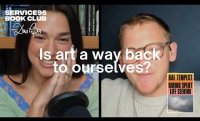
In this video, author and musician Kae Tempest talks about the core themes of forgiveness and atonement in his second novel, Having Spent Life Seeking (Jonathan Cape, 2026), and transmuting his musical background into prose in this conversation with Dua Lipa for the Service95 Book Club series.

Genre: 

Nick Martino: Scrap Book

Caption: 

In this Green Apple Books event, Nick Martino reads from his debut poetry collection, Scrap Book (Alice James Books, 2026), and discusses how he used different types of archival documents to explore how his father’s incarceration shaped his life in a conversation with Brian Tierney. Scrap Book is featured in Page One in the July/August 2026 issue of Poets & Writers Magazine.

Genre: 

Honestly

6.25.26

In “The Tally,” an essay by Anne Enright recently published in the New Yorker, the author thinks back on a childhood memory in which her mother returned to a grocery store to settle the difference because she had been undercharged for a Christmas turkey. Enright explores her feelings of indignation at her family’s morality in the face of “corporate interest” and “predatory capitalism,” but then concludes that “integrity is also a way to hold the self together” and that “honesty may be a one-sided contract with the world, but it is the only side that we can control.” Write a personal essay that reflects on how your own stances around honesty and integrity have been shaped by how you were raised and what your family valued. How has your point of view on honesty evolved over the years, whether maintaining consistency or broadening to a more open-minded flexibility?

Pages

Subscribe to Poets & Writers RSS