Ann Patchett: Whistler

Caption: 

In this Books Are Magic event at St. Ann’s Church in Brooklyn, Ann Patchett speaks with Emma Straub about her latest novel, Whistler (Harper, 2026), and the creative process behind commissioning art for the book’s cover, as well as the experience of fostering community with her bookstore Parnassus Books in Nashville.

Genre: 

Competing Interests

The comedy horror television series Widow’s Bay begins with the mayor of a small New England island town attempting to boost tourism and presenting the locale in a positive light to a visiting reporter of a major newspaper outlet. Despite the mayor’s efforts to detract attention from the town’s history of unusual occurrences, corroborating local residents’ warnings that the island is cursed and haunted, an arrival of thick fog brings present danger and terror that cannot be ignored. Write a short story that revolves around a group of people whose competing interests are illuminated when an outsider enters the picture. First, spend some time establishing the nuances of your characters’ relationships: Are there rivalries or unresolved conflicts from the past? How does the outsider create a disruption in your characters’ routines and expectations?

Let America Be

6.30.26

“Let America be America again. / Let it be the dream it used to be. / Let it be the pioneer on the plain / Seeking a home where he himself is free. // (America never was America to me.)” Written in 1935, Langston Hughes’s poem “Let America Be America Again” begins with a stanza of lines that seems to wish for a bygone era of the country, with its ideas of pioneering and freedom, but follows with a line in parentheticals that clarifies and redefines that notion of America from the speaker’s point of view. The poem’s next two stanzas follow this form with lines in parentheticals, the last one stating: “There’s never been equality for me, / Nor freedom in this “homeland of the free.” This week, compose a poem that begins with the title of Hughes’s poem as your first line. Throughout your poem, use parentheticals to illuminate how some of your own ideas and experiences stand in tension with the country’s founding ideals.

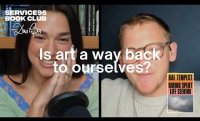
Kae Tempest on Having Spent Life Seeking

Caption: 

In this video, author and musician Kae Tempest talks about the core themes of forgiveness and atonement in his second novel, Having Spent Life Seeking (Jonathan Cape, 2026), and transmuting his musical background into prose in this conversation with Dua Lipa for the Service95 Book Club series.

Genre: 

Nick Martino: Scrap Book

Caption: 

In this Green Apple Books event, Nick Martino reads from his debut poetry collection, Scrap Book (Alice James Books, 2026), and discusses how he used different types of archival documents to explore how his father’s incarceration shaped his life in a conversation with Brian Tierney. Scrap Book is featured in Page One in the July/August 2026 issue of Poets & Writers Magazine.

Genre: 

Honestly

6.25.26

In “The Tally,” an essay by Anne Enright recently published in the New Yorker, the author thinks back on a childhood memory in which her mother returned to a grocery store to settle the difference because she had been undercharged for a Christmas turkey. Enright explores her feelings of indignation at her family’s morality in the face of “corporate interest” and “predatory capitalism,” but then concludes that “integrity is also a way to hold the self together” and that “honesty may be a one-sided contract with the world, but it is the only side that we can control.” Write a personal essay that reflects on how your own stances around honesty and integrity have been shaped by how you were raised and what your family valued. How has your point of view on honesty evolved over the years, whether maintaining consistency or broadening to a more open-minded flexibility?

The Role of the Small Press

Caption: 

In this episode of the SlantCast podcast, Gregory Wolfe, founder of Slant Books, and Emily Kwilinski, the press’s managing editor, speak with author and industry insider Jim Hanas about the role of indie presses in the book business. Slant Books is featured in Small Press Points in the July/August 2026 issue of Poets & Writers Magazine.

Scentscape of the Future

6.24.26

As climate collapse transforms our experiences of the natural world, researchers are sounding the alarm that smells and scents will become extinct alongside changes in plant biodioversity, weather-related phenomena, and the evolution of the world’s landscapes of man-made structures. According to a recent article in Smithsonian magazine, scientists warn that not only will the changing climate have a reduced “scentscape,” but that human beings may gradually experience diminished abilities to smell, due to the harmful effects of pollution. Write a short story that takes place in a universe where smells have largely disappeared from everyday life. What sort of adaptations have been created to compensate for this sensory loss? Will memories, which are strongly associated with smell, function in different ways?

Human Form

6.23.26

In an interview for the Poetry Society of America, Diane Seuss talks to Jennifer Franklin about how she writes with a keen awareness of the body as a site of both immense precarity and radical agency. When considering the role of structure in poetry, Seuss draws a parallel between the literary form and human form, how language can be compressed and lead through the formal constraints of a poetic form in the same way the human body can act as an impediment and a guide. “We write with all of ourselves,” she says, “at our best.” Write a poem that uses the structure of a poetic form to reflect on the nature of the body. Explore how the lyrical imagination pushes against structure, like the body “compresses the soul,” as Seuss describes. How does the inclusion of the body anchor your writing, and how might you play within these confines?

Center for the Art of Translation

Caption: 

In this video, Michael Holtmann, president of the Center for the Art of Translation, and founder Olivia Sears, along with authors and booksellers, talk about the importance of literary translation and the need to build a permanent home for the center in San Francisco. For more information, read “A New Home for Translators in San Francisco” by Ilana Masad in the July/August 2026 issue of Poets & Writers Magazine.

Genre: 

Pages

Subscribe to Poets & Writers RSS