Fictional Poetic Memoir

While the late Keith Waldrop described his 1993 book, Light While There Is Light: An American History, reissued by New York Review Books Classics in May, as a “fictional memoir,” Dalkey Archive Press, which reissued the book in 2013, referred to it as an “autobiographical novel,” and elsewhere it’s been described as a “poetic memoir.” This week, compose three short pieces about one single memory, each one to be described by one of these hybrid labels. How does your fusion of fiction and nonfiction shift when you’re thinking about the genre of your work in a different way? What kind of permission is granted when you add on a more imaginative modifier, such as “fictional” or “poetic”—and how does the “autobiographical” prefix work in tandem or in tension with a fictional element in place?

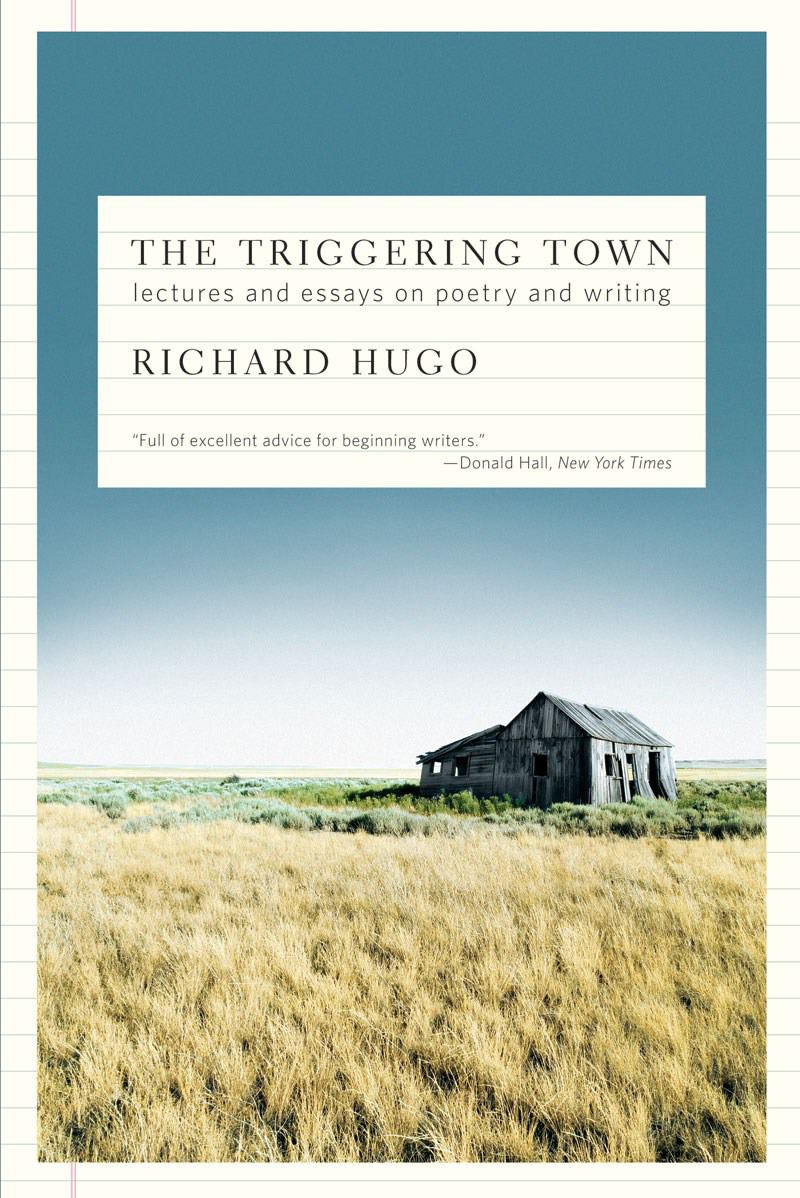
The Triggering Town: Lectures and Essays on Poetry and Writing

by
Author: 
Richard Hugo
Published in 2010
by Norton

Originally published in 1979, Richard Hugo’s The Triggering Town has become a classic guide for writers. The renowned poet and teacher has brought together a series of lectures, essays, and reflections, all “directed toward helping with that silly, absurd, maddening, futile, enormously rewarding activity: writing poems.” The book includes pieces on how to write “off the subject” and how poets make a living, with lessons intended to teach you “how to teach yourself how to write.” Poets and writers of any experience will benefit from Hugo’s insights into the mysteries of literary creation. As he writes in the introduction, “I don’t know why we do it. We must be crazy. Welcome, fellow poet.”  

Natalie Adler: Waiting on a Friend

Caption: 

“I was writing this book that was kind of longing for the city that I actually lived in.” In this episode of Poured Over: The Barnes & Noble Podcast hosted by Miwa Messer, Natalie Adler talks about the loneliness she felt in New York City during the pandemic and how it inspired her to write her debut novel, Waiting on a Friend (Hogarth, 2026), which takes place at the height of the AIDS crisis in 1984.

Genre: 

Teen Life

“I learned that Lucky Charms cereal is, like, seventy-five percent sugar, bananas are poisonous to monkeys, and you should rinse Popsicles before eating them to avoid losing taste buds. I learned that you can kind of just say ‘slay’ whenever, as filler, that you can address both your girls and your dad as ‘bro,’” writes Anna Wiener in “The Life and Times of an American Tween,” a recent New Yorker piece about a San Francisco twelve-year-old and her friends that expands into larger ideas around being a twenty-first century tween. Write a short story in which one of your main characters is a teenager. Draw from your own experiences as a teen, as well as your knowledge of Gen Alpha, to round this character out with age-specific habits, emotional turmoil, energy, and outlook. Consider how the character’s use of slang conveys a phase of in-betweenness, intense observation, and playacting in this preadult window of their life.

Machine Seeing

The machines are watching you . . . and they’re talking to each other. In an interview for Phaidon, Trevor Paglen, artist and author of How to See Like a Machine: Images After AI (Verso, 2026), speaks about how most images made in the world today are not centered around a human observer, but are made by machines for other machines. “A simple example is a self-driving car that is making tons and tons of images every second to navigate,” he says. “They’re not making those images for humans, they’re making them for themselves.” Spend some time imagining how a machine might “see” a photograph differently from how a human would, and write a poem with a particular image in mind. What might a machine notice or not notice? How might processing an image and communicating about it be different when we dispense with our conventional ideas of human emotional responses? Experiment with the way certain details are described and remembered.

Writers Speak: Anuk Arudpragasam

Caption: 

“I think philosophy was my first reading love. It was through philosophy that I entered literature.” In this Mahindra Humanities Center event at Harvard University, Tamil novelist and translator Anuk Arudpragasam speaks with Tara K. Menon about writing while working on his doctorate in philosophy and shares insights about his novels The Story of a Brief Marriage (Flatiron Books, 2016) and A Passage North (Hogarth Press, 2021).

Genre: 

Pages

Subscribe to Poets & Writers RSS