

Broken Down

9.11.25

Write an essay about something in your daily life that has quietly broken down but remains in use. Perhaps it’s a favorite chair with a wobbling leg, a jacket with a missing button, or a smartphone with a cracked screen. Begin with the object itself, describing its flaws in detail, then follow the thread outward: What does your continued reliance on it reveal about your habits, your history with broken things, and your relationship to loss? Consider how the imperfect object serves as a stand-in for resilience, denial, or attachment. Let the essay move between the object’s material reality and the emotional truths it props up.

The Interview: Arundhati Roy

Caption: 

In this episode of The Interview, a podcast from the New York Times, Arundhati Roy speaks with host Lulu Garcia-Navarro about government censorship and political repression, the role of the artist amidst crisis, and the challenges of writing about her mother in her new memoir, Mother Mary Comes to Me (Scribner, 2025), which is featured in Page One in the September/October issue of Poets & Writers Magazine.

Earth and Water

9.10.25

In her 1955 book The Edge of the Sea, marine biologist Rachel Carson explores the ecology of the Atlantic seashore. “When we go down to the low-tide line, we enter a world that is as old as the earth itself,” she writes, “the primeval meeting place of the elements of earth and water, a place of compromise and conflict and eternal change.” Write a short story that uses a shoreline as its setting. Consider the ways in which this meeting place of earth and water is a place where one might encounter change, conflict, and compromise. What sorts of sights specific to this merging of earth and water are observed, and how can you connect them to the major and minor conflicts in your narrative? Does your story conclude with the implication of further “eternal change,” or do you lead your characters to a seeming point of resolution?

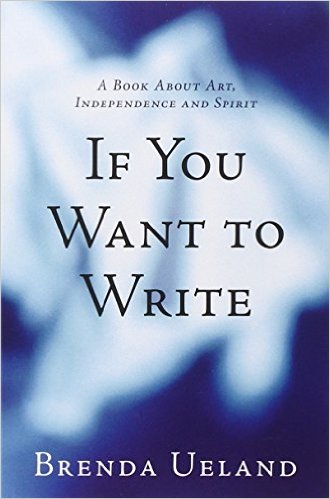
If You Want to Write: A Book About Art, Independence and Spirit

by
Author: 
Brenda Ueland
Published in 2007
by Graywolf Press

First published in 1938, Brenda Ueland’s classic book is a guide for writers at all levels offering insight to the writing process and the artist’s identity. Ueland encourages all to find their creative center and provides spirited advice on how to channel creativity during happy, idle time spent ruminating and imagining. “Inspiration does not come like a bolt, nor is it kinetic, energetic, striving, but it comes to us slowly and quietly and all the time,” she writes. Each chapter speaks directly to the reader reminding them that, as the first chapter is titled, “Everybody Is Talented, Original, and Has Something Important to Say.” 

Kevin Young: Night Watch

Caption: 

In this Politics and Prose event, Kevin Young reads from his latest poetry collection, Night Watch (Knopf, 2025), and discusses the importance of place, both for his life and his writing, in a conversation with Steve Lickteig. Night Watch is featured in Page One in the September/October issue of Poets & Writers Magazine.

Genre: 

Community of Air

“Life itself is kinship. We’re all a community of air,” says Mohammad Saud who operates a bird clinic in Delhi with his brother Nadeem Shehzad that predominantly treats the city’s omnipresent black kites and is the center of Shaunak Sen’s 2022 award-winning documentary, All That Breathes. The film is filled with footage not only of the raptors, but also of the many other creatures—including insects, reptiles, rats, and dogs—that have adapted to an urban environment teeming with pollution and sectarian violence, creating a sense of precarious, precious kinship between human civilization and nonhuman life. Write a poem that draws on observation of all the things that breathe around you. What lives in your local “community of air?”

Emily Henry on Writing Romance Novels

Caption: 

In this interview from The Tamron Hall Show, the best-selling author of the romance novels Beach Read (Berkley, 2020), Book Lovers (Berkley, 2022), and Great Big Beautiful Life (Berkley, 2025) talks about her writing process, approaches to character development, and exploration of themes, such as love, loss, and self-discovery.

Genre: 

Highest 2 Lowest

Caption: 

Watch the trailer for Spike Lee’s Highest 2 Lowest, a reimagination of Akira Kurosawa’s 1963 film High and Low, which was loosely adapted from the 1959 novel King’s Ransom: An 87th Precinct Mystery by Ed McBain. The crime thriller film stars Denzel Washington, Jeffrey Wright, and A$AP Rocky.

Genre: 

Constant Illumination

In an essay in the New York Review of Architecture, Elvia Wilk writes about light pollution and the extensive effects and detriments of artificial lighting. “Everyone suffers, from bats—which are essential pollinators, predators, and fertilizers—to birds, to coral reefs, to orchids. The disruption occurs not only on the scale of the day, but on the scale of the season,” writes Wilk. “In cities, trees positioned next to streetlamps wait to shed their fall leaves for three weeks longer than trees unlit by lamps.” Write a personal essay that reflects on your own relationship to the various types of lighting around you, both artificial and natural. Describe the way sunlight affects you throughout the seasons and explore how lamps, overhead lighting, and streetlights shape your days and nights.

Pages

Subscribe to Poets & Writers RSS