In Medias Res

5.27.25

In storytelling, the narrative strategy of beginning in medias res is to launch into the middle of a plot. Frequently applied to the composition of contemporary novels and films, such as Fight Club, Forrest Gump, and Raging Bull, the storytelling device can be traced back to Homer’s Greek epic poem The Iliad, which opens at the tail end of the Trojan War. This week write a poem that begins in medias res. Think of a story you’d like to recount in narrative verse and then select a starting point that may be much later than the logical or conventional beginning of the action. Sprinkle in flashbacks and recollections of memory to fill in any necessary pieces of context that allude to earlier events.
Marilyn Chin: Sage

Caption: 

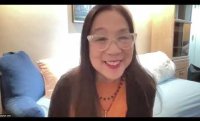
Marilyn Chin reads from her sixth poetry collection, Sage (Norton, 2023), and answers questions about the public role of the modern poet and her references to ancient traditions and pop culture in this 2023 virtual installment of the Hugh C. Hyde Living Writers’ Series hosted by San Diego State University’s Creative Writing program.

Genre: 

A Pale View of Hills

Caption: 

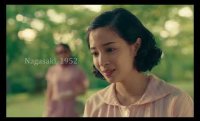
Watch the trailer for A Pale View of Hills, a film adaptation of Kazuo Ishiguro’s 1982 novel of the same name. Directed by Kei Ishikawa, the film stars Suzu Hirose, Fumi Nikaido, and Yoh Yoshida, and explores a widow’s memories spanning post-war Nagasaki in the 1950s and England during the 1980s Cold War era.

Genre: 

Jemimah Wei: The Original Daughter

Caption: 

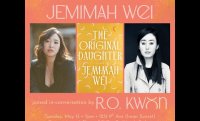
In this Green Apple Books event, Jemimah Wei reads from her debut novel, The Original Daughter (Doubleday, 2025), and talks about her desire to write about two ambitious girls growing up in modern Singapore in a conversation with R. O. Kwon. “What I tell people about this book is that I’ve always thought it of as a love story, but like a really unromantic love story.”

Genre: 

Describe the Lake

5.22.25

In her latest book, In the Rhododendrons: A Memoir With Appearances by Virginia Woolf (Algonquin, 2025), poet Heather Christle explores her past and her relationship with her mother through the life and work of Virginia Woolf. Christle reflects on the difficult, and sometimes painful, writing process for the book in an essay published on Literary Hub: “There’s a line from a Tony Tost poem I often think about: ‘I don’t know how to talk about my biological father, so I’m going to describe the lake.’ I had so many lakes. I began the process of draining them.” Spend some time jotting down a wide-ranging list of inspiring works of art, geographical locations, and cultural touchstones that are of interest to you. Then, begin an essay by describing something from your list that is seemingly disconnected from a difficult subject matter from your life, and inch your way toward it.

Lauren Groff on the Themes in Her Novels

Caption: 

“I think each project requires its own form, and the story itself demands the form.” In this Louisiana Channel interview, Lauren Groff talks about how her novel Matrix (Riverhead Books, 2021) began as a thought experiment around toxic masculinity, and reflects on the ways fiction can challenge patriarchal storytelling traditions.

Genre: 

Free Will

5.21.25

“Nothing happens without a reason. Everything was determined by something prior.” In Devs, a 2020 science fiction television miniseries written and directed by Alex Garland, the viewer is presented with heady questions around determinism and free will as more and more is revealed about a quantum simulation project at a cutting-edge tech company that appears to have the ability to simulate the world at any and all places and times, past and future. Write a short story in which you examine these ideas through characters with opposing opinions about the freedom to change the course of one’s life. You might choose to delve into science fiction or fantasy, or develop your story around a romance or a comedy of errors. What events in the past lead each character to their respective ways of thinking?

Ocean Vuong: The Emperor of Gladness

Caption: 

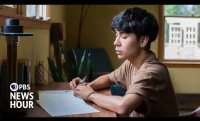
“Being a writer, creating stories, is my way of saying that I’m not marked by my history.” In this PBS NewsHour interview, Ocean Vuong talks about the power of writing and the working-class community of Hartford that shaped his second novel, The Emperor of Gladness (Penguin Press, 2025). For more from Vuong, read “Theater of Memories: A Conversation With Ocean Vuong” by Divya Mehrish.

Genre: 

How to Live

5.20.25

On her website, The Marginalian, Maria Popova writes about her admiration for Marie Howe’s poem “The Maples,” which appears in her Pulitzer Prize–winning collection, New and Selected Poems (Norton, 2024), and describes it as “spare and stunning.” The poem begins by asking a question that has fueled philosophical discussions for centuries: “How should I live my life?” The speaker poses this question to nearby maple trees to which they respond, “shhh shhh shhh,” and their leaves “ripple and gleam.” Compose your own poem that attempts to ask and even embody this big life question, situating a speaker in a setting in which their connection to the surrounding environment is incorporated into the answer. Do you find yourself drawn toward nature or somewhere else?

Michael Luo: Strangers in the Land

Caption: 

In this event at the Chinese Historical Society of America Museum in San Francisco, Michael Luo talks about how a series of tweets reacting to a hate crime he experienced led to an exploration of early nineteenth-century Chinese immigration, which began the process for his debut book, Strangers in the Land: Exclusion, Belonging, and the Epic Story of the Chinese in America (Doubleday, 2025). “In order to understand this kind of present, you have to go back,” Luo says.

Pages

Subscribe to Poets & Writers RSS