Sensational Statements

In the New York Times, a recent headline reads: “Universal Antivenom May Grow Out of Man Who Let Snakes Bite Him 200 Times.” Without reading the content of the article, where does this sensational statement take your mind? This could be an act of heroism, foolishness, a desperate cry for attention, or simply one of the many bizarre idiosyncrasies of human behavior. This week, scroll and scan through a range of headlines—whether seemingly legitimate or dubious—and pick a particularly strange one. Before reading the article, write a poem that follows your line of thinking upon seeing this striking bit of reportage. Think about where the story might go and what images are evoked. Are you able to draw a personal connection to aspects of your own behavior that might explain why the headline resonated with you?

P&W Live: Douglas Kearney in Conversation With Destiny O. Birdsong

Caption: 

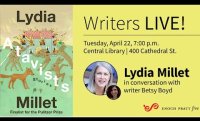
In this Poets & Writers Live event introduced by Poets & Writers Magazine features editor India Lena González, Douglas Kearney reads from his new poetry collection, I Imagine I Been Science Fiction Always (Wave Books, 2025), and joins Poets & Writers Magazine contributing editor Destiny O. Birdsong for a conversation. A profile of Kearney by Birdsong appears in the May/June issue of Poets & Writers Magazine.

Genre: 

Vauhini Vara: Searches

Caption: 

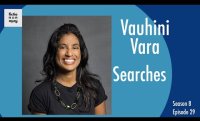
In this episode of Literary Hub’s Fiction/Non/Fiction podcast cohosted by V. V. Ganeshananthan and Whitney Terrell, author Vauhini Vara talks about the current discourse of artificial intelligence and the ChatGPT conversation that led to writing her essay collection, Searches: Selfhood in the Digital Age (Pantheon, 2025).

Baek Se-hee and Anton Hur

Caption: 

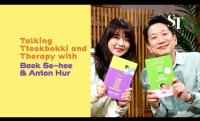
For this Straits Times video, Korean author Baek Se-hee and translator Anton Hur reflect on the global success and universal resonance of I Want to Die but I Want to Eat Tteokbokki (Bloomsbury Publishing, 2022) and discuss the current state of mental health in East Asian countries in their first joint interview.

From a Distance

In a New Yorker interview about her short story “Marseille,” Ayşegül Savaş comments on a realization she made when putting together her story collection Long Distance, forthcoming from Bloomsbury in July: “Even though friendships are very important to my own life, I would still place marriage, or parents, or children at the center of my preoccupations. Then why do I write so much about friends?” Take a look through some of your past writing and try to locate any patterns of concerns that recur throughout different pieces, thus revealing your thematic priorities. Write an essay that muses on why these are primary concerns for you to explore creatively. How do your subjects influence your writing form and vice versa? Have themes evolved or shifted in big or small ways over the years?

Dear Poet 2025: Jericho Brown

Caption: 

“The loneliest people have the earth to love / And not one friend their own age.” Jericho Brown reads his poem “Labor,” which appears in his second poetry collection, The New Testament (Copper Canyon Press, 2014), in this video for the Dear Poet series, the Academy of American Poets’ educational project for National Poetry Month.

Genre: 

Breaking the Rules

4.30.25

In his introduction to The Best American Short Stories 2019, guest editor Anthony Doerr lists several dos and don’ts one often hears about writing short stories and describes his love for reading and writing stories that break those very rules. Some of the rules Doerr mentions are: “Don’t start with a character waking up. Jump right into the action. Exposition is boring. Backstory slows you down. Stick with a single protagonist. Make sure he or she is likable. Don’t break up chronology.” This week, think carefully about the reasoning behind one of these oft-cited rules, then write a story that explicitly goes against it. How can the incorporation of an aspect of experimentation or innovation effectively push against the possibly clichéd rationale behind the original rule?

The ABCs of Art

4.29.25

In “Leaving the Psychologist: An Abecedarian Ekphrastic,” published in the Academy of American Poets’ Poem-a-Day series, Grisel Y. Acosta combines two poetic forms—the abecedarian, in which the first letter of each line follows alphabetical order, and the ekphrastic, which describes or responds to a work of visual art. In Acosta’s poem, she uses a 1960 painting by Spanish Mexican Surrealist artist Remedios Varo titled “Mujer saliendo del psicoanalista” as inspiration: “another face has sprouted in my chest / beastly, that’s me, a super freak / cavorting with your skull in my grasp….” Inspired by Acosta’s creation of combined forms, write your own abecedarian ekphrastic poem. Search for an image of a painting or other work of visual art that invokes a feeling of expansiveness or cyclicality. Allow this to buoy your path from A to Z.

Yuki Tanaka: Chronicle of Drifting

Caption: 

“If only the sky were kind enough to lend me his blue coat.” In this video, Yuki Tanaka reads an excerpt from the title poem of his debut collection, Chronicle of Drifting (Copper Canyon Press, 2025), which is featured in Page One in the May/June issue of Poets & Writers Magazine.

Genre: 

Pages

Subscribe to Poets & Writers RSS