Early Resonance

10.28.25

According to a recent article in Psychology Today, while most people’s earliest memories are remembered like silent films—rich with imagery but largely void of sound—for a select few who have an auditory first memory, they may also have a “sound-minded” orientation in life, in which the “sensory modality of hearing is inseparable from their way of being.” This week, taking inspiration from these two possibilities, compose a pair of poems with contrasting takes on sound. Choose one childhood memory and write one sound-filled version and one silent version. Take some time to think about the various ways in which sound can be conveyed through stylistic decisions involving alliteration and consonance, typography and punctuation, and rhythm. How might line breaks and spacing on the page contribute to a sense of silence?
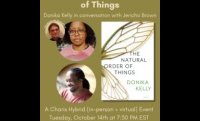
Donika Kelly: The Natural Order of Things

Caption: 

“I was little and lost / the season I learned to be still...” In this Charis Circle event, Donika Kelly reads poems from her new collection, The Natural Order of Things (Graywolf Press, 2025), and speaks with Jericho Brown about family, home, and her writing process. Read a profile of Kelly by Brian Gresko in the November/December issue of Poets & Writers Magazine.

Genre: 

Susan Orlean: Joyride

Caption: 

In this episode of The Write Reasons podcast, Susan Orlean talks about how her first memoir, Joyride (Avid Reader Press, 2025), originated from her reflections of her 1992 Esquire essay, “The American Male at Age Ten,” in a conversation with Simon & Schuster CEO Jonathan Karp. Orlean’s memoir is featured in Page One in the November/December issue of Poets & Writers Magazine.

Oprah’s Book Club: Megha Majumdar

Caption: 

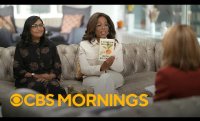
In this CBS Mornings segment with cohost Gayle King, Oprah Winfrey announces her latest book club pick, A Guardian and a Thief (Knopf, 2025), and speaks with author Megha Majumbar about the themes of her novel and how becoming a parent changed how she viewed her characters. Read Majumbar’s installment of our Ten Questions series.

Genre: 

Rabbit Holes

10.23.25

Kate Zambreno’s Animal Stories, published by Transit Books in September, is divided into two sections: “Zoo Studies” and “My Kafka System.” The first section includes essays that meld accounts of various zoo visits with meditations on animals, ideas about enclosure and captivity, and familial relationships and motherhood for human and nonhuman animals alike. The second section examines various aspects of the life and work of the famed author whose stories have centered around an ape, a mouse, a dog, hybrid creatures, and, of course, a giant insect. Taking your cue from Zambreno’s wide-ranging pieces, write a series of short reflections on animals that progresses with associative logic. Allow yourself permission to go down any rabbit holes, as deeply as you wish. Take inspiration from the realms of science and other artistic mediums to include intriguing anecdotes and historical facts.

Jade Chang: What a Time to Be Alive

Caption: 

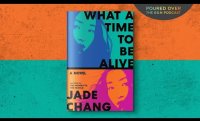
“I think I just really wanted to show a version of the city that we don’t see as often in popular culture.” In this live episode of Poured Over: The Barnes & Noble Podcast hosted by Miwa Messer, Jade Chang discusses the nuances of writing about Los Angeles in her latest novel, What a Time to Be Alive (Ecco, 2025). Read Chang’s installation of our Ten Questions series.

Genre: 

Frenetic

10.22.25

“I arrived in the middle of the night to save you from the terrible smoke, I had a dream about you and so I decided to come and see you, I arrived just in time,” writes Ariana Harwicz in Unfit (New Directions, 2025), translated from the Spanish by Jessie Mendez Sayer. In the novel an Argentine migrant worker laboring as a grape picker in southern France is thrown into a tailspin after losing custody of her two young sons; she sets fire to her in-laws’ farmhouse, kidnaps her children, and embarks on a manic road trip. The terrifying and darkly humorous first-person narration is filled with contradictions and falsehoods and comma-filled run-on sentences, structured in frenzied, rambling paragraphs that mirror the protagonist’s delusionary state of mind. Write a story that plays with narrative voice in a similar way, aligning the mindset of your protagonist with a frenetic style of storytelling. Are there moments of levity that can provide a reprieve from the pacing?

Gabrielle Calvocoressi: The New Economy

Caption: 

In this 2023 Harvard Radcliffe Institute event, Gabrielle Calvocoressi reads from their collection The New Economy (Copper Canyon Press, 2025) and discusses the relationship between the vessel of the body and the vessel of the poem in a conversation with Claudia Rizzini. The New Economy is featured in Page One in the November/December issue of Poets & Writers Magazine.

Genre: 

Epic Elements

10.21.25

In the introduction to John Berryman’s Only Sing: 152 Uncollected Dream Songs, forthcoming in December from Farrar, Straus and Giroux, editor Shane McCrae makes the case that Berryman’s The Dream Songs—a compilation of two books, 77 Dream Songs (FSG, 1964) and His Toy, His Dream, His Rest (FSG, 1968)—is an epic poem, pointing to its stylistic concision. “The language of an epic poem must be, in its way, as compressed as the language of a lyric poem,” he writes, “and in those moments when it is not compressed, the language must strike the reader as relaxed from compression, and loaded with the certainty of future compression.” Another feature of epic poems is the presence of a hero, although McCrae notes that Berryman’s Henry is an “unheroic hero,” variably charming, gloomy, facetious, and colloquial. Begin composing a series of poems that contain these two elements of traditional epic poetry. How does your hero or antihero function to create a binding narrative?

New Stories by Virginia Woolf

Caption: 

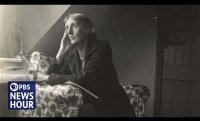
In this PBS NewsHour video, Malcolm Brabant speaks with archivists and scholars about discovering lost stories written by Virginia Woolf before her first novel was published. The discovery culminated into a newly published collection of three comic stories, The Life of Violet: Three Early Stories (Princeton University Press, 2025), edited by Urmila Seshagiri.

Genre: 

Pages

Subscribe to Poets & Writers RSS