Burdens

11.27.25

Lulu Wang’s 2019 film, The Farewell, begins with a group of relatives convening in China on the pretext of a wedding but who are actually there to bid farewell to the family matriarch from whom they are hiding her terminal cancer diagnosis. The protagonist of the film, a woman in her thirties who has lived in the United States for most of her life, struggles with this concept and is told by her uncle that it is their duty to carry the emotional burden of her grandmother’s illness for her. “You think one’s life belongs to oneself,” he says. “But that’s the difference between the East and the West. In the East, a person’s life is part of a whole. Family. Society.” Think back to a time when you have carried a burden for someone else and write an essay that examines your personal experience with this concept. Are there situations in which withholding the truth or keeping something secret feels reasonable, ethical, or even honorable to you?
Distorted Paths

11.26.25

In Shirley Jackson’s short story “The Tooth,” a woman’s bus ride to the dentist dissolves into a haze of pain, exhaustion, and an uncanny encounter with a stranger. Write about an ordinary trip on a bus, train, or rideshare that is unsettled by your character’s physical state, whether they’re experiencing hunger, sleeplessness, or an illness. Let the journey shift gradually into unease, or perhaps, an altered sense of connection with others. Focus on moments where tension arises from vulnerability and misconnection, and consider how travel reshapes your character’s sense of self and destination.

Unnatural Habitat

11.25.25

Write a poem that begins with the image of an animal arriving where it should not be, such as a whale in an office space or a Zebra in a suburban backyard. Allow this surreal scene to take you to unexpected places and metaphors. Is the animal an omen or is it concealing a secret? Focus on the literal and symbolic dimensions of the encounter, drawing out the scene to illuminate overlooked truths, inner stirrings, and the quiet absurdities of the world around you.

Hamnet

Caption: 

Watch the trailer for Hamnet, a film adaptation of Maggie O’Farrell’s 2020 novel of the same name. Directed by Chloé Zhao and starring Jessie Buckley and Paul Mescal, the film follows the relationship between William Shakespeare and his wife Agnes, and the impact of their young son’s tragic death on their lives.

Genre: 

Margaret Atwood on 60 Minutes

Caption: 

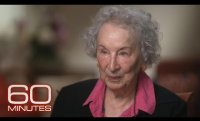
In this 60 Minutes interview, Margaret Atwood speaks about her response to book banning, her new memoir, Book of Lives: A Memoir of Sorts (Doubleday, 2025), and why she says the popularity of her novel The Handmaid’s Tale is “not due to me or the excellence of the book. It’s partly the twists and turns of history.”

Backstory

11.20.25

What’s the story behind the story? Springsteen: Deliver Me From Nowhere, the new biopic directed by Scott Cooper, relays a behind-the-music creation story of Bruce Springsteen’s 1982 acoustic album Nebraska, which was composed and recorded in a New Jersey bedroom. The album represents the singer’s desire for pure art that is free of the constraints and adornments of being a superstar in the music industry. Think about the story behind one of your own stories, perhaps a personal essay you wrote years ago that sprang from a sense of urgency. Write an essay that recounts the story behind this story describing in detail the emotions that played throughout the creative act, where you worked on it, and how the subject matter dictated the process of its writing.

Lana Lin: The Autobiography of H. Lan Thao Lam

Caption: 

In this Books Are Magic event, Lana Lin reads from her book The Autobiography of H. Lan Thao Lam (Dorothy, a Publishing Project, 2025) and discusses how she uses both Gertrude Stein and Audre Lorde’s genre-bending approaches to autobiography in order to highlight Asian diasporic narratives in a conversation with Monique Truong.

Soundscape of Your Youth

11.19.25

“The dry, undramatic accent of the Midwest had her longing for the slow, thick drip of Southern speech,” writes Brian Gresko in “Singing the Sublime: A Profile of Donika Kelly,” published in the November/December issue of Poets & Writers Magazine, about how Kelly “leans into the soundscape of her youth, bringing her family forward as characters and voices within her poems” in her new collection, The Natural Order of Things (Graywolf Press, 2025). Taking inspiration from Kelly’s journey back to her youth, think about the voices and language of a time or place from your past that you long to hear again. Write a short story that incorporates these voices—the diction, syntax, cadence, and grammar—into the world of your narrative. Where does your character encounter this soundscape? Is it spoken by a stranger in passing or by someone who becomes an important part of the plot?

When Objects Dream

11.18.25

In “Man Ray: When Objects Dream,” a new survey exhibition at the Metropolitan Museum of Art in New York, among the many works on display are over fifty of the artist’s “rayographs,” photograms made in the early twentieth century by placing objects on or near light-sensitive photo paper that is then exposed to create dramatically silhouetted images with high contrast. In these works, everyday objects—a comb, bottle, lightbulb, eggbeater, key, and wrench—become defamiliarized through Man Ray’s manipulation of placement and movement, capturing what poet Tristan Tzara described as the moment “when objects dream.” Browse through some of the rayographs and select one image that particularly resonates with you. Compose a poem that imagines the dreams in your chosen image. In your deciphering of the objects, ask yourself what do they dream?

Pages

Subscribe to Poets & Writers RSS