Flair for Drama

5.29.25

In the 1997 film Face/Off, an FBI agent survives an assassination attempt that kills his young son and is out for vengeance and justice. To foil this criminal’s next plot to bomb the city, the agent undergoes a secret surgery to replace his face with that of the criminal, only to have him surgically don the agent’s face, effectively creating a mirrored switch in physical identities and an epic showdown. Notable for its flabbergasting premise, another aspect of the film’s cult popularity is director John Woo’s signature style and trademark motifs: balletic action sequences, doves and churches, deadlocked gunfights, and coats blowing in slow motion in the wind. Write an essay about a dramatic situation from your past in which you insert small details and observations of physical description that complement the tone of your piece. How might you translate a slow-motion effect in cinema to a slow-motion moment in your storytelling?

Poured Over: Tayari Jones and A. M. Homes

Caption: 

Tayari Jones, author of An American Marriage (Algonquin Books, 2018), and A. M. Homes, author of May We Be Forgiven (Viking, 2012), talk about how the definition of women’s literature has evolved over time in this live episode of Poured Over: The Barnes & Noble Podcast hosted by Miwa Messer celebrating thirty years of the Women’s Prize for Fiction.

Genre: 

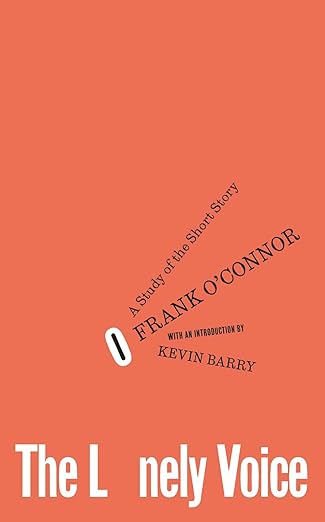
The Lonely Voice: A Study of the Short Story

by
Author: 
Frank O’Connor
Published in 2025
by The Lilliput Press

In The Lonely Voice, Irish writer Frank O’Connor discusses the techniques and challenges of the short story form and considers his favorite writers—among them Chekhov, Hemingway, Kipling, and Joyce—and their greatest works. O’Connor argues that the short story represents “our own attitude to life” and each chapter focuses on the different ways writers express this attitude through the art of the short story. “The storyteller differs from the novelist in this: he must be much more of a writer, much more of an artist—perhaps I should add, considering the examples I have chosen, much more a dramatist,” writes O’Connor. This reprinted edition includes a new introduction by award-winning Irish author Kevin Barry, bringing the 1962 classic to a new generation.  

A Whimper

5.28.25

This is the way the world ends / This is the way the world ends / This is the way the world ends / Not with a bang but a whimper,” concludes T. S. Eliot’s 1925 poem “The Hollow Men,” described in his obituary in the New York Times as “probably the most quoted lines of any 20th-century poet writing in English.” When considering the ending of something enormously consequential, the expectation might be that the external drama of that conclusion match one’s internal turmoil, however the sorrow of Eliot’s sentiment comes through in the idea of ending not with something explosive and abrupt, but with something much smaller, anticlimactic, and quiet. Write a short story that revolves around an ending of some sort—whether it be the world, a war, or a relationship—and include some portion of these last four lines of Eliot’s poem.

In Medias Res

5.27.25

In storytelling, the narrative strategy of beginning in medias res is to launch into the middle of a plot. Frequently applied to the composition of contemporary novels and films, such as Fight Club, Forrest Gump, and Raging Bull, the storytelling device can be traced back to Homer’s Greek epic poem The Iliad, which opens at the tail end of the Trojan War. This week write a poem that begins in medias res. Think of a story you’d like to recount in narrative verse and then select a starting point that may be much later than the logical or conventional beginning of the action. Sprinkle in flashbacks and recollections of memory to fill in any necessary pieces of context that allude to earlier events.

Marilyn Chin: Sage

Caption: 

Marilyn Chin reads from her sixth poetry collection, Sage (Norton, 2023), and answers questions about the public role of the modern poet and her references to ancient traditions and pop culture in this 2023 virtual installment of the Hugh C. Hyde Living Writers’ Series hosted by San Diego State University’s Creative Writing program.

Genre: 

A Pale View of Hills

Caption: 

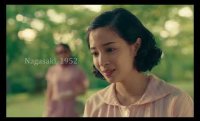
Watch the trailer for A Pale View of Hills, a film adaptation of Kazuo Ishiguro’s 1982 novel of the same name. Directed by Kei Ishikawa, the film stars Suzu Hirose, Fumi Nikaido, and Yoh Yoshida, and explores a widow’s memories spanning post-war Nagasaki in the 1950s and England during the 1980s Cold War era.

Genre: 

Jemimah Wei: The Original Daughter

Caption: 

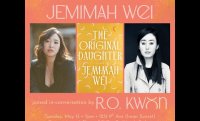
In this Green Apple Books event, Jemimah Wei reads from her debut novel, The Original Daughter (Doubleday, 2025), and talks about her desire to write about two ambitious girls growing up in modern Singapore in a conversation with R. O. Kwon. “What I tell people about this book is that I’ve always thought it of as a love story, but like a really unromantic love story.”

Genre: 

Pages

Subscribe to Poets & Writers RSS