Lambda Literary Awards Announced

Last night, at a ceremony in New York City, the winners of the twenty-eighth annual Lambda Literary Awards (the “Lammys”) were announced. The awards recognize excellence in LGBTQ literature, critical studies, and drama, and are given in twenty-five categories determined by more than ninety judges.
The awards in poetry were given in three categories: The Lesbian Poetry award went to Dawn Lundy Martin for Life in a Box Is a Pretty Life (Nightboat Books); the Gay Poetry award resulted in a tie between Nicholas Wong’s Crevasse (Kaya Press) and Carl Phillips’s Reconnaissance (Farrar, Straus and Giroux); and the Transgender Poetry prize went to kari edwards’s succubus in my pocket (EOAGH Books).

In fiction, the awards were administered in five categories: The Lesbian Fiction award went to Under the Udala Trees by Chinelo Okparanta; Hasan Namir won in Gay Fiction for God in Pink (Arsenal Pulp Press); Anna North won the Bisexual Fiction prize for The Life and Death of Sophie Stark (Blue Rider Press); Roz Kaveney took home the Transgender Fiction award for Tiny Piece of Skull: Or, a Lesson in Manners (Team Angelica Publishing); and the LGBT Debut Fiction prize went to Victor Yates for A Love Like Blood (Hillmont Press).

During the reception, poet Eileen Myles was honored with the organization’s Pioneer Award, and nonfiction writer Hilton Als received the Trustee Award for Excellence in Literature.

A complete list of winners in all twenty-five categories, as well as photos of the awards gala, are available on the Lambda Literary website.

Lambda Literary is a nonprofit foundation dedicated to celebrating and advancing Lesbian, Gay, Bisexual, Transgender, and Queer literature. In addition to the annual Lammy Awards, the foundation administers prizes for emerging and mid-career writers, hosts the Writers Retreat for Emerging Voices, and sponsors the LGBT Writers in Schools program. 

Self-Portrait Poem

Most people spend at least a few minutes a day in front of a mirror, whether while brushing teeth at the bathroom sink at night, or involved in a focused morning makeup or hairstyling routine. Spend a more intensive amount of time in front of a mirror and write a self-portrait poem as you study your own reflection. How has your face evolved over the years? Do your features seem more or less familiar the longer you look? Are there particular elements of your face that remind you of certain people or memories?

Union Square Slam: Putting the Unity Back in Community

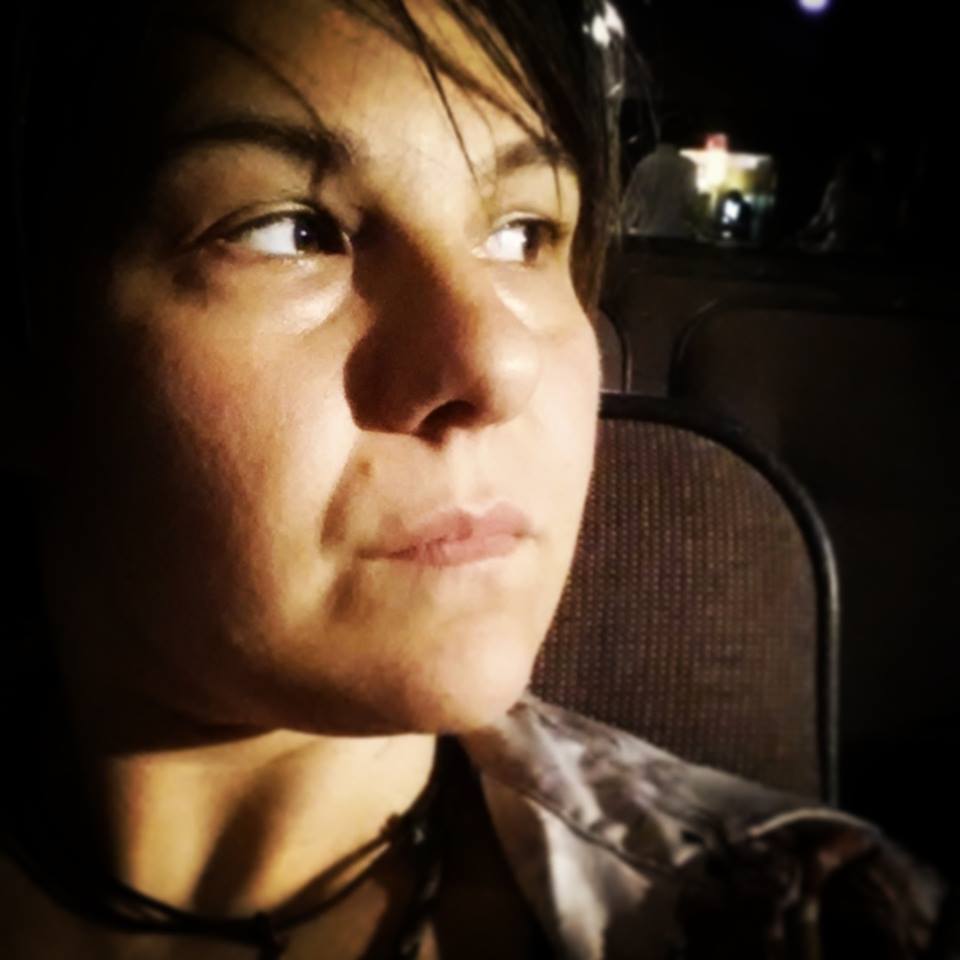
Cecily Schuler received their MFA in Writing from the Pratt Institute in Brooklyn, New York. Having attended both the Bread Loaf Writers’ Conference and the Vermont Studio Center, Schuler has had their work featured in the Offing, Fairy Tale Review, Wicked Banshee, Ellipsis, and Duende, and anthologized in great weather for MEDIA and Fire Stories: Further Thoughts on Radically Rethinking Mental Illness. Schuler's chapbook, 296, chronicling the author's experience living with multiple mental health diagnoses, is available from Next Left Press. Schuler cofounded and manages Union Square Slam, a weekly poetry open mic/slam in the heart of New York City.
What makes your program(s) unique?
I would say that, while we share components of each, we are not your average open mic, poetry reading, or poetry slam. Union Square Slam (USS) was created to not only serve the local and national slam poetry circuit, but more so to provide a creative space for our local poets and authors to branch out, foster, and showcase their particular talents and interests. We are looking to showcase the broad range of overlapping scenes here in New York City, as well as poetic style and talents from other regions of the country.

We encourage audience engagement in a number of ways: “If You Feel Something, Say Something.” If someone says something on the mic that moves you, it’s the culture of the show to respond to that movement through snapping/clapping, moans/groans, shouting and talking back. On paper that sounds like a ruckus, but at the show it can be encouraging and empowering. We also offer writing workshops with highly skilled facilitators before the show each week. Sometimes we ask for donations that go towards the facilitator, but more often than not, the workshops are free! All of the organizers are also working artists, and we know how challenging it can be to keep creating while volunteer organizing on top of working a 9-5. These weekly workshops are just another way we hope to generate community-based quality work for our show attendees.
What recent project and/or program have you been especially proud of and why?
We inherited a venue and show day/time from another open mic/poetry slam in January 2015. Over time, it became clear that the venue and our show were growing in different directions artistically and aesthetically. In November of the same year, we switched venues to our current home in the Bureau of General Services - Queer Division. It was such a relief in so many ways: not only were we in a venue dedicated solely to literary and visual arts, we could now serve all ages and accommodate folks who use wheelchairs. We have managed to build a steady and returning audience, book and fund our features (thanks P&W!!) and have a successful slam season, culminating in USS sending our very first team to the National Poetry Slam in Decatur (Atlanta), Georgia this August. It was a lot of rigmarole, and yet people have come out of the woodwork to offer us support in countless ways. (Speaking of which, please consider helping USS reach its fundraising goals for the team by donating here.)

How do you find and invite readers?
Part of Union Square Slam’s mission is to amplify voices of the oppressed. We aim to book features who self-identify in one or more of the following: people of color and/or queer/LGBTQIA and/or disabled/alter-abled/neurodiverse and/or poor/working class. We don’t go looking for artists who fit these criteria; rather, we check ourselves against this standard as we are booking. Our organizers have been involved in different aspects of not just the national slam scene, but other literary scenes throughout New York City, so between us, we’ve had a wide range of featured poets this year.

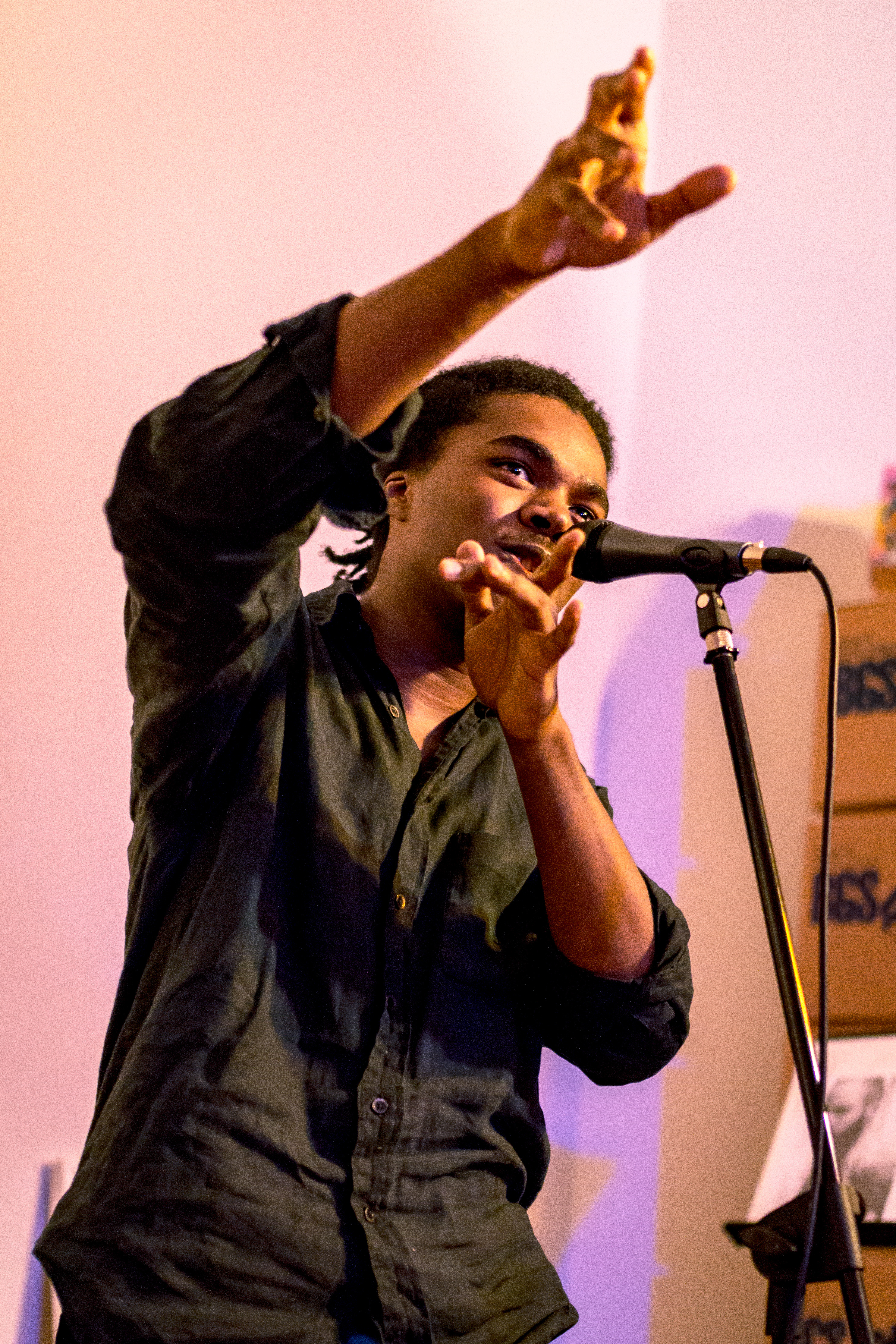
Photo: (top) Cecily Schuler. (bottom) Grand Slam Champ Nkosi Nkululeko. Photo credit: (bottom) Guangpyo David Hong.

Support for Readings & Workshops in New York City is provided, in part, by public funds from the New York State Council on the Arts, and the New York City Department of Cultural Affairs, with additional support from the Louis & Anne Abrons Foundation, the Axe-Houghton Foundation, the A.K. Starr Charitable Fund Trust, and the Friends of Poets & Writers.


Feminist Press and TAYO Launch First Book Prize

The Feminist Press has partnered with TAYO Literary Magazine to launch the Louise Meriwether First Book Prize, which will be given for debut books of fiction or nonfiction by women and nonbinary writers of color. The winner will receive $5,000 and a publishing contract with the Feminist Press.

Novels, short story collections, and works of narrative nonfiction are eligible. Women and nonbinary writers of color (or those who self-identify as nonwhite) may submit a complete manuscript of 50,000 to 80,000 words along with a cover letter that includes the following: an author statement, a brief bio, how the book fits with the work and mission of TAYO and the Feminist Press, a list of up to three influential writers, and the manuscript’s word count. The deadline is July 31. Complete guidelines here.

Entries will be read by a group of judges made up of staff, board members, and allies of the Feminist Press and TAYO Literary Magazine. The top five manuscripts will then be sent to final judges Tayari Jones and Ana Castillo, who will select the winning manuscript. The winner will be announced in February 2017.

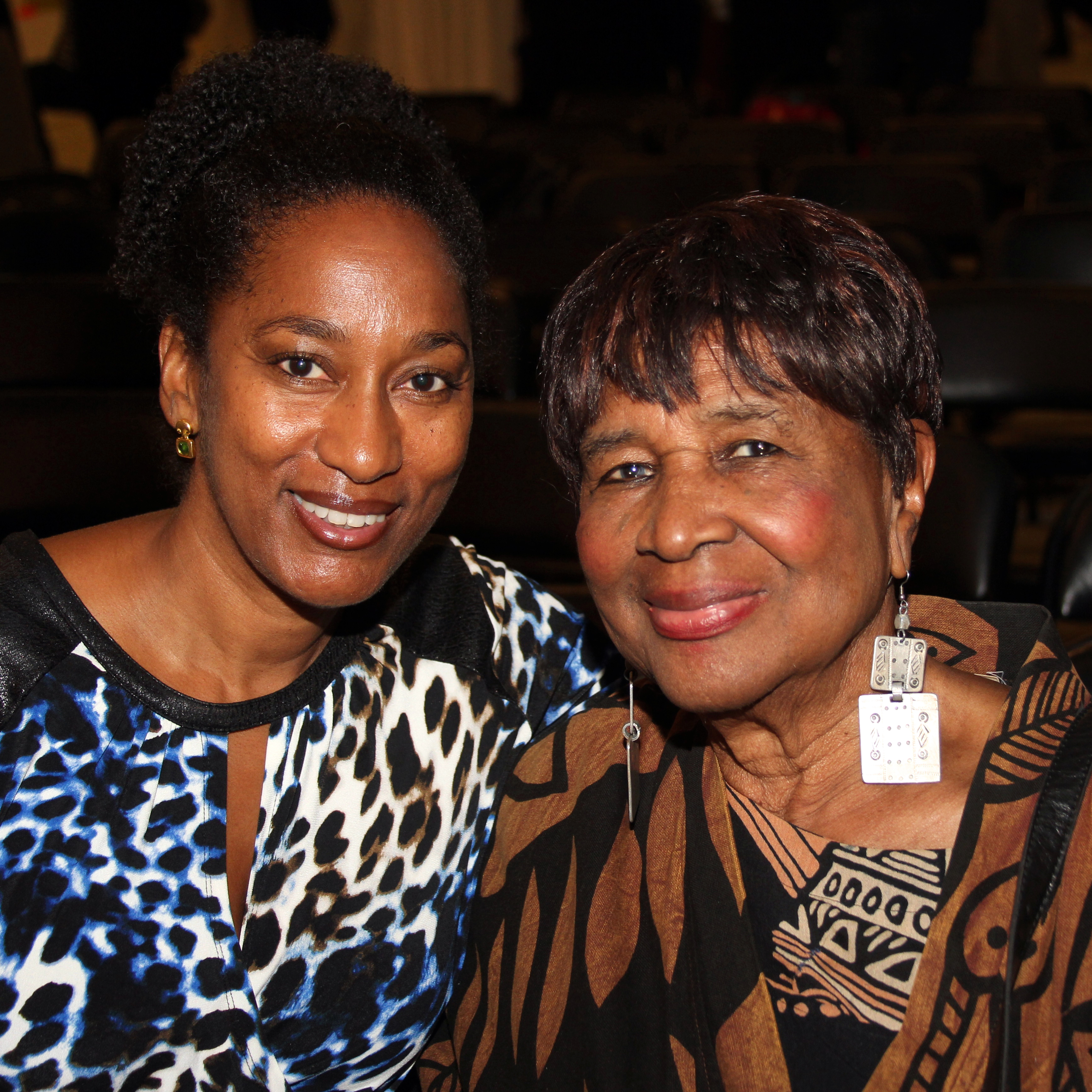
The new prize was founded in honor of novelist, essayist, journalist, and activist Louise Meriwether, age 93, who published her first novel, Daddy Was a Number Runner, in 1970. The book, about the life of a poor black family in the post–Harlem Renaissance era, was one of the first contemporary American novels to feature a young African American girl as the protagonist, and went on to inspire the careers of authors such Jacqueline Woodson and Bridgett M. Davis.

TAYO—a which means “us” or “stand up” in Tagalog—is a magazine dedicated to publishing works of poetry and prose that “slice into the phantasmagoria of the oppressed, marginalized, post-colonized, and diasporic life.”The Feminist Press, founded in 1970 at the City University of New York, is a nonprofit press established to “advance women’s rights and amplify feminist perspectives,” and champion “silenced and marginalized voices in order to support personal transformation and social justice for all people.

Photo: Bridgett M. Davis and Louise Meriwether in 2014. Credit: Muneesh Jain

Griffin Poetry Prize Winners Announced

Poets Norman Dubie and Liz Howard have won the 2016 Griffin Poetry Prizes, given annually for books of poetry published in or translated into English in the previous year. They each received $65,000 Canadian (approximately $50,000). Alice Oswald, Tracy K. Smith, and Adam Sol judged.

Poet Norman Dubie won the International Prize for his collection The Quotations of Bone (Copper Canyon Press). Dubie, 71, has published twenty-nine poetry collections and teaches at Arizona State University in Tempe. “The poems in Dubie’s newest collection are deeply oneiric, governed by vigorous leaping energy that brings the intimate into contact with history, and blurs the distinction between what is real because it once happened, and what is real because of the emphatic manner in which it has been felt,” wrote the judges in their citation.

Liz Howard took home the Canadian Prize for her debut collection, Infinite Citizen of the Shaking Tent (McClelland & Stewart). “These poems are filled with energy and magic, suspended between competing inheritances, at home in their hyper-modern hybridity,” said the judges. “Infinite Citizen of the Shaking Tent confronts its legacies with vivid imagery and crackling language, and introduces us to a bold, original poetic voice.”

The finalists for the International Prize were Joy Harjo for Conflict Resolution for Holy Beings (Norton), Don Paterson for 40 Sonnets (Faber & Faber), and Rowan Ricardo Phillips for Heaven (Farrar, Straus and Giroux). The finalists for the Canadian Prize were Per Brask and Patrick Friesen for their translation from the Danish of Ulrikka S. Gernes’s Frayed Opus for Strings & Wind Instruments (Brick Books) and Soraya Peerbaye for Tell: poems for a girlhood (Pedlar Press). Each finalist received a $10,000 honorarium for participating in the Griffin Prize shortlist reading on Wednesday in Toronto.

Established in 2000, the Griffin Poetry Prize was founded to “serve and encourage excellence in poetry.” Each year the trustees—Mark Doty, Carolyn Forché, Michael Ondaatje, Robin Robertson, Karen Solie, and David Young—along with Scott Griffin, the founder of the prize, select the judges. This year’s judges read 633 poetry collections from 43 countries.

Previous winners of the International Prize include Michael Longley, Brenda Hillman, Fady Joudah for his translation of Ghassan Zaqtan, and David Harsent. Recent winners of the Canadian Prize include Jane Munro, Anne Carson, David McFadden, and Ken Babstock.

Publishers may submit titles for the 2017 prize. The deadline for books published between January 1 and June 30 is June 30; the deadline for books published from July 1 to December 31 is December 31.

Photos: Dubie (Matt Valentine), Howard (Ralph Kolewe)


Pages

Subscribe to Poets & Writers RSS