Find details about every creative writing competition—including poetry contests, short story competitions, essay contests, awards for novels, grants for translators, and more—that we’ve published in the Grants & Awards section of Poets & Writers Magazine during the past year. We carefully review the practices and policies of each contest before including it in the Writing Contests database, the most trusted resource for legitimate writing contests available anywhere.
Find a home for your poems, stories, essays, and reviews by researching the publications vetted by our editorial staff. In the Literary Magazines database you’ll find editorial policies, submission guidelines, contact information—everything you need to know before submitting your work to the publications that share your vision for your work.
Whether you’re pursuing the publication of your first book or your fifth, use the Small Presses database to research potential publishers, including submission guidelines, tips from the editors, contact information, and more.
Research more than one hundred agents who represent poets, fiction writers, and creative nonfiction writers, plus details about the kinds of books they’re interested in representing, their clients, and the best way to contact them.
Find publishers ready to read your work now with our Open Reading Periods page, a continually updated resource listing all the literary magazines and small presses currently open for submissions.
Since our founding in 1970, Poets & Writers has served as an information clearinghouse of all matters related to writing. While the range of inquiries has been broad, common themes have emerged over time. Our Top Topics for Writers addresses the most popular and pressing issues, including literary agents, copyright, MFA programs, and self-publishing.
Our series of subject-based handbooks (PDF format; $4.99 each) provide information and advice from authors, literary agents, editors, and publishers. Now available: The Poets & Writers Guide to Publicity and Promotion, The Poets & Writers Guide to the Book Deal, The Poets & Writers Guide to Literary Agents, The Poets & Writers Guide to MFA Programs, and The Poets & Writers Guide to Writing Contests.
Poets & Writers lists readings and other literary events held online and in person. Whether you are an author on a book tour or the curator of a reading series, the Literary Events Calendar can help you find your audience.
Research newspapers, magazines, websites, and other publications that consistently publish book reviews using the Review Outlets database, which includes information about publishing schedules, submission guidelines, fees, and more.
Well over ten thousand poets and writers maintain listings in this essential resource for writers interested in connecting with their peers, as well as editors, agents, and reading series coordinators looking for authors. Apply today to join the growing community of writers who stay in touch and informed using the Poets & Writers Directory.
Since our founding in 1970, Poets & Writers has served as an information clearinghouse of all matters related to writing. While the range of inquiries has been broad, common themes have emerged over time. Our Top Topics for Writers addresses the most popular and pressing issues, including literary agents, copyright, MFA programs, and self-publishing.
Find a writers group to join or create your own with Poets & Writers Groups. Everything you need to connect, communicate, and collaborate with other poets and writers—all in one place.
Well over ten thousand poets and writers maintain listings in this essential resource for writers interested in connecting with their peers, as well as editors, agents, and reading series coordinators looking for authors. Apply today to join the growing community of writers who stay in touch and informed using the Poets & Writers Directory.
Find information about more than two hundred full- and low-residency programs in creative writing in our MFA Programs database, which includes details about deadlines, funding, class size, core faculty, and more. Also included is information about more than fifty MA and PhD programs.
Whether you are looking to meet up with fellow writers, agents, and editors, or trying to find the perfect environment to fuel your writing practice, the Conferences & Residencies is the essential resource for information about well over three hundred writing conferences, writers residencies, and literary festivals around the world.
Poets & Writers lists readings and other literary events held online and in person. Whether you are an author on a book tour or the curator of a reading series, the Literary Events Calendar can help you find your audience.
Discover historical sites, independent bookstores, literary archives, writing centers, and writers spaces in cities across the country using the Literary Places database—the best starting point for any literary journey, whether it’s for research or inspiration.
From in-person events held in cities across the country to virtual events available to all, Poets & Writers Live offers a more tangible connection to the community of writers through celebrations of authors featured in the pages of Poets & Writers Magazine, including readings and conversations with the debut authors in our annual debut poets roundup, First Fiction, The New Nonfiction, and 5 Over 50 and acclaimed authors such as Garth Greenwell, Douglas Kearney, Karen Russell, and Clint Smith.
Establish new connections and enjoy the company of your peers using our searchable databases of MFA programs and writers retreats, apply to be included in our directory of writers, and more.
Each year the Readings & Workshops program provides support to hundreds of writers participating in literary readings and conducting writing workshops. Learn more about this program, our special events, projects, and supporters, and how to contact us.
The Maureen Egen Writers Exchange Award introduces emerging writers to the New York City literary community, providing them with a network for professional advancement.
Find information about how Poets & Writers provides support to hundreds of writers participating in literary readings and conducting writing workshops.
Bring the literary world to your door—at half the newsstand price. Available in print and digital editions, Poets & Writers Magazine is a must-have for writers who are serious about their craft.
View the covers and contents of every issue of Poets & Writers Magazine, from the current edition all the way back to the first black-and-white issue in 1987.
Find details about every creative writing competition—including poetry contests, short story competitions, essay contests, awards for novels, grants for translators, and more—that we’ve published in the Grants & Awards section of Poets & Writers Magazine during the past year. We carefully review the practices and policies of each contest before including it in the Writing Contests database, the most trusted resource for legitimate writing contests available anywhere.
Every day the editors of Poets & Writers Magazine scan the headlines—publishing reports, literary dispatches, academic announcements, and more—for all the news that creative writers need to know.
In our weekly series of craft essays, some of the best and brightest minds in contemporary literature explore their craft in compact form, articulating their thoughts about creative obsessions and curiosities in a working notebook of lessons about the art of writing.
The Time Is Now offers weekly writing prompts in poetry, fiction, and creative nonfiction to help you stay committed to your writing practice throughout the year. Sign up to get The Time Is Now, as well as a weekly book recommendation for guidance and inspiration, delivered to your inbox.
Ads in Poets & Writers Magazine and on pw.org are the best ways to reach a readership of serious poets and literary prose writers. Our audience trusts our editorial content and looks to it, and to relevant advertising, for information and guidance.
Start, renew, or give a subscription to Poets & Writers Magazine; change your address; check your account; pay your bill;
report a missed issue; contact us.
Poets & Writers is pleased to provide free subscriptions to Poets & Writers Magazine to award-winning young writers and to high school creative writing teachers for use in their classrooms.
Read select articles from the award-winning magazine and consult the most comprehensive listing of literary grants and awards, deadlines, and prizewinners available in print.
In an interview with Paisley Rekdal curated by Victoria Chang for Tupelo Quarterly, the poet discusses how she always writes in pursuit of a form. “Once I have an idea (really, more of a feeling than a subject), I’m always trying to find a way to shape the material of that feeling,” says Rekdal. As an example, Rekdal talks about her poem “Philomela,” from her book Nightingale (Copper Canyon Press, 2019), and how identifying what dissatisfied her about the poem allowed her to find a form for it. This week, find an unfinished poem that you’ve been dissatisfied with and try to express why in a brief sentence. Next, write a new poem that directly addresses this dissatisfaction. Does this exercise help you discover new forms?
“If only we knew / what music is. / If only we understood,” reads Adam Zagajewski from his poem “Poets Photographed,” included in his collection Unseen Hand, in this 2015 reading at Trinity College in Cambridge, England. Recipient of the 2004 Neustadt International Prize for Literature and many other literary awards, Zagajewski died at the age of seventy-five in Krakow, Poland, on March 21, 2021.
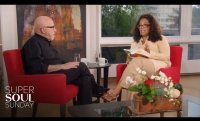
The author of the best-selling novel The Alchemist sits down with Oprah Winfrey for a rare television interview. Coelho discusses the idea of the “personal legend” and how this guided his path to become a writer.
Bhanu Kapil’s “Notes Toward a Race Riot Scene” from her collection Ban en Banlieue (Nightboat Books, 2015) portrays—through a flurry of fragments, brief descriptions, anaphora, flashbacks, and flash-forwards—a moment in the speaker’s life before a race riot breaks out in London in 1979. Kapil captures the unease forming in the air before the riot breaks out with the second line: “It’s about a girl walking home from school at the exact moment that her neighbor laces up his Doc Martens, tight.” Write a brief essay that depicts the surrounding atmosphere before a significant event breaks out. How can descriptions of the landscape offer context for the event?
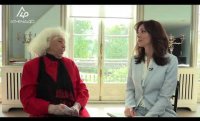
“You do not separate between dancing, music, writing, painting, it’s all one, it is expression of the self,” says Nawal El Saadawi about her journey to become a writer in this 2018 interview with Athena40’s Elizabeth Filippouli. The Egyptian writer and activist died at the age of eighty-nine on March 21, 2021.
Poets & Writers has launched a second round of Project Grants for BIPOC Writers to support writers in our United States of Writing cities of Detroit, Houston, and New Orleans.
Recently Poets & Writers’ Readings & Workshops program staff members and I held an informational session to help writers from all cities get to know the organization and navigate the process of applying for a project grant. I was pleased to see many New Orleans writers and familiar faces in attendance.
Grants range from $250 to $750 and can be used to pay for costs related to coordinating online literary events in the genres of poetry, fiction, or creative nonfiction. In addition, projects must take place between April 19 and June 30.
To be eligible, applicants must:
identify as Black, Indigenous, or a person of color;
be a resident of Detroit, Houston, or New Orleans, including the surrounding metro areas of each city;
be a published writer of poetry, fiction, or creative nonfiction, or have performance credits as a spoken word artist.
The response to our first grant applications was well-received in all three cities, and we’re so pleased to be able to offer this second round. For New Orleans, the project grants come at a perfect time when many of our literary festivals and National Poetry Month events are going virtual.
To find out more about the project grants, watch the virtual informational session below and read about how to apply here. And if you have any questions, feel free to reach out to me at [email protected].
Kelly Harris is the literary outreach coordinator for Poets & Writers in New Orleans. Contact her at [email protected] or on Twitter, @NOLApworg.
Ocean Vuong’s debut novel, On Earth We’re Briefly Gorgeous (Penguin Press, 2019), begins as a letter: “Dear Ma, I am writing to reach you—even if each word I put down is one word further from where you are.” The letter unearths the family history of the narrator, from Vietnam to their lives in Connecticut as immigrants, capturing the deep love between a single mother and her son while asking questions that explore race, class, and masculinity. The novel is gripping from the first sentence with the inherent intimacy of the epistolary form bridging the distance between the speaker and the reader. Write a story in the form of a letter that speaks to a cherished guardian figure. Why is the letter the perfect form for what your protagonist wants to say?
“We were the unwanted, the unneeded, and the unseen, invisible to all but ourselves,” reads Washington Post’s Robin Givhan from Viet Thanh Nguyen’s latest novel, The Committed (Grove Press, 2021), in this conversation with the Pulitzer Prize–winning author on how history and memory have shaped his life and writing.
Polish poet Adam Zagajewski, who died on March 21 at the age of seventy-five, was known for his intermingling of, as he once put it in an interview, the “historic world with the cosmic world that is static, or rather moves in a totally different rhythm.” The title of his poem “Mysticism for Beginners,” translated from the Polish by Clare Cavanagh, is taken from a book cover the speaker notices and then uses as an opportunity to describe his surroundings with a mystical sense of praise: “Suddenly I understood that the swallows / patrolling the streets of Montepulciano / with their shrill whistles” and “the white herons standing…like nuns in fields of rice” are only “mysticism for beginners, / the elementary course, prelude / to a test that’s been / postponed.” Write a poem “for beginners” about a concept that is explored through concrete, physical descriptions. Take a note from Zagajewski’s poem and start by writing down a list of images.