Spies

John LeCarré’s novel A Perfect Spy begins by introducing the protagonist Magnus Pym and tracking his movements across “a south Devon coastal town” on his way to a Victorian boardinghouse, where he is addressed by an old woman who says, “Why Mr. Canterbury, it’s you.” In this deft use of dialogue, LeCarré illustrates the essence of the classic writing technique “show, don’t tell,” revealing that Pym has visited the boardinghouse before and is traveling under a pseudonym. Write a story in which a protagonist’s identity is hidden, and only revealed through subtle clues in dialogue and physical gestures.

Image or Detail?

Rick Barot’s poem “The Wooden Overcoat,” published in the April 2012 issue of Poetry, begins: “It turns out there’s a difference between a detail / and an image.” Barot develops this train of thought and proceeds to engage in differentiating between the two, positing that a dandelion on the sidewalk is “mere detail,” but “the dandelion inked on a friend’s bicep / is an image because it moves when her body does.” Write a poem that sets up an argument in the first sentence and then proceed to test it through rhetorical devices and concrete imagery. How can you use a poem to prove a thesis?

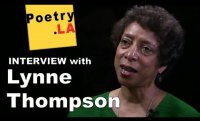
Lynne Thompson

Caption: 

“I consider myself essentially a storyteller who’s chosen the genre of poetry.” Lynne Thompson, author of Start With a Small Guitar (What Books Press, 2013) and Beg No Pardon (Perugia Press, 2007), speaks about family stories and how she came to poetry after a career in law with Mariano Zaro for the Poetry.LA interview series. Thompson is the 2021 poet laureate of Los Angeles.

Genre: 

Te-Ping Chen With Charles Yu

Caption: 

In this virtual launch of Land of Big Numbers (Mariner Books, 2021) hosted by the Asian American Writers’ Workshop, author Te-Ping Chen reads from her debut story collection and speaks with Charles Yu about releasing a book during a pandemic. Land of Big Numbers is featured in Page One in the March/April issue of Poets & Writers Magazine.

Genre: 

In Praise

2.25.21

“Safe to say none of the other Muslim kids on the eastside of Columbus got MTV or BET in their cribs & we do at my crib sometimes like after Pops got a promotion or after Grandma moved in,” writes Hanif Abdurraqib in the long, energetic first sentence of his new book, A Little Devil in America: Notes in Praise of Black Performance (Random House, 2021), which is featured in Page One in the March/April 2021 issue of Poets & Writers Magazine. The book weaves together pieces that praise Black performance in America from Josephine Baker in mid-century Paris to the more intimate space of a living room in Columbus, Ohio. This week, inspired by Abdurraqib’s sharp reflections on culture, choose a moment in entertainment that has stuck in your mind and write an essay that praises and traces your connection to its legacy.

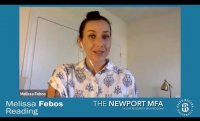
Melissa Febos Reads From Girlhood

Caption: 

“It is so painful to be loved sometimes. Intolerable even.” In this 2020 virtual event hosted by Salve Regina University, Melissa Febos reads from her new essay collection, Girlhood (Bloomsbury, 2021), and answers questions about her writing process. A profile of Febos by Brian Gresko appears in the March/April issue of Poets & Writers Magazine.

The Short Short

2.24.21

“Short short stories hold the obvious charge of compressing narrative in a rather extreme way, but what I initially loved about writing the form was the possibility to attend to reverberation,” writes Peter Kispert in a recent installment of Craft Capsules. “I noticed how a detail could echo out more apparent, and controlled, than in the longer works of fiction I had been drafting.” Kispert dives into his experience reading Amy Hempel’s “Going,” a three-page story from her collection Reasons to Live (Knopf, 1985), and how the unconventional narrative blew “the world wide open in the best way.” Write a short short story of up to three pages that compresses a narrative through controlled, powerful details.

A Moment in the Dark

If you are reading this and aren’t from Texas, say some prayers. We are still in recovery mode—our homes are still spaces scarred by ice and busted pipes, waterlogged walls and no food or shelter, all on top of a pandemic. Give us grace.

It isn’t that the winter storm is something we cannot adapt to—it is that this is the latest in a series of natural disasters that Houston has had to endure. The trauma is real. The longing for calm is palpable.

We are boiling water, we are waiting for plumbers to fix the pipes, who in turn have to scavenge to find the materials to fix our houses, and their own. Some of us are still waiting on the lights...IN THE MIDDLE OF A PANDEMIC.

I wrote a poem on the second night of my own family’s personal ordeal. I thought of what could bring down cheer to the heart, not even knowing when this would see the light of day. I wrote this with my phone at 5 percent battery life.

How to Prepare for Winter Storm in TX

The day brings white ice and soon the
Stars see us, wishing on a single thread.
At dusk, we come undone, wait for light
Night brings a child we cannot avoid, we
Are creatures of light, we gather in
Big pockets, we muscle fire forward
And we do howl for peace and flame.
Bright smiles keep us warm even when
Deep rains cause us to freeze. We know
In the gut, what it means to rise up, take
Heart that this won’t bring me down.

I’ll find you, bring you hot hands and song.

If you have a moment, please consider donating to these sources to help the Houston community. Many are overwhelmed with monetary donations, but offer other ways to help. Please also be careful to verify the accounts you send funds to as there have been reports of scams and fake accounts on Venmo and other payment platforms.

Here are a few local organizations to consider supporting:

1. Houseless Organizing Coalition (@HocHtx) is a revolutionary coalition fully operated by BIPOC organizers building dual power within Houston’s houseless community. They are currently distributing supplies and addressing needs for those in our houseless community.

2. West Street Recovery (@weststreetrecovery) is a horizontally organized grassroots nonprofit organization which aims to use efforts toward recovery after Hurricane Harvey to build community power.

3. Houston Food Bank (@HoustonFoodBank ) serves more than 1.1 million people in the eighteen Southeast Texas counties and distributes food and other essentials to those in need through a network of 1,500 community partners.

4. Texas Jail Project (@TxJailProject) is a grassroots advocacy project that listens, informs, and advocates for people trapped in Texas county jails. Amidst the Texas Winter Storm, they have set up a rapid response helpline for folks and their families to report on-the-ground conditions in jail facilities where thousands have no clean drinking water and are experiencing neglect. They are distributing funds to people's commissaries for those who are able to purchase food, water, and hygiene products through their jail’s commissary stores. They are also posting money to phone accounts and covering the cost of all collect calls from jails.

Lupe Mendez is the literary outreach coordinator for Poets & Writers in Houston. Contact him at [email protected] or on Twitter, @houstonpworg.

Pages

Subscribe to Poets & Writers RSS