Useless Stuff

Amy Hempel’s short story “In the Cemetery Where Al Jolson Is Buried” begins with a conversation between two best friends in which the narrator keeps her ill friend company in the hospital by telling her random facts. “Make it useless stuff or skip it,” requests the friend. The story then hooks the reader with a series of tall tales and jokes that entertain both the sick friend and the reader alike, serving as context for their close relationship and a unique introduction for the heart-wrenching story. Write a short story that begins with, or uses throughout, trivia or jokes as a way of developing the relationship between two key characters.

COVID Vivid Interview: Rose Mary Salum

Happy April and National Poetry Month! This week, I conclude my series of interviews with Houston writers speaking about their experience during the COVID-19 pandemic, each answering the question:

What have you been doing since the pandemic started?

This week features Rose Mary Salum, founding editor of the bilingual literary magazine Literal: Latin American Voices and Literal Publishing. Salum is the author of The Water That Rocks the Silence, translated from the Spanish by C. M. Mayo, winner of the International Latino Book Award and the prestigious Panamerican Award Carlos Montemayor; Tres semillas de granada: Ensayos desde el inframundo (Vaso Roto, 2020); Una de ellas (Dislocados, 2020); El agua que mece el silencio (Vaso Roto, 2015); Delta de las arenas, cuentos árabes, cuentos judíos (Literal Publishing, 2013), winner of the International Latino Book Award; and Spaces in Between (Literal Publishing, 2006).

Here is what she had to say:

“When the pandemic started last year—I guess this happened to all of us—I was in shock. At that time, I felt like something, or someone, was stealing a part of my life away from me. There are a few days, here and there, that I still have that sense of grief and loss. I remember one day though, just as I was touching bottom on my feelings regarding the lockdown, an idea came to me: I needed to make up for all the time lost in this pandemic by putting together a book. That would be the only way I could survive this time without losing my mind. The mere idea of waking up to a project that I set for myself made all the difference. That book is finished and, in spite of the fact that I still need to go through it and make sure all looks good, at least I can say that I kept my cool thanks to it.”

Lupe Mendez is the literary outreach coordinator for Poets & Writers in Houston. Contact him at [email protected] or on Twitter, @houstonpworg.


The Trivial Sublime

In Tomas Tranströmer’s lyrical autobiography Memories Look at Me (New Directions, 2011), translated from the Swedish by Robin Fulton, he describes his high school experience of reading the work of Horace out loud in the original Latin and instantaneously translating it into English. “This alternation between the trivial and decrepit on the one hand and the buoyant and sublime on the other taught me a lot,” writes Tranströmer. “It had to do with the conditions of poetry and life. That through form something could be raised to another level.” Write a poem with a central moment or image that risks being ridiculous. How can form be used to tether that moment to a more sublime mission? For inspiration, read “Old Man Leaves Party” by Mark Strand and “The Indoors Is Endless” by Tranströmer.

House of Mercury by Fady Joudah

Caption: 

“The storm funneled through town with destructive intent. / Fractured tree limbs, toppled fences, rippled shingles / like tufts of hair.” In this PBS NewsHour video, Fady Joudah reads “House of Mercury” from his poetry collection Tethered to Stars (Milkweed Editions, 2021), which is featured in Page One in the March/April issue of Poets & Writers Magazine.

Genre: 

Literary Translation Clinic: Sora Kim-Russell

Caption: 

In this Center for Fiction virtual event, Sora Kim-Russell, editor and Korean literature translator, joins Alex Zucker for a conversation about revision, editing, and co-translation. The center’s Literary Translation Clinics are a monthly series of knowledge-sharing open sessions with a focus on literary translation as a profession hosted by members of the translator collective, Cedilla & Co.

Genre: 

Joshua Nguyen for WAN Poetry

Caption: 

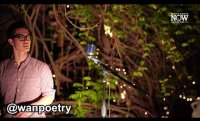
“My mother doesn’t write recipes, / she just knows. // Braised pork and eggs, / rice cleaned thoroughly.” Joshua Nguyen, author of the chapbook, American Lục Bát for My Mother (Bull City Press, 2021), reads two poems in this video for the Write About Now Poetry reading series in Houston. 

Recipe for the Poet

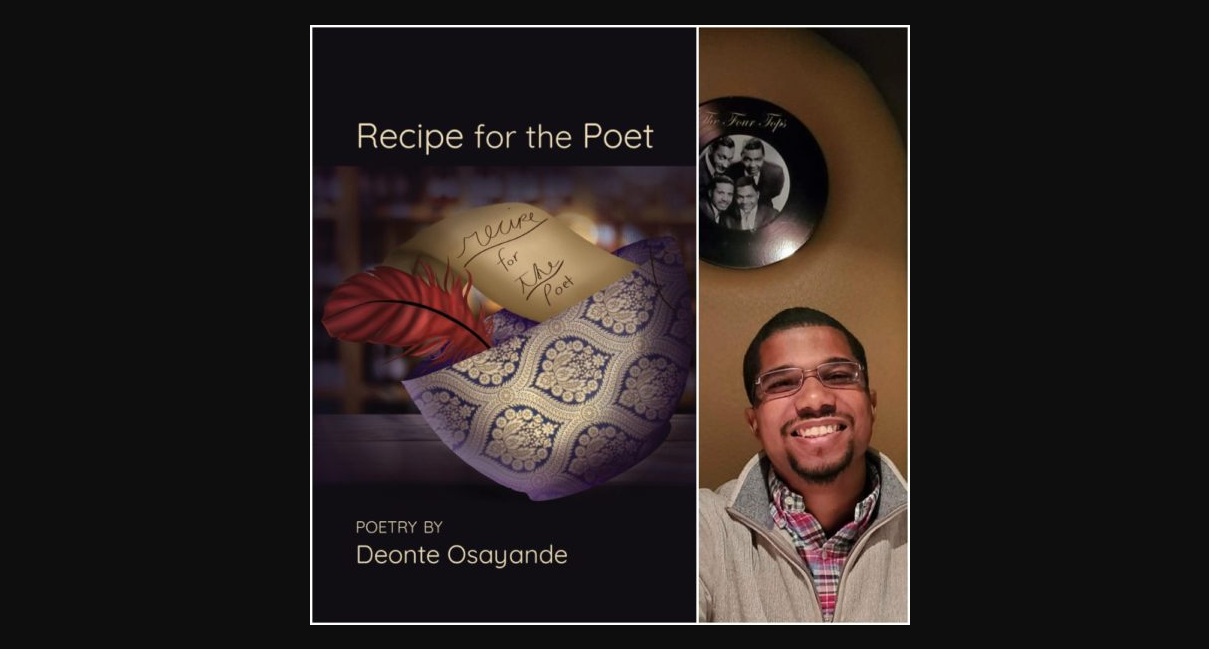
Recently I reconnected with Detroit’s Deonte Osayande, whose new collection, Recipe for the Poet, is available now from Finishing Line Press. Osayande describes this collection as a mix of both form and free verse pieces acting as a sampler ahead of his anticipated full-length collection. “It blends the lessons I’ve learned about form poetry with the relevant topics of today,” says Osayande. I also believe that this is an important approach for both readers and writers of poetry; to allow poetic forms that are often thought of as “old” to reflect on the current world.

Serving the Detroit literary community as a poet, host, and slam master for over a decade, Osayande is a well-known artist in the city and is the author of three other collections, Class (Urban Farmhouse Press, 2017), Circus (Brick Mantle Books, 2018), and Civilian (Urban Farmhouse Press, 2019).

Given Osayande’s experience publishing in literary journals and working on manuscripts, I asked what advice he would give to those who want to submit work. “Never give up and write what you know. Rejection is part of the game and happens to everyone,” says Osayande. “You just need to have the drive and passion to persevere through it. If you write about what is close to your heart, those will be the most meaningful poems.”

Photo: Book cover of Recipe for the Poet (Finishing Line Press, 2021) by Deonte Osayande.
 
Justin Rogers is the literary outreach coordinator for Poets & Writers in Detroit. Contact him at [email protected] or on Twitter, @Detroitpworg.

On Campus

3.31.21

At the Millions, Emily Layden writes about how campus novels offer “a portrait of a community, not just in cast but in geography, and tell us the story of the relationship between a place and its people—how they shape one another, imprint on each other, leave the other forever changed.” Layden compiles a list of the “best campus novels,” which includes The Incendiaries by R. O. Kwon, Prep by Curtis Sittenfeld, and My Education by Susan Choi, and discusses how each novel captures the intimacy of youth through the evocative and tense setting of the academic campus. Write a story set on an educational campus. Use the hierarchies inherent to the school setting—principals, teachers, counselors, seniors, freshmen—to set up the story’s conflict.

Poem to My Child, If Ever You Shall Be With Gia Margaret

Caption: 

“I have so many questions of you, / for you are closer to me than anyone // has ever been, tumbling, as you are, this second, / through my heart’s every chamber,” reads Ross Gay from his poem “Poem to My Child, If Ever You Shall Be” in this video with music by Gia Margaret, a collaboration from a new Jagjaguwar album called Dilate Your Heart.

Pages

Subscribe to Poets & Writers RSS