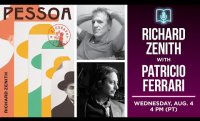
Richard Zenith on Pessoa

Caption: 

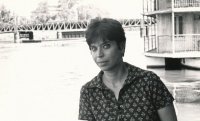
“Fernando Pessoa in many ways was a writer of not so much his own time, but even more of a future time.” Translator and scholar Richard Zenith speaks about the life and work of Portuguese poet Fernando Pessoa collected in his new book, Pessoa: A Biography (Liveright, 2021), in this conversation with poet, editor, and translator Patricio Ferrari for Powell’s Books.

Forms

8.10.21

In Paul Tran’s “Progress Report,” published on Literary Hub and featured in their forthcoming debut poetry collection, All the Flowers Kneeling (Penguin Poets, 2022), the poem catalogues the speaker’s life while filling out a form: “Photograph of the ’93 Mazda MPV he reportedly turned into an ice cream truck. / I marked Humor. / Holes where the nails had been in the wall. / I marked Self-harm.” The poem, made up of single end-stopped lines, uses a call-and-response technique to reveal new information as it progresses. Write a poem in which the speaker is filling out a form—perhaps a progress report, an immigration document, or a demographic survey. How can you use the poem’s form as a way of highlighting an important event?

Margaret Atwood on Worth Quoting

Caption: 

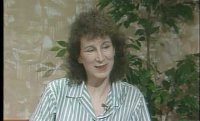
“There’s nothing in this book that hasn’t happened already,” says Margaret Atwood in this 1986 interview for the “Worth Quoting” series sponsored by Florida State College at Jacksonville, in which she discusses the release of her award-winning dystopian novel, The Handmaid’s Tale, and the historic and current events that influence her writing.

Genre: 

To Be Continued

Caption: 

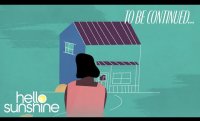
“Another lie. Though every one makes what I’m about to do all the more easier.” Watch the first episode of “To Be Continued…” written by author Sandie Jones and animated by Hailley Furkalo. This five-part series pairs authors from Reese’s Book Club with animators for a short story with twists, turns, and cliffhangers. 

Genre: 

Vivian Gornick’s First Time

Caption: 

“The life we lead as writers is awful—it’s boring, tedious, lonely,” says Vivian Gornick. “But when it’s working, there’s nothing in the world that compares.” In this installment of the Paris Review’s “My First Time” series, Gornick discusses the experience of writing and publishing her first book, In Search of Ali Mahmoud: An American Woman in Egypt.

Endurance

“It was a challenging but exhilarating time, and I’ve come away with a deeper understanding of what I’m capable of,” writes Anjali Enjeti in her last Craft Capsule essay “How to Be a Writer and an Organizer.” In the essay she discusses the importance of finding balance as a writer and how she spent most of last year revising and editing two books for publication, teaching at a low-residency MFA program, reporting for two news publications, and organizing for leadership councils during the presidential election. Write an essay about a time in which your endurance and capacity for work was tested. Whether it be political organizing, parenting, or working several jobs, what did you learn from the experience of trying to balance multiple tasks?

The Speculative

In a profile of Alexandra Kleeman for the New York Times, she discusses her relationship to the speculative and the setting of a post-apocalyptic California in her latest novel, Something New Under the Sun, out this week from Hogarth. In the novel, only the wealthy have access to temperature-controlled interiors and real water. “Things that we’ve always needed, like land, a place to live, resources, become privatized and turned into possessions, when they weren’t to start with,” says Kleeman. Write a story with a speculative setting in which a necessary resource is privatized. Ask yourself “what if” when considering this altered version of reality.

Pages

Subscribe to Poets & Writers RSS