Ancestor

8.26.21

“By calling an influence an ancestor rather than an influence, a relationship is made, a kinship,” says U.S. poet laureate Joy Harjo speaking about her new memoir, Poet Warrior (Norton, 2021), in a Q&A by Laura Da’ featured in the September/October 2021 issue of Poets & Writers Magazine. “Some of these connections resonate and flower, while others challenge and force us to stand up.” This week, make a list of influential people in your life who have either helped you grow or challenged you. Write a series of linked essays that reflects on how these relationships are all connected.
Between Two Succulents With Brian Broome

Caption: 

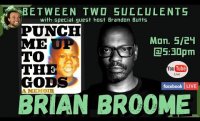
Charm City Books bookseller Brandon Rashad Butts hosts this episode of Between Two Succulents with poet and screenwriter Brian Broome who speaks about his debut memoir, Punch Me Up to the Gods (Mariner Books, 2021). Broome is featured in “The New Nonfiction 2021” in the September/October issue of Poets & Writers Magazine.

Birth

8.25.21

“Consider this: I’ve spent nine months cradled in my mother’s body,” writes Nawaaz Ahmed in his debut novel, Radiant Fugitives, published earlier this month by Counterpoint. “My world was small and safe and familiar, interrupted only occasionally by light and sounds from the outside. And even those arrived muted by my mother’s flesh and bone, the light tinted by her blood.” The novel, a saga involving an immigrant family’s secrets and betrayals, begins from the point of view of the protagonist’s child at the moment of his birth, infusing the novel’s prelude with disorienting descriptions recounting the experience of first encountering the world. Write a story that begins through the eyes of a newborn. Consider the reason for this beginning and try, as Ahmed does, to suffuse the scene with sensual imagery.

Burial With Mary Lattimore

Caption: 

“imagine his joy as the sun / wizarded forth those abundant sugars / and I plodded barefoot / and prayerful at the first ripe plum’s swell and blush,” reads Ross Gay from his poem “Burial” in this video featuring music by Mary Lattimore. The track is featured in an album called Dilate Your Heart, part of a yearlong release campaign celebrating the twenty-fifth anniversary of indie record label Jagjaguwar.

Climate Crisis

8.24.21

Rising global temperatures and natural disasters, such as the recent tropical storms and hurricanes in North America and the earthquake in Haiti, bring to mind the fragility of the environment and the effects of climate change. Over the years, poets have taken to their craft to raise awareness and humanize the climate crisis in works such as “I Don’t Know What Will Kill Us First: The Race War or What We’ve Done to the Earth” by Fatimah Asghar, “Let Them Not Say” by Jane Hirshfield, “Letter to Someone Living Fifty Years from Now” by Matthew Olzmann. Write a poem about the environment that draws the reader in emotionally, whether it is by describing a changing landscape or reflecting on the issue. For further inspiration, browse these poems engaging with the climate crisis curated by the Academy of American Poets.

Author and Agent: James Tate Hill and Eric Smith

Caption: 

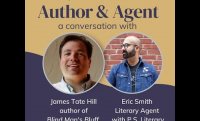
James Tate Hill discusses the themes of disability and self-acceptance in his debut memoir, Blind Man’s Bluff (Norton, 2021), and speaks about process and the author-agent relationship in this Writing Workshops Dallas conversation with agent and author Eric Smith. Hill’s memoir is featured in Page One in the September/October issue of Poets & Writers Magazine. 

Anthony Doerr on Cloud Cuckoo Land

Caption: 

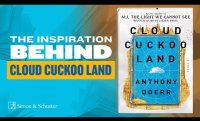
“In Cloud Cuckoo Land, I try to tell the story of stewards, people who care deeply about something, and how their actions reverberated through the generations after them,” says Anthony Doerr in this video about the inspiration behind writing his new novel, Cloud Cuckoo Land (Simon & Schuster, 2021), which is featured in Page One in the September/October issue of Poets & Writers Magazine.

Genre: 

Homage to the Square

8.19.21

In 1950, German artist Josef Albers began creating his world-famous series known as Homage to the Square, which consisted of three or four differently colored squares, each inside the other in successively smaller sizes. The nonprofit arts organization Public Delivery explains on its website that Albers originally started the series to help students and other artists “approach and study color experimentally,” but it eventually led him to create more than a thousand square paintings until his death in 1976. Inspired by Albers, choose a word as simple or fundamental as a square, then write an essay—or a series of linked essays—about this word, studying its presence in your life along with its etymology. What connections can you draw from one word?

Nawaaz Ahmed on Radiant Fugitives

Caption: 

“It has taken me almost ten years to get to this point of publishing this book.” In this Politics and Prose Bookstore video, Nawaaz Ahmed talks about what led him to write his debut novel, Radiant Fugitives (Counterpoint, 2021), which is featured in Page One in the September/October issue of Poets & Writers Magazine.

Genre: 

Poet Laureate Joy Harjo

Caption: 

“I’m carrying this for America, but for Indigenous peoples in particular,” says Joy Harjo about what it means to be the first Native American to serve as the poet laureate of the United States in this 2019 PBS NewsHour interview with Jeffrey Brown. A Q&A with Harjo about her new memoir, Poet Warrior (Norton, 2021), appears in the September/October issue of Poets & Writers Magazine.

Genre: 

Pages

Subscribe to Poets & Writers RSS